
Smell candles are wax-based products infused with natural or synthetic fragrances that release scent when burned. The heat from the flame melts the wax, vaporizing fragrance molecules into the air. These molecules interact with your olfactory receptors, creating the sensory experience of smell that can transform a room's atmosphere and influence mood, memory, and perception of space.
The appeal of smell candles extends beyond simple decoration. They create an invisible architecture in your home, establishing boundaries between the chaos of the day and the sanctuary of evening. The ritual of lighting a candle marks transitions, signals intention, and builds atmosphere through scent rather than sight or sound.
What are smell candles made from?
Smell candles are made from a wax base, a wick, and fragrance materials that can be either botanical extracts or synthetic compounds. The wax acts as a fuel source and fragrance carrier, while the wick controls burn rate and flame size. When lit, the heat liquefies the wax and releases fragrance molecules into surrounding air through evaporation.
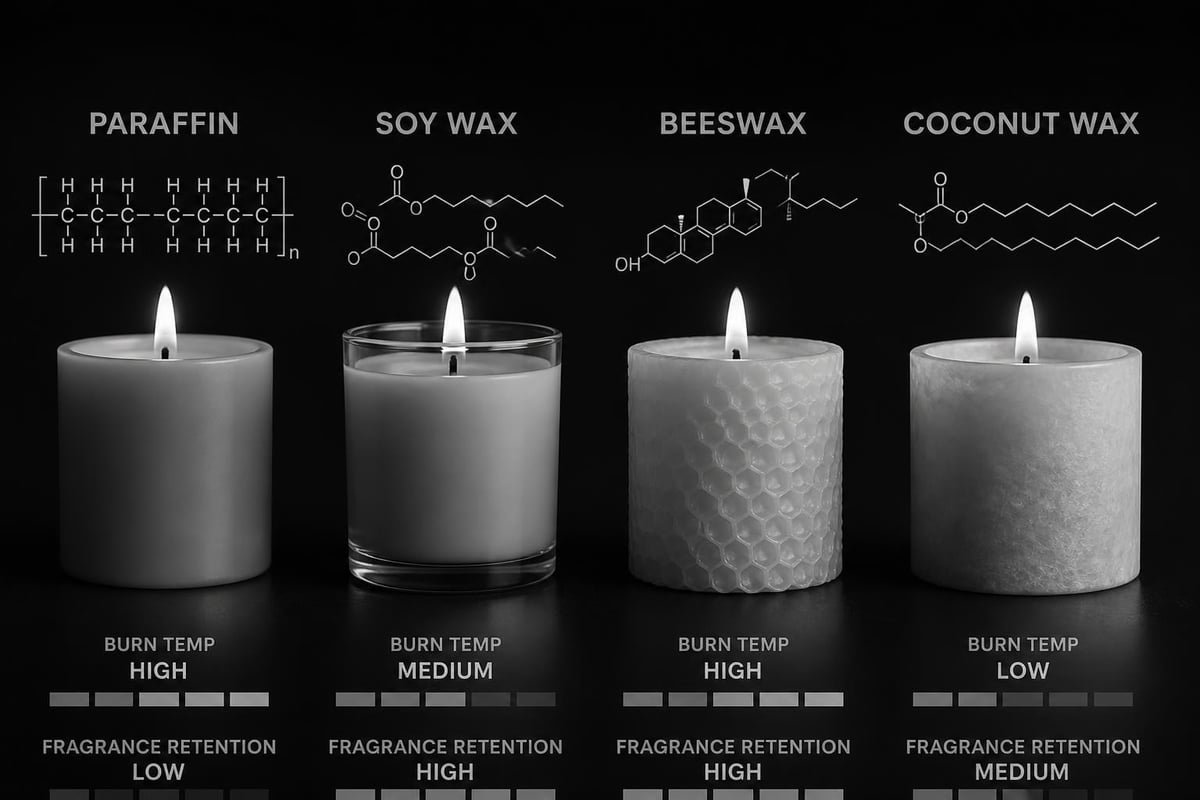
The wax composition determines how a candle burns and how well it holds fragrance. Common bases include:
- Paraffin wax derived from petroleum refining
- Soy wax made from hydrogenated soybean oil
- Beeswax produced by honeybees
- Coconut wax extracted from coconut meat
- Palm wax sourced from palm oil
- Blended waxes combining multiple sources
Botanical smell candles use plant and resin extracts as fragrance sources rather than laboratory-created molecules. These extracts come from flowers, leaves, roots, bark, and resins that have been distilled, cold-pressed, or solvent-extracted. Botanical candles and wax melts rely on the inherent chemistry of plants to create scent profiles that shift and develop as the candle burns.
The evolution of scented candles
The practice of scenting candles is relatively recent in the long history of candle making. For most of human civilization, candles served purely functional purposes: providing light after sunset. Tallow candles smelled unpleasant when burned, while beeswax offered a subtle honey scent as a byproduct rather than an intention.
Deliberate fragrance addition became common only in the 20th century as synthetic chemistry expanded and domestic life shifted from necessity to experience. The transformation of candles from utility to atmosphere reflects broader cultural changes in how we understand home spaces, self-care, and sensory wellness.
How do smell candles release fragrance?
Smell candles release fragrance through heat-activated evaporation. The burning wick creates a small pool of liquid wax around the flame. As wax molecules heat up, they gain energy and transition from liquid to gas state. Fragrance molecules embedded in the wax evaporate simultaneously, dispersing into the air where they travel via convection currents and diffusion until they reach your nose.
The fragrance release process follows predictable thermal dynamics. The temperature in the wax pool typically reaches between 135°F and 175°F, depending on wax type and wick size. At these temperatures, different fragrance molecules evaporate at different rates based on their molecular weight and volatility.
This staggered evaporation explains why smell candles develop over time rather than releasing all their scent at once. Lighter molecules with lower boiling points evaporate first, creating top notes. Medium-weight molecules follow as middle or heart notes. Heavy molecules with high boiling points remain in the wax longer, emerging as base notes that linger after the candle is extinguished.
| Fragrance Layer | Evaporation Temperature | Duration | Character |
|---|---|---|---|
| Top Notes | 135-155°F | 15-30 minutes | Bright, immediate, fleeting |
| Heart Notes | 155-170°F | 1-3 hours | Complex, developed, sustained |
| Base Notes | 170°F+ | 3+ hours | Deep, grounding, lasting |
The science behind this release pattern has been studied extensively. Research into consumer preferences for scented household products reveals that fragrance intensity, development, and persistence all influence how people experience and value smell candles.
What is the difference between smell candles and diffusers?
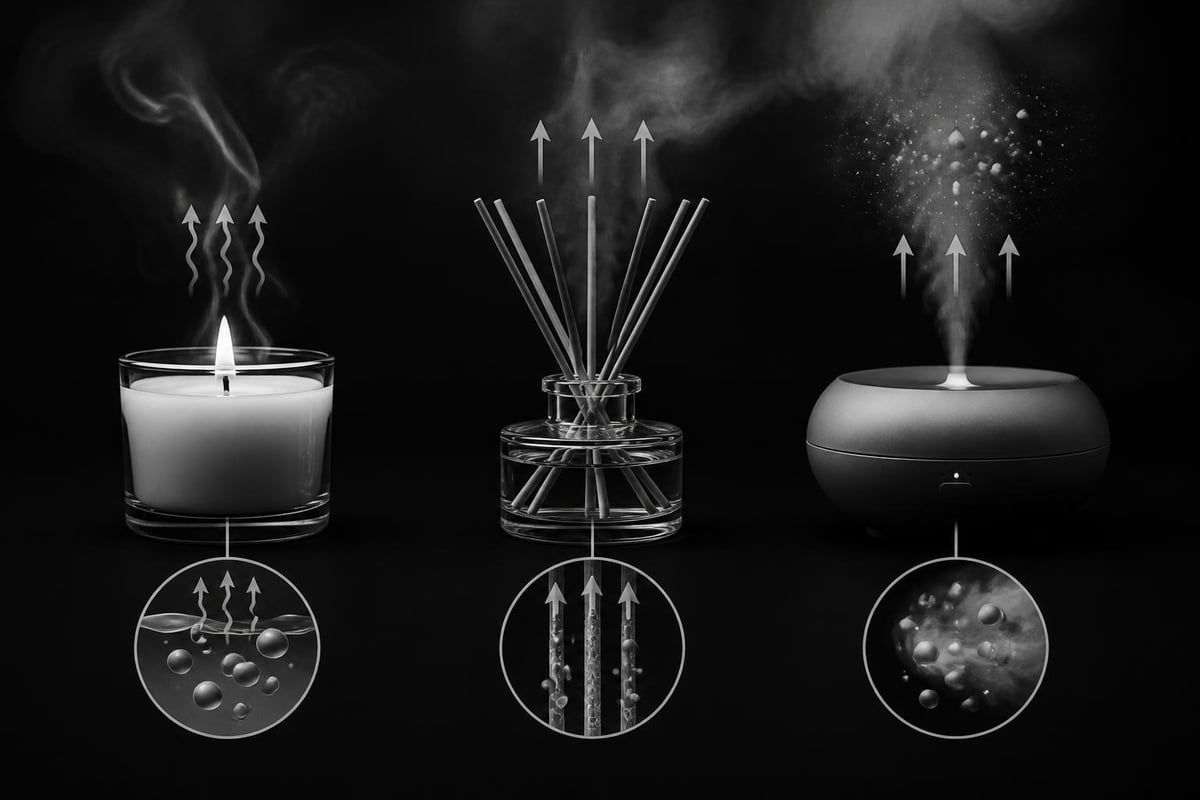
Smell candles use heat from a flame to release fragrance through wax evaporation, while diffusers disperse scent through evaporation, ultrasonic vibration, or reed absorption without combustion. Candles offer visual ambiance through flame and typically provide stronger, more immediate scent throw. Diffusers operate continuously without supervision and deliver more consistent fragrance distribution over extended periods.
The choice between these methods depends on context, safety requirements, and sensory preferences:
Candles excel when:
- You want the ritual and visual element of flame
- Creating atmosphere for specific occasions or time periods
- Scenting larger rooms or open floor plans
- Combining fragrance with soft lighting
Diffusers work better for:
- Continuous background fragrance
- Spaces where open flame poses risks
- Precise scent intensity control
- Unattended operation
Comparing candles and diffusers reveals trade-offs between sensory richness and practical convenience. Many people use both methods in different rooms or situations rather than choosing one exclusively. The sensory experience differs fundamentally: a candle's scent arrives with flickering light and subtle warmth, while a diffuser provides steady invisible presence.
How should you place smell candles in your home?
Place smell candles in locations with moderate air circulation, away from drafts, vents, and high-traffic pathways. Position them on heat-resistant surfaces at least 12 inches from walls, curtains, and other flammable materials. For optimal scent distribution, place candles centrally in the room rather than in corners, and avoid clustering multiple strong fragrances in the same space.
Strategic placement transforms how fragrance moves through your home:
- Entry areas benefit from welcoming scents that create first impressions
- Living rooms work well with candles placed on coffee tables or mantels for even distribution
- Bedrooms require gentler placement on nightstands or dressers for relaxation without overwhelming
- Bathrooms suit smaller candles on counters or shelves for intimate spaces
Avoid placing smell candles in certain locations. Professional recommendations on candle placement emphasize keeping them away from dining tables during meals, as competing scents interfere with food aromas. Skip windowsills where sunlight can soften wax and drafts cause uneven burning. Never place candles on unstable surfaces, near paper or fabric, or in rooms where you sleep with the flame burning.
Room size and fragrance strength
Matching candle size to room volume prevents both underwhelming and overpowering results. Small candles in large spaces disappear scentwise, while oversized candles in compact rooms become suffocating.
| Room Size | Recommended Candle Size | Burn Time for Effect |
|---|---|---|
| Small (100-150 sq ft) | 4-6 oz | 1-2 hours |
| Medium (150-300 sq ft) | 8-10 oz | 2-3 hours |
| Large (300-500 sq ft) | 12-16 oz | 3-4 hours |
| Open Plan (500+ sq ft) | Multiple candles or 20+ oz | 4+ hours |
Understanding these proportions helps you build fragrance presence without waste or excess. Start with one candle and assess its throw before adding more. Natural botanical smell candles often develop more slowly than synthetic alternatives, requiring patience as the scent establishes itself in the space.
Are smell candles safe to burn indoors?
Smell candles are safe to burn indoors when used according to manufacturer guidelines, which include trimming wicks to 1/4 inch, burning on stable heat-resistant surfaces, keeping flames away from flammable materials, never leaving candles unattended, and extinguishing them before leaving a room. Properly formulated candles made from quality materials and burned correctly pose minimal health risks for most people.
Safety considerations vary based on composition and usage patterns. The National Candle Association's research studies demonstrate that candles made from common wax types burn cleanly when formulated and used properly. However, individual factors influence safety outcomes:
- Ventilation: Adequate airflow prevents particle buildup
- Burn duration: Limiting sessions to 3-4 hours prevents overheating
- Wick maintenance: Trimmed wicks reduce soot production
- Container integrity: Cracks or damage create fire risks
- Fragrance load: Excessive fragrance can produce more smoke
People with respiratory sensitivities, asthma, or chemical sensitivities should exercise additional caution. Testing a new candle in a well-ventilated space helps identify potential reactions before regular use. Botanical formulations using plant-based fragrances rather than synthetic compounds may reduce sensitivity concerns for some individuals, though plant extracts can still trigger allergies in susceptible people.
The question of toxicity often focuses on fragrance sources. Candles made entirely from botanical ingredients without synthetic additives eliminate concerns about phthalates, parabens, and petroleum-derived fragrance compounds. However, "natural" does not automatically mean safer for everyone, as natural substances can also cause reactions.
How long do smell candles last?
Smell candles last based on wax weight and burn rate, typically providing 6-8 hours of burn time per ounce of wax. An 8-ounce candle burns for approximately 48-64 hours, while a 12-ounce candle provides 72-96 hours. Actual duration varies with wick size, wax type, fragrance load, and burning conditions like air circulation and ambient temperature.
Extending candle life requires attention to burning practices:
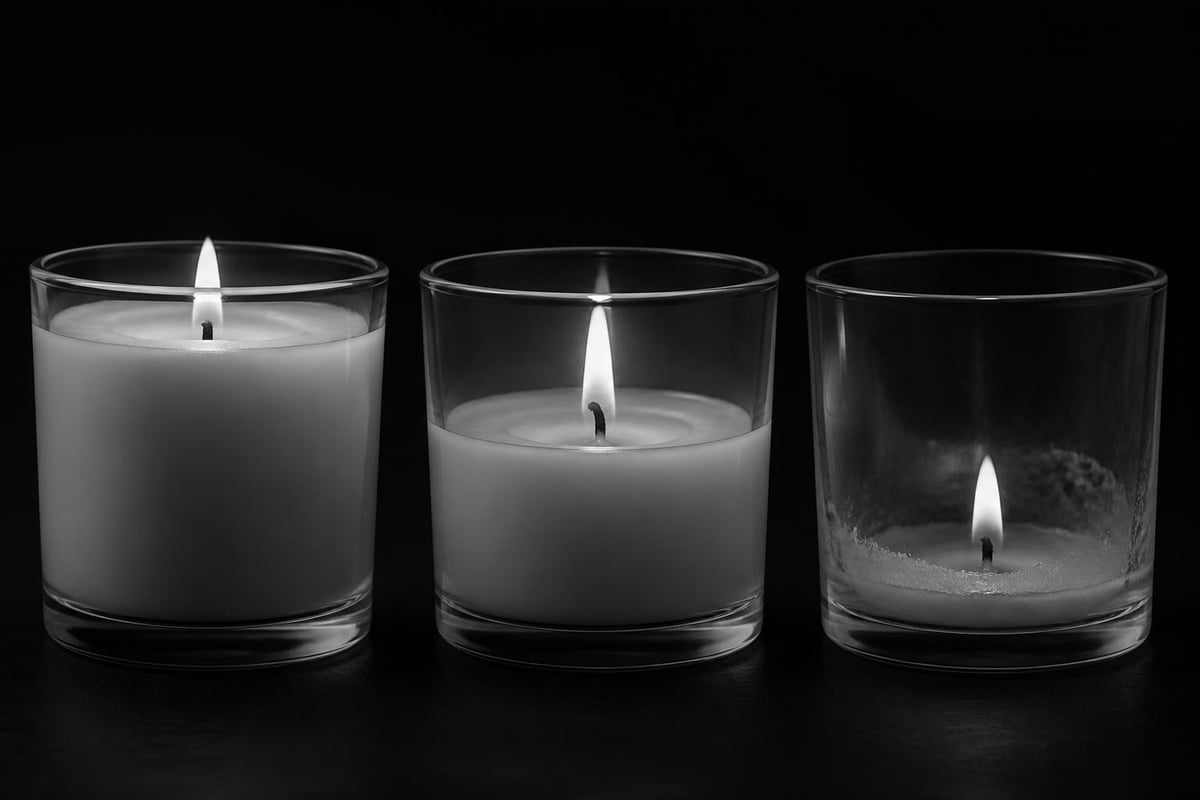
- First burn matters: Allow the wax to melt fully to the container edge on first use, establishing proper burn memory
- Trim the wick: Cut to 1/4 inch before each lighting to prevent smoking and tunneling
- Limit sessions: Burn no more than 4 hours at a time to prevent overheating
- Extinguish properly: Use a snuffer rather than blowing, which can embed soot in wax
- Store correctly: Keep away from heat and direct sunlight between uses
Fragrance longevity differs from burn time. The scent throw from smell candles diminishes gradually as fragrance molecules deplete faster than wax. A candle may still burn after its fragrance has faded significantly, particularly in synthetic formulations where fragrance and wax aren't chemically integrated. Botanical candles often maintain more consistent scent throughout their lifespan because plant extracts bond differently with natural wax matrices.
What makes botanical smell candles different?
Botanical smell candles use fragrance derived entirely from plant and resin sources rather than laboratory-synthesized molecules. These extracts maintain the complex chemical signatures of living plants, containing dozens or hundreds of aromatic compounds that create multi-dimensional scent profiles. The difference appears in how fragrances develop, shift, and interact with individual body chemistry compared to single-molecule synthetic alternatives.
The complexity of botanical materials produces less predictable but more nuanced results. A rose absolute contains over 400 chemical compounds, while a synthetic rose fragrance might contain 3-10 molecules designed to approximate the dominant scent characteristics. This simplification creates reliability and consistency but sacrifices depth and subtlety.
Manufacturing botanical smell candles requires different technical approaches. Plant extracts behave differently in wax than synthetic fragrances, often requiring lower temperatures, specific wax types, and careful balancing to achieve proper scent throw. The formulation process for scented oils in candles becomes more intricate when working with botanical materials that vary batch to batch based on growing conditions, harvest timing, and extraction methods.
For those seeking alternatives to mass-market formulations, exploring various scented products reveals how botanical approaches extend beyond candles to encompass full fragrance experiences built from plant materials. These products avoid the standardization that dominates commercial fragrance production, accepting natural variation as part of their character.
How do you choose quality smell candles?
Choose quality smell candles by examining wax composition, wick material, fragrance sourcing, and maker transparency about ingredients and production methods. Look for candles made from natural waxes without additives, cotton or wood wicks free from metal cores, and clear disclosure about whether fragrances are botanical, synthetic, or blended. Quality indicators include even burning, consistent fragrance throw, minimal soot production, and containers that remain intact throughout the candle's life.
Evaluating options requires looking beyond marketing language to actual composition:
Red flags to avoid:
- Vague ingredient lists or "proprietary blend" without details
- Artificially colored wax suggesting unnecessary additives
- Wicks that mushroom excessively or produce black smoke
- Fragrance descriptions using food terms for non-edible candles
- Prices far below market averages for claimed natural materials
Quality markers to seek:
- Transparent ingredient sourcing and production location
- Natural wax specifications (soy, coconut, beeswax percentages)
- Fragrance composition disclosure (botanical versus synthetic)
- Clean burning with minimal residue
- Appropriate pricing reflecting material and labor costs
The experience of shopping for botanical smell candles in Manhattan neighborhoods like NoMad allows direct sensory evaluation before purchase. Smelling candles in person reveals characteristics impossible to convey through descriptions: how quickly fragrance becomes apparent, whether it reads as natural or artificial, and how it interacts with your personal scent perception.
Where can you find handmade smell candles in New York?
Handmade smell candles in New York are available through boutique fragrance shops, artisan markets, and specialty stores that prioritize craft production and quality ingredients. Manhattan's NoMad district hosts several destinations for botanical fragrances, where makers produce small-batch candles on-site using natural waxes and plant-based scent materials. These locations offer advantages over mass-market retailers: direct interaction with makers, detailed ingredient information, and the ability to smell products before purchasing.
The value of local sourcing extends beyond convenience. When candles are made in New York by hand in small batches, you're supporting craft traditions and transparent production rather than industrial-scale manufacturing. Pickup options eliminate shipping waste and allow you to start using your candle immediately rather than waiting for delivery.
For those interested in deeper engagement with botanical fragrance, some New York makers offer experiences beyond simple retail. Visitors can learn about plant-based scent construction, understand how different extraction methods affect aroma, and even participate in creating custom formulations. This educational dimension transforms shopping from transaction to experience, building knowledge that enhances your relationship with smell candles and fragrance more broadly.
Frequently Asked Questions
How long should you burn a smell candle?
Burn smell candles for a minimum of one hour to establish a full melt pool and a maximum of four hours to prevent overheating. The first burn should continue until wax melts completely to the container edge, preventing tunneling in subsequent uses. Always extinguish candles before leaving a room and never burn them unattended or while sleeping.
Can you burn multiple smell candles at once?
You can burn multiple smell candles simultaneously if their fragrances complement rather than compete with each other. Avoid mixing more than two distinct scent families in the same room, as this creates olfactory confusion rather than harmony. Place multiple candles at different heights and locations to create layered fragrance distribution without overwhelming the space.
Why doesn't my smell candle have a strong scent?
Weak scent throw results from insufficient fragrance load, incompatible wax and fragrance pairing, incomplete melt pool formation, or burning in overly large or well-ventilated spaces. Ensure the candle burns long enough to liquefy wax fully to the edges and position it centrally in appropriately sized rooms. Some botanical candles develop more slowly than synthetic alternatives, requiring patience for full scent emergence.
How do you remove smell candle wax from surfaces?
Remove smell candle wax by first hardening it completely with ice, then gently scraping away the bulk with a plastic scraper or credit card edge. For remaining residue, place paper towels over the wax and apply low heat with a hairdryer or iron, allowing the towel to absorb melted wax. Clean any remaining oil stain with appropriate solvent for the surface material.
Are smell candles better than plug-in air fresheners?
Smell candles provide richer sensory experiences through flame ambiance and more complex fragrance development but require active monitoring and create combustion byproducts. Plug-in air fresheners offer convenience and continuous operation without supervision but typically use synthetic fragrances and provide less atmospheric depth. The better choice depends on your priorities regarding sensory quality, safety considerations, and desired involvement in the fragrance experience.
What is the shelf life of unused smell candles?
Unused smell candles maintain quality for one to two years when stored properly in cool, dark locations away from direct sunlight and heat sources. Fragrance intensity may diminish gradually over time, particularly in candles with high botanical content, as volatile compounds slowly evaporate even without burning. Discoloration or surface texture changes indicate degradation, though candles remain safe to burn if wax and container show no damage.
Understanding how smell candles function, what distinguishes quality options, and how to use them safely transforms these simple objects into tools for creating intentional atmosphere. Whether you prioritize botanical purity, handmade craft, or specific scent experiences, your choices shape not just how rooms smell but how they feel.
For botanical smell candles made by hand in Manhattan using 100% plant-based ingredients, visit Haus of Smell in NoMad, where every wick is set by hand and every scent comes from real botanical sources rather than synthetic approximations.