
A scent category is a classification system that groups fragrances by their dominant aromatic characteristics, organizing perfumes into families such as floral, woody, fresh, and oriental. This structure helps identify patterns in your preferences and guides you toward botanical scents that align with your natural inclinations, making the selection process less overwhelming when faced with hundreds of options.
Understanding how these classification systems work transforms the way you approach fragrance selection. Rather than testing dozens of bottles at random, you can navigate directly to the families that resonate with your aesthetic and sensory preferences.
What are the main scent category families?
The primary scent category families divide into four major groups: floral, oriental, woody, and fresh. Each family contains subfamilies that reflect variations in intensity, composition, and mood, creating a spectrum that ranges from delicate and airy to deep and resinous.
Floral families emphasize blooms and petals, spanning from single-note rose or jasmine to complex bouquets. These compositions often feel romantic, soft, or elegant, though some lean toward green or spicy territories.
Oriental categories feature warm, opulent profiles built on resins, spices, and amber-like bases. These fragrances tend toward richness and depth, evoking evening wear or cooler seasons.
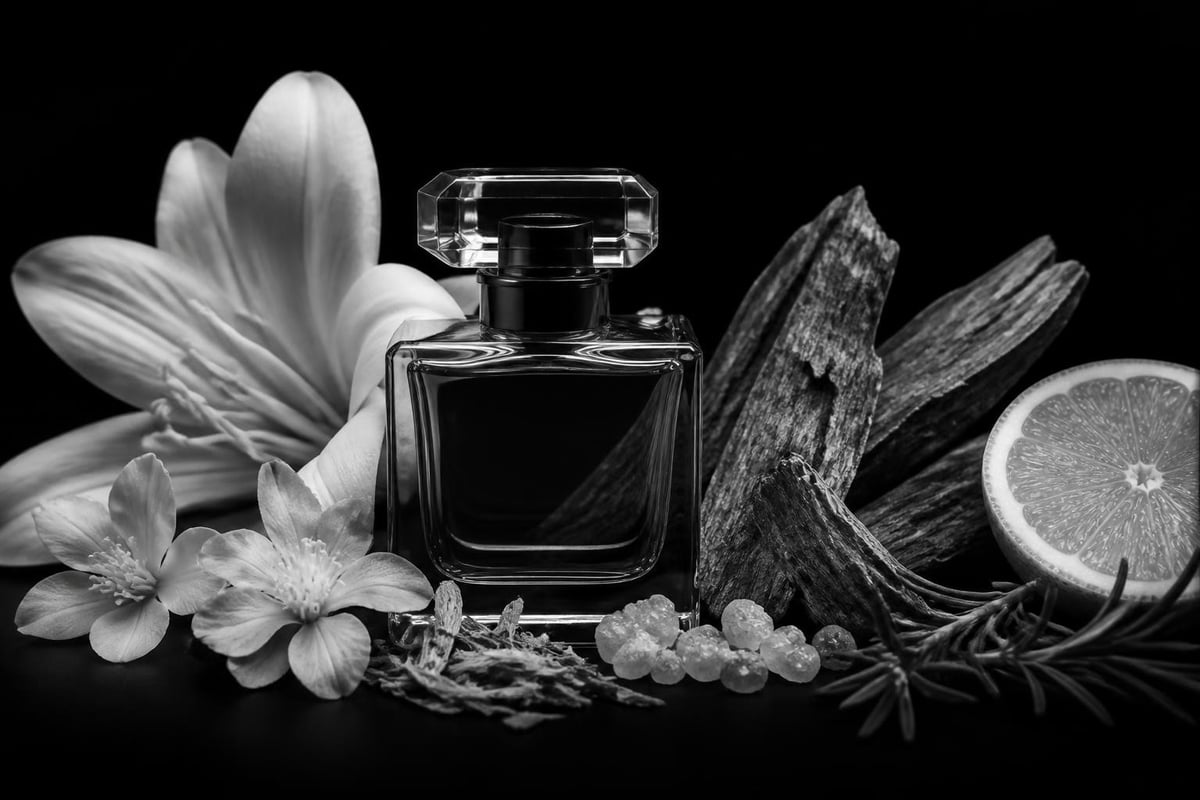
Woody families center on trees, bark, and earth-derived materials. They project grounding, sophisticated qualities that work across genders and occasions.
Fresh categories capture citrus, aquatic, and green notes that feel clean and invigorating. These scents typically read as casual and approachable, suitable for daytime wear.
How do subfamilies refine each scent category?
Within each major family, subfamilies provide nuance. Floral categories split into soft florals, floral orientals, and floral fresh variations. Woody families branch into mossy woods, dry woods, and aromatic woods.
These distinctions matter when you recognize patterns in your preferences. Someone drawn to floral scents might prefer the powdery softness of violet over the heady richness of tuberose. Both exist within the floral family, but the subfamilies clarify the difference.
Oriental scents divide into soft orientals, floral orientals, and woody orientals, each offering distinct temperature and texture. A soft oriental might feature vanilla and amber, while a woody oriental leans into patchouli and incense.
How does the fragrance wheel organize scent category relationships?
The fragrance wheel arranges families in a circular format that displays how categories blend into one another. Adjacent families share characteristics, while opposites on the wheel contrast sharply.
This visual tool helps predict which fragrances might appeal to you based on current preferences. If you favor fresh citrus scents, the wheel shows that aromatic or green families sit nearby, while heavy orientals occupy the opposite quadrant.
The wheel evolved from Michael Edwards' 1983 classification system, which sought to bring order to the expanding fragrance market. His framework remains the industry standard, though variations exist across different perfume houses and educators.
| Scent Category Position | Adjacent Families | Opposite Quadrant |
|---|---|---|
| Floral | Soft oriental, Fresh | Woody |
| Oriental | Floral, Woody | Fresh |
| Woody | Oriental, Aromatic | Soft floral |
| Fresh | Aromatic, Floral | Soft oriental |
Understanding the fragrance wheel's structure allows you to explore systematically rather than randomly. You can venture one family over from your comfort zone, testing adjacent categories before leaping to opposites.
Why does understanding scent category matter for botanical perfumes?
Botanical fragrances operate within the same classification framework, though their materials differ from synthetic compositions. Natural plant and resin extracts express these families through ingredients like citrus oils for fresh categories, tree resins for orientals, and wood essences for woody families.
The absence of synthetic aroma chemicals means botanical perfumes often present softer, more nuanced versions of their category. A natural floral reads differently than a synthetic one, with greater complexity and subtlety in its development.
Knowing your preferred scent category guides your exploration of botanical ingredients and formulations. If you gravitate toward woody families, you might seek out botanical perfumes featuring cedarwood, sandalwood, or vetiver as primary materials.

What role does personal chemistry play in scent category preferences?
Skin chemistry influences how a scent category expresses itself on your body. The same fragrance can read differently on two people due to pH levels, moisture content, and natural skin oils.
Botanical perfumes, particularly oil-based formulations, interact intimately with skin chemistry. They develop slowly, revealing layers as they warm on your pulse points. This makes testing essential, as a scent might belong to your preferred category but still not harmonize with your personal chemistry.
Temperature affects category perception as well. Woody and oriental families often feel more comfortable in cooler weather, while fresh and light floral categories suit warmer climates. Your environment becomes part of the equation when selecting within a scent category.
How do you identify your preferred scent category?
Start by examining fragrances you already own or consistently reach for. Look for patterns in their compositions and families. If multiple bottles share woody or fresh characteristics, you have identified a natural inclination.
Consider the scents that attract you in environments beyond perfume. Do you prefer the smell of cut grass, ocean air, or forest floors? These preferences often translate directly into scent category affinities.
Testing across families reveals boundaries and surprises. Visit a boutique specializing in botanical scents and request samples from different categories. Note which ones feel like home and which ones feel foreign or uncomfortable.
Can you appreciate multiple scent category families?
Most people develop preferences across several families rather than limiting themselves to one. You might favor fresh citrus for summer mornings, woody resins for winter evenings, and soft florals for spring afternoons.
Building a wardrobe of fragrances from different categories allows you to match scent to mood, season, and occasion. This approach treats fragrance as an expressive tool rather than a single signature.
The concept of a signature scent has shifted in recent years. Modern fragrance culture embraces variety and experimentation, encouraging exploration across the full spectrum of scent category options. This flexibility aligns well with botanical perfumery, which offers custom fragrance creation that can span multiple families.
What mistakes do people make when choosing by scent category?
Relying solely on category names without testing leads to mismatches. A fragrance might technically classify as floral but express that family in ways that do not resonate with your expectations or preferences.
Avoiding entire categories based on assumptions limits discovery. Many people dismiss oriental families as too heavy or woody families as too masculine, missing nuanced compositions that might surprise them.
Common category misconceptions include:
- Assuming all florals smell sweet or feminine
- Believing woody scents work only for men
- Thinking fresh categories lack sophistication
- Expecting oriental families to overwhelm
How fragrances organize within families reveals far more variation than these stereotypes suggest. Each category contains a range that spans from subtle to bold, simple to complex.
How do marketing descriptions align with actual scent category?
Brand descriptions sometimes emphasize romantic narratives over accurate category placement. A perfume marketed as "mysterious and seductive" might belong to any family, from fresh to oriental, depending on its actual composition.
Learning to read ingredient lists helps verify category claims. If a bottle lists citrus oils prominently, it likely sits in the fresh family regardless of how the marketing positions it. Resinous materials signal oriental leanings, while wood essences confirm woody classification.
Some fragrances intentionally blur category lines, creating hybrid compositions that draw from multiple families. These complex perfumes might anchor in one category while borrowing accents from others, making strict classification difficult but also more interesting.
How does scent category influence perfume longevity?
Different families demonstrate varying staying power due to their molecular structures. Oriental and woody categories typically last longer than fresh or light floral families because their heavier molecules evaporate more slowly.
Botanical perfumes in oil-based formulations extend longevity across all categories. Without alcohol to speed evaporation, even fresh botanical scents maintain presence longer than their synthetic counterparts. The oil base clings to skin, releasing aroma gradually throughout the day.
Base materials within each scent category determine staying power. Resins, woods, and heavy florals anchor compositions, while citrus and green notes dissipate quickly. A well-constructed fragrance balances top, heart, and base to create evolution over time.
| Scent Category | Typical Longevity | Botanical Oil Extension |
|---|---|---|
| Fresh citrus | 2-4 hours | 4-6 hours |
| Light floral | 3-5 hours | 5-7 hours |
| Woody | 6-8 hours | 8-10 hours |
| Oriental | 8-12 hours | 10-14 hours |
Selecting a base scent for your home or personal collection often means choosing a woody or oriental category for its persistence and grounding qualities.

What seasonal considerations affect scent category choices?
Temperature and humidity influence how fragrance families perform. Heavy oriental and woody categories can feel oppressive in summer heat, while light fresh families might disappear too quickly in winter cold.
Spring and fall offer the most flexibility, allowing you to wear fragrances from any category comfortably. These transitional seasons invite experimentation across the full range of families.
Seasonal scent category guidelines:
- Summer – Fresh, green, light floral, aquatic subcategories
- Fall – Woody, aromatic, spicy oriental transitions
- Winter – Deep oriental, resinous woody, heavy floral families
- Spring – Soft floral, citrus fresh, green aromatic blends
These are suggestions rather than rules. Personal preference and climate trump generalized seasonal recommendations. Someone in a tropical climate might wear fresh categories year-round, while someone in northern regions might prefer woody families even in summer.
How do different occasions call for different scent category selections?
Professional environments often favor woody, aromatic, or soft floral categories that project competence without overwhelming. Fresh categories work well for daytime casual settings, reading as approachable and clean.
Evening events accommodate richer oriental and deep floral families that would feel too heavy in office settings. The intimacy of dinner or theater allows heavier compositions to shine without imposing on others.
Active pursuits benefit from fresh or aromatic categories that complement rather than compete with physical exertion. Many people skip fragrance entirely for intense exercise, but light botanical scents in fresh families can enhance the experience without feeling cloying.
How can you layer scents across categories?
Layering fragrances from different families creates custom compositions that evolve throughout the day. Start with a woody or oriental base that provides longevity, then add fresh or floral accents for brightness and lift.
Botanical candles from different scent categories can establish environmental fragrance that complements your personal perfume. A woody candle in your space paired with a fresh personal scent creates interesting contrast and depth.
Some combinations work better than others. Fresh citrus layers well over woody bases, while oriental and fresh categories often clash. Testing combinations on your skin reveals which pairings harmonize with your chemistry.
Successful layering combinations:
- Woody base with fresh citrus top
- Soft oriental with light floral accent
- Green aromatic with woody anchor
- Resinous base with spicy oriental layer
The key to successful layering lies in balance. One scent should dominate while others provide supporting notes. Too many strong fragrances from different categories create confusion rather than complexity.
How do cultural preferences influence scent category popularity?
Geographic and cultural factors shape which families dominate regional markets. Middle Eastern consumers favor heavy oriental and oud-based compositions, while Scandinavian markets lean toward fresh and clean categories.
American preferences tend toward fresh, woody, and soft floral families, with full-bodied orientals occupying a smaller market share. These patterns shift over time as global influences blend and tastes evolve.
Understanding these tendencies helps explain why certain scent category families feel familiar or foreign. Your cultural background and exposure shape your baseline expectations for what fragrance should be.
Do gender associations still influence scent category marketing?
Traditional marketing positioned floral families as feminine and woody families as masculine, but contemporary fragrance culture increasingly rejects these limitations. Botanical perfumery especially tends toward gender-neutral positioning, focusing on scent character rather than demographic targeting.
Many people now select fragrances based solely on personal preference, ignoring gendered marketing entirely. The rise of niche and artisan perfumery, including botanical specialists, supports this shift by presenting scents as artistic expressions rather than gendered products.
Woody and fresh categories show the most crossover appeal, while certain floral and oriental subfamilies still carry gendered associations in mainstream marketing. Boutique brands often subvert these expectations deliberately.
What resources help you explore scent category classifications?
Fragrance databases and classification tools provide searchable interfaces for exploring families and subfamilies. These resources let you filter by category, view related fragrances, and understand how perfumers classify specific compositions.
Reading the fragrance wheel becomes easier with practice. Print versions serve as reference guides when shopping or organizing your collection. Some boutiques display wheels prominently to help customers navigate their offerings.
Sampling programs from botanical perfume houses allow systematic exploration across categories. Order discovery sets organized by family, testing each over several days to understand how they develop and interact with your skin chemistry.
Books on perfumery history and composition deepen understanding of how categories evolved and why certain materials traditionally associate with specific families. This knowledge enriches your appreciation even if you never create your own fragrances.
Can you trust online scent category classifications?
Database classifications vary in accuracy and detail. Some sites provide thorough analysis based on ingredient lists and expert assessment, while others rely on user submissions that may reflect personal interpretation more than objective categorization.
Cross-reference multiple sources when researching a specific fragrance's category. If three reputable sites classify it as woody oriental while one calls it fresh, trust the consensus. Just as jewelry buyers verify larimar jewelry authenticity through multiple indicators, fragrance research benefits from confirmation across sources.
Brand descriptions offer starting points but sometimes prioritize marketing over precision. A perfume house might describe their scent as "fresh and invigorating" when its composition actually sits firmly in the woody aromatic category. Ingredient lists provide more reliable category clues than promotional copy.
Frequently Asked Questions
What is the difference between a scent category and a fragrance note?
A scent category describes the overall family classification of a complete fragrance composition, while individual notes refer to specific aromatic ingredients within that composition. Categories organize complete perfumes into groups like floral or woody, whereas notes identify particular materials like rose or cedarwood that contribute to the overall scent profile.
How many scent category families should I explore before choosing favorites?
Test fragrances from at least three different scent category families before identifying preferences. This provides sufficient range to recognize patterns in what attracts or repels you. Many people discover unexpected affinities when they venture beyond initial assumptions about which categories might suit them.
Can a fragrance belong to multiple scent category families simultaneously?
Yes, complex fragrances often blend characteristics from multiple families, creating hybrid compositions. These might classify as floral oriental or woody aromatic, combining dominant traits from each category. The primary family usually determines overall classification, while secondary families describe supporting characteristics that add depth and complexity.
Do botanical perfumes fit standard scent category classifications differently than synthetic fragrances?
Botanical perfumes align with the same scent category framework but express families through natural plant and resin extracts rather than synthetic molecules. The classifications remain consistent, though botanical versions often present softer, more nuanced interpretations of each family. Natural materials create complexity that develops differently on skin compared to synthetic compositions.
How often do scent category preferences change over time?
Scent category preferences evolve gradually as your palate develops and life circumstances shift. Many people maintain core family affinities while expanding into adjacent categories over years. Significant life changes, relocations, or deliberate exploration can accelerate preference shifts, but most evolution happens slowly through continued exposure and experimentation.
What role does concentration play in how a scent category expresses itself?
Concentration affects intensity and longevity more than fundamental category classification. An oriental perfume remains oriental whether formulated as eau de parfum or perfume oil, though higher concentrations emphasize base materials and extend wearing time. Oil-based botanical formulations showcase category characteristics with particular clarity due to their concentrated nature and slow evaporation.
Understanding scent category systems transforms fragrance selection from overwhelming guesswork into guided exploration. These classifications reveal patterns in your preferences and open pathways to discovering botanical compositions that resonate with your aesthetic and sensory inclinations. Whether you favor fresh citrus territories, grounding woody families, or opulent oriental expressions, knowing how fragrances organize helps you navigate choices with confidence. Haus of Smell offers handcrafted botanical perfumes across multiple scent families, each formulated with natural plant and resin extracts in Manhattan to help you discover which categories speak to your personal style.