
Manhattan offers over 200 perfume retailers across its neighborhoods, from department store counters to independent botanical boutiques. The best perfume store manhattan options for natural, vegan fragrances cluster in NoMad, SoHo, and the West Village, where small-batch makers emphasize transparency and handcrafted quality over mass-market synthetic blends.
The city's fragrance retail landscape has shifted dramatically in recent years. Where synthetic designer scents once dominated every counter, a growing number of specialty shops now prioritize botanical ingredients, ethical sourcing, and direct customer education. This transformation reflects broader consumer demand for transparency and wellness-oriented products across personal care categories.
What makes a perfume store Manhattan worth visiting?
A perfume store manhattan earns attention when it offers expertise, product transparency, and an experience beyond transactional retail. The best shops provide ingredient education, allow extended scent testing without pressure, and staff who understand fragrance composition rather than simply pushing inventory. Location matters less than the knowledge and quality a shop brings to each customer interaction.
Retail footfall data from Cushman & Wakefield's Manhattan MarketBeat shows that smaller boutiques in mixed-use neighborhoods often provide more intimate shopping experiences than high-traffic corridors. Customers spend longer in-store when they can ask questions, test products without time limits, and receive personalized guidance.
Three factors distinguish exceptional fragrance retailers:
- Ingredient transparency: Clear labeling of synthetic versus natural components, allergen information, and sourcing details
- Education-first approach: Staff trained in fragrance families, extraction methods, and skin chemistry rather than commission-driven sales tactics
- Testing flexibility: Sample programs, discovery sets, or the ability to wear scents for hours before purchasing
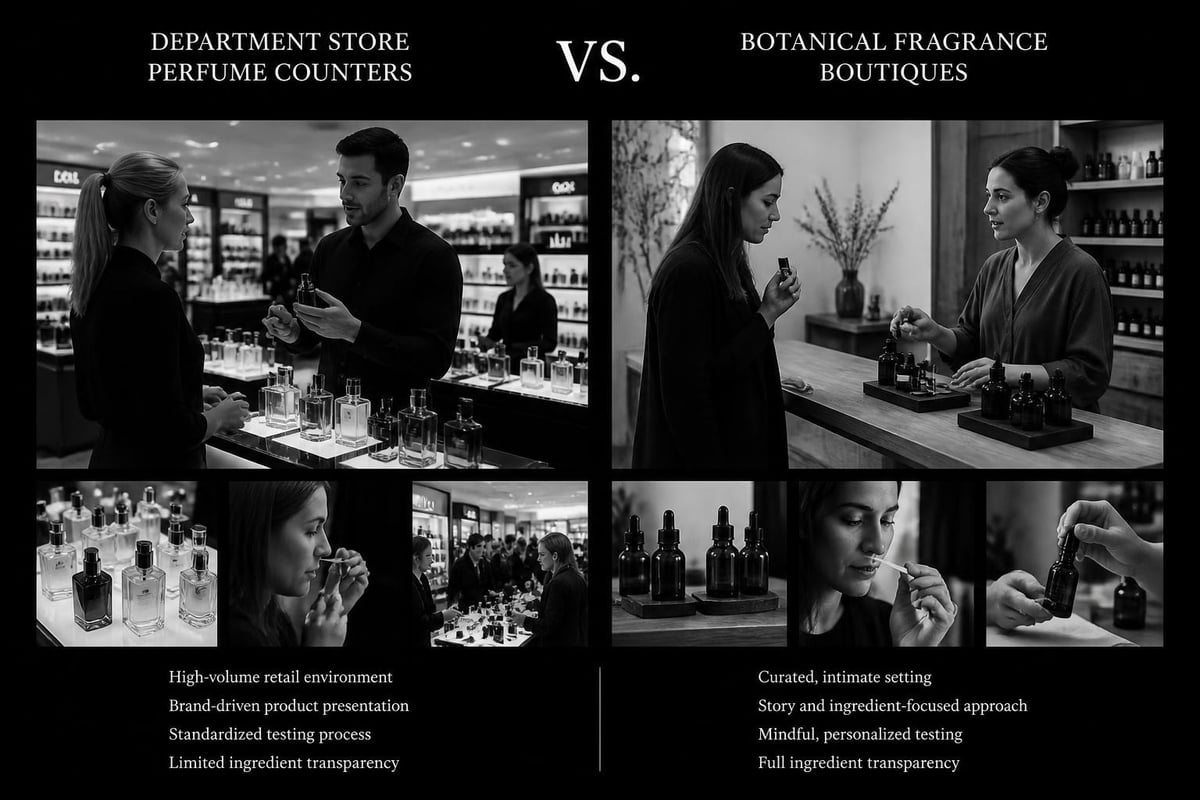
The traditional department store model prioritizes volume and brand partnerships. Independent boutiques, particularly those focusing on botanical scents, build loyalty through expertise and product integrity.
Where do Manhattan's best natural perfume shops cluster?
NoMad, SoHo, the West Village, and parts of the Lower East Side concentrate the highest density of independent fragrance retailers emphasizing natural and botanical formulations. These neighborhoods combine residential populations with tourist foot traffic while maintaining lower rents than Fifth Avenue or Madison Avenue, allowing smaller brands to sustain physical retail presence.
According to the Real Estate Board of New York's Manhattan retail analysis, these districts show steady leasing activity for specialty retail despite broader market pressures. The retail mix supports experiential shopping rather than pure convenience.
| Neighborhood | Retail Character | Perfume Store Focus | Customer Base |
|---|---|---|---|
| NoMad | Mixed residential/commercial | Artisan, small-batch, workshop-integrated | Local professionals, wellness-focused shoppers |
| SoHo | High tourism, brand-heavy | Niche boutiques alongside major labels | Tourists, design-conscious locals |
| West Village | Residential, lower foot traffic | Established independents, curated selection | Neighborhood regulars, intentional shoppers |
| Lower East Side | Emerging creative corridor | Experimental, maker-focused | Younger demographic, early adopters |
Each district offers different advantages. SoHo provides visibility but demands higher price points to offset rent. The West Village sustains quieter shops with loyal customer bases. NoMad balances accessibility with a creative retail environment that supports product education and customer workshops.
How do you choose between department stores and independent perfume retailers?
Choose independent perfume retailers when you prioritize ingredient transparency, educational experiences, and direct access to makers. Department stores serve customers seeking established designer brands, gift sets, or the convenience of testing multiple mainstream labels in one location. The decision hinges on whether you value product knowledge and natural formulations over brand recognition and discounting.
Department store counters operate on commission structures that incentivize volume sales. Staff receive training on brand marketing messages rather than ingredient chemistry or extraction processes. Return policies tend to be more flexible, but product selection skews heavily toward synthetic formulations and alcohol-based sprays.
Independent perfume stores, particularly those specializing in botanical fragrances, invest in staff education and allow customers to explore scent at their own pace. Many offer sample programs or smaller discovery sizes. The trade-off involves narrower selection within specific fragrance philosophies.
What questions should you ask at any perfume store Manhattan location?
Every perfume store manhattan visit should include questions about ingredients, formulation methods, and longevity expectations. Ask whether fragrances contain synthetic components, how long they typically last on skin, and whether alcohol or oil forms the base. Request information about potential allergens and whether the shop offers samples or return options.
Effective questions include:
- What percentage of ingredients are natural versus synthetic? This reveals formulation philosophy and transparency.
- Is the base alcohol or oil? Oil-based perfumes perform differently on skin and often suit sensitive skin better.
- Do you offer samples or discovery sets? This indicates confidence in product quality and customer-first policies.
- What's the return or exchange policy? Important for expensive purchases or gift-giving.
- Can you explain the difference between your fragrance families? Tests staff knowledge and educational commitment.
Shops unable or unwilling to answer these questions clearly likely prioritize sales over service. The best retailers welcome detailed inquiries and provide ingredient lists without hesitation.
What should you expect to pay at Manhattan perfume stores?
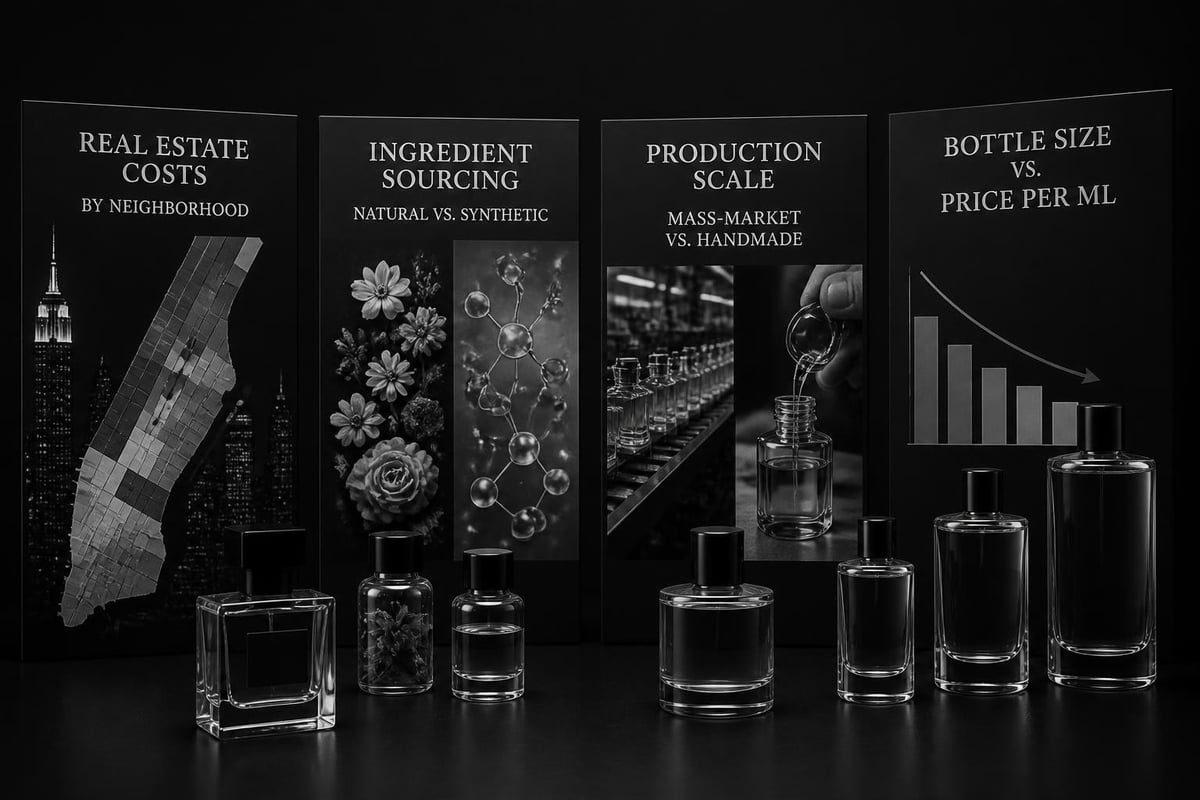
Manhattan perfume prices range from forty dollars for small-batch botanical oils to over three hundred dollars for niche or designer bottles. Independent botanical perfume stores typically price handmade, natural fragrances between seventy and one hundred fifty dollars for standard sizes. Location, ingredient sourcing, and production scale all influence final cost more than brand prestige.
JLL's analysis of prime urban retail corridors demonstrates how Manhattan rents directly impact retail pricing. Stores on Fifth Avenue or in premium shopping districts pass real estate costs to customers through higher margins.
Botanical and natural perfumes command premium pricing due to ingredient costs and small production batches. Real plant extracts and essential oils cost significantly more than synthetic alternatives. Handmade production in Manhattan adds labor costs that mass manufacturing avoids.
Price comparison across perfume categories:
| Category | Typical Price Range | Volume | Notes |
|---|---|---|---|
| Mass-market synthetic | $40–$90 | 50–100ml | Department stores, alcohol-based |
| Designer prestige | $100–$200 | 50–75ml | Brand premium, mixed natural/synthetic |
| Niche/indie synthetic | $150–$300 | 30–50ml | Small brands, artistic direction |
| Botanical/natural | $70–$150 | 15–30ml | Higher ingredient costs, oil or alcohol base |
| Custom/bespoke | $100–$250 | Variable | Consultation included, unique formulation |
Price per milliliter often favors smaller botanical producers when accounting for ingredient quality. A thirty-milliliter botanical oil at ninety dollars costs three dollars per milliliter, comparable to many designer fragrances when adjusted for concentration and purity.
Are natural perfumes worth the premium price?
Natural perfumes justify premium pricing through ingredient quality, absence of synthetic chemicals, and often superior skin compatibility. Customers seeking vegan, alcohol-free, or hypoallergenic options find value beyond simple scent. The price reflects real material costs rather than marketing budgets or celebrity endorsements.
Synthetic fragrances achieve consistent scent profiles and projection at lower production costs. Natural botanical perfumes offer complexity that evolves on skin as different plant compounds interact with body chemistry. Neither approach is inherently superior, but they serve different customer priorities.
For those exploring natural alternatives, European brands like Sober Berlin have built reputations around vegan, clean formulations that prioritize ingredient integrity, demonstrating growing international demand for transparent fragrance products.
How do you test perfumes properly in a Manhattan store?
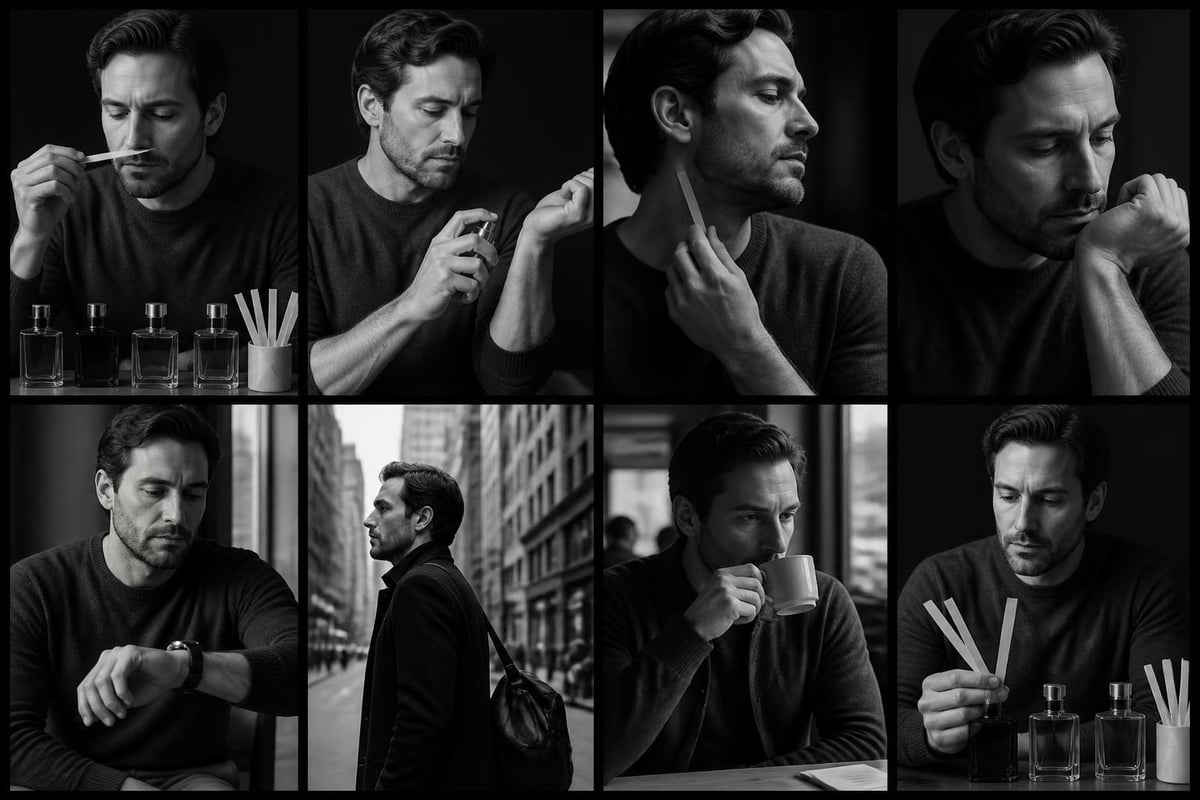
Test perfumes by applying small amounts to pulse points, waiting at least fifteen minutes for initial alcohol evaporation, and wearing scents for several hours before deciding. Limit testing to three fragrances per visit to avoid olfactory fatigue. Request samples or return later rather than rushing decisions during a single store visit.
Many shoppers make purchasing mistakes by smelling directly from bottles or testing too many options simultaneously. Fragrance develops in stages, and true character emerges only after settling on skin for thirty minutes to two hours.
Professional testing protocol:
- Start with blotters or test strips to eliminate obvious mismatches without committing skin space
- Apply chosen finalists to different pulse points (inner wrists, inner elbows, or behind ears)
- Leave the store and continue your day to experience how scent develops in various environments
- Smell periodically over four to six hours to track how fragrance evolves
- Note which scents you still enjoy after several hours rather than initial impression alone
Staff at quality perfume stores encourage this methodical approach. Shops that pressure immediate purchases or discourage sampling likely prioritize sales velocity over customer satisfaction.
What time of day offers the best perfume shopping experience?
Weekday mornings between ten and noon provide the optimal perfume shopping window in Manhattan. Stores are less crowded, staff have more time for individual attention, and your nose is fresh and sensitive. Avoid late afternoons when olfactory fatigue sets in naturally, and weekends when tourist crowds limit personalized service.
The Mintel fragrance trends report highlights that experiential retail succeeds when customers receive adequate time and attention. Rushing through fragrance selection in crowded conditions leads to dissatisfaction and returns.
Early visits also allow you to wear test scents throughout the day while conducting normal activities. This reveals how fragrances perform during work meetings, subway commutes, or evening social situations rather than just in controlled retail environments.
What makes botanical perfume stores different from mainstream retailers?
Botanical perfume stores differentiate through ingredient sourcing, formulation transparency, and education-focused customer service. These shops prioritize plant-based extracts, essential oils, and natural resins over synthetic aroma chemicals. Staff understand extraction methods, ingredient origins, and how different botanical components interact rather than simply merchandising brand stories.
The philosophical difference extends beyond ingredients to entire business models. Botanical specialists often make products in-house or work directly with small producers. This allows detailed ingredient conversations and customization options unavailable at conventional retailers.
For instance, Haus of Smell's custom botanical perfume service allows customers to choose from 212 botanical scents handmade in Manhattan, offering personalization that department store counters cannot match. This made-to-order approach prioritizes individual preference over inventory turnover.
Botanical retailers also address growing customer concerns about synthetic chemicals and sustainability. IFRA guidance documents establish safety standards for both natural and synthetic ingredients, but many customers prefer to minimize synthetic exposure regardless of regulatory approval.
Do botanical perfumes last as long as synthetic fragrances?
Botanical perfumes in oil bases often provide comparable or superior longevity to alcohol-based synthetic fragrances, though projection differs. Oil-based formulations sit closer to skin and release scent gradually through body heat. Alcohol sprays project more initially but evaporate faster, particularly the synthetic top notes engineered for immediate impact.
Longevity depends on multiple factors beyond natural versus synthetic composition. Skin type, climate, application amount, and specific botanical ingredients all influence duration. Some plant extracts like resins and woods anchor scent for eight to twelve hours, while citrus and light florals fade within two to four hours regardless of source.
Customer expectations also matter. Synthetic fragrances train noses to expect consistent, loud projection. Botanical perfumes reward close-range appreciation and evolve noticeably over hours as different plant compounds become prominent at different rates.
Where can you find vegan perfume options in Manhattan?
Vegan perfume options concentrate in independent perfume stores throughout Manhattan, particularly in NoMad, the West Village, and parts of Brooklyn accessible via subway. These shops avoid animal-derived ingredients like musk, ambergris, castoreum, and civet, relying instead on plant-based alternatives. Most botanical perfume specialists maintain fully vegan inventories as a baseline rather than offering vegan options alongside conventional formulations.
Identifying vegan perfumes requires checking ingredient lists carefully. Some natural perfumes still incorporate beeswax, honey, or animal musks. Shops committed to vegan formulations display certifications clearly and train staff to explain ingredient sourcing.
The Fragrance Foundation's trend analysis identifies vegan and clean beauty as sustained growth categories through 2026 and beyond. Consumer demand continues pushing mainstream brands toward vegan options, but independent makers led this shift years earlier.
How do you verify a perfume is truly natural and vegan?
Verify natural and vegan claims by requesting complete ingredient lists, checking for third-party certifications, and researching specific components. Legitimate botanical perfume makers provide transparent documentation without hesitation. Be wary of vague terms like "natural fragrance" or "botanical blend" without detailed breakdowns, as these may mask synthetic components.
Key verification steps:
- Request full ingredient disclosure: Every component should be listed, not hidden behind proprietary claims
- Look for specific certifications: Leaping Bunny, Vegan Society, or USDA Organic where applicable
- Research unfamiliar ingredients: Some technical names describe plant extracts; others indicate synthetics
- Ask about extraction methods: CO2 extraction, steam distillation, and cold pressing indicate natural processing
- Inquire about preservatives and carriers: Even natural perfumes need stabilizers; ensure these are also plant-derived
Reputable shops welcome these questions and often provide educational materials explaining their sourcing and production processes. Evasive or defensive responses suggest claims may not withstand scrutiny.
What role do perfume workshops play in Manhattan's fragrance scene?
Perfume workshops transform retail experiences from transactional to educational, allowing customers to understand fragrance construction while creating personalized scents. Manhattan hosts numerous workshop options ranging from single-session introductions to multi-week certification courses. These hands-on experiences build customer loyalty and deepen appreciation for natural ingredients and blending complexity.
Workshops serve multiple purposes for both retailers and customers. Participants learn to identify botanical ingredients, understand fragrance structure, and develop vocabulary for describing scents. Retailers benefit from deeper customer relationships and direct feedback on ingredient preferences.
The experiential retail trend documented across Manhattan's retail corridors shows that customers increasingly value experiences over pure product acquisition. Workshops convert fragrance shopping from a quick transaction to a memorable activity worth sharing and repeating.
Workshop formats vary considerably:
| Workshop Type | Duration | Typical Cost | Outcome |
|---|---|---|---|
| Intro session | 60–90 minutes | $50–$85 | Sample creation, basic education |
| Custom perfume | 90–120 minutes | $95–$175 | Full-size personalized fragrance |
| Multi-week course | 6–8 sessions | $400–$800 | Comprehensive blending skills |
| Private group | 2–3 hours | $500–$1200 | Team building, special events |
These experiences particularly appeal to locals seeking unique activities and tourists wanting memorable New York experiences beyond standard sightseeing. The educational component justifies premium pricing while creating brand ambassadors who understand product value.
Can you create custom fragrances at Manhattan perfume stores?
Many independent Manhattan perfume stores offer custom fragrance creation through guided consultations, blending workshops, or made-to-order services. The process typically involves scent preference discussions, testing botanical options, and creating unique blends matched to individual chemistry and lifestyle. Custom services range from choosing pre-made accords to fully bespoke formulations developed over multiple sessions.
Custom perfume creation requires time and expertise that department stores cannot provide. Independent boutiques structure these services as premium offerings, charging for consultation time and specialized ingredients beyond standard retail markups.
The customization spectrum includes several approaches. Some shops offer pre-blended bases that customers modify with accent ingredients. Others provide complete creative freedom within their botanical ingredient inventory. The most elaborate services develop entirely unique formulations through extended consultation processes.
How has Manhattan's perfume retail landscape changed recently?
Manhattan's perfume retail landscape has shifted toward smaller independent boutiques emphasizing natural ingredients, transparency, and experiential shopping while department store fragrance counters contract. Between 2022 and 2026, over a dozen botanical and niche perfume specialists opened in NoMad, the West Village, and downtown neighborhoods. This growth reflects consumer preferences for authenticity, wellness-oriented products, and shopping experiences that educate rather than simply sell.
Department stores reduced fragrance counter footprints as customers migrated to online purchasing for mainstream brands. The counters that remain focus on exclusive launches and gift sets during holiday periods. Independent retailers fill the gap by offering products and expertise unavailable through conventional channels.
This evolution mirrors broader retail trends favoring specialized knowledge over broad inventory. Customers willing to visit physical stores seek expertise, discovery, and experiences that justify leaving home. Generic product selection available online holds less appeal than curated collections with knowledgeable staff guidance.
Why are customers choosing botanical perfumes over designer brands?
Customers choose botanical perfumes for ingredient transparency, vegan formulations, skin sensitivity considerations, and desire for unique scents unavailable in mass-market channels. Growing awareness of synthetic chemical exposure drives wellness-conscious consumers toward natural alternatives. Additionally, botanical perfumes offer distinctiveness that counters the ubiquity of designer fragrances worn by millions globally.
The decision often reflects values beyond mere scent preference. Customers prioritizing sustainability, ethical sourcing, and small-business support find these values embedded in botanical perfume brands. Designer fragrances prioritize marketing budgets and celebrity partnerships over ingredient quality or production ethics.
Botanical specialists also provide personalization options that mass-market brands cannot match. When perfumes are handmade in small batches, customer input and customization become feasible in ways impossible for industrial production.
Frequently Asked Questions
What are the best neighborhoods for perfume shopping in Manhattan?
NoMad, SoHo, and the West Village offer the highest concentration of independent perfume stores emphasizing botanical and natural formulations. These neighborhoods balance residential populations with tourist traffic while maintaining diverse retail mixes that support specialized boutiques. NoMad particularly concentrates makers who produce on-site and offer workshops alongside retail.
How much should you budget for natural perfume in Manhattan?
Budget between seventy and one hundred fifty dollars for quality botanical perfumes in Manhattan, with custom or bespoke options ranging from one hundred to two hundred fifty dollars. Smaller discovery sizes or sample sets start around thirty to fifty dollars. Natural ingredients and small-batch production justify higher prices compared to mass-market synthetic fragrances.
Do Manhattan perfume stores offer samples before purchasing?
Most independent Manhattan perfume stores provide samples, discovery sets, or generous return policies to ensure customer satisfaction before full-size purchases. Department stores offer samples less consistently. When shopping for botanical or natural perfumes, request samples to test longevity and skin compatibility over several days before committing to full bottles.
What makes oil-based perfumes different from alcohol-based sprays?
Oil-based perfumes absorb into skin and release scent gradually through body heat, providing intimate projection and extended longevity. Alcohol-based sprays evaporate quickly, creating immediate projection but fading faster. Oil formulations suit sensitive skin better and avoid the drying effects of alcohol, though they require direct skin application rather than spraying.
Can you return perfume purchases in Manhattan stores?
Return policies vary significantly between Manhattan perfume retailers, with independent boutiques generally offering more flexible exchanges than department stores for opened fragrances. Always clarify return terms before purchasing, especially for expensive bottles. Some shops offer store credit for opened products, while others maintain strict no-return policies on used items.
Are perfume workshops in Manhattan suitable for beginners?
Manhattan perfume workshops welcome beginners and require no prior fragrance knowledge or experience. Introductory sessions teach basic scent families, blending principles, and ingredient identification through hands-on creation. Staff guide participants through the entire process, making workshops accessible to anyone curious about fragrance regardless of expertise level.
Manhattan's perfume retail landscape rewards shoppers who prioritize ingredient quality, educational experiences, and personalized service over brand recognition and convenience. Independent botanical specialists offer transparency and expertise that transform fragrance shopping from transaction to discovery. Whether you seek vegan formulations, custom creations, or simply deeper understanding of what you wear daily, exploring the city's diverse perfume stores reveals options far beyond department store counters. For handmade botanical perfumes crafted in Manhattan with complete ingredient transparency and customization options, visit Haus of Smell to experience fragrance retail that educates, personalizes, and prioritizes natural ingredients above all else.