
Perfume natural scent refers to fragrance compositions created exclusively from botanical materials such as plant extracts, resins, essential oils, and absolutes, without any synthetic compounds or alcohol-based carriers. These scents derive their aromatic profile directly from flowers, woods, roots, leaves, and tree resins, offering a connection to the natural world that synthetic alternatives cannot replicate.
The distinction between natural and synthetic scents has become increasingly important to consumers who seek transparency in their personal care products. While conventional fragrances dominate the market with their cost-efficiency and consistency, a growing number of people are turning toward botanical alternatives that align with their values around health, sustainability, and authenticity. This shift reflects broader consumer trends favoring clean beauty and plant-based formulations.
What Makes a Perfume Natural Scent Different from Synthetic Fragrances
A perfume natural scent derives entirely from botanical sources without laboratory-created molecules, while synthetic fragrances use chemically manufactured compounds to replicate or create scent profiles. The fundamental difference lies in the source material and extraction method.
Natural perfumes rely on traditional extraction techniques that preserve the complex molecular structures found in plants. These methods include steam distillation, cold pressing, CO2 extraction, and solvent extraction. Each technique captures different aromatic compounds from the source material, resulting in a multi-dimensional scent profile.
Synthetic fragrances, by contrast, use isolated aroma chemicals or entirely artificial molecules created in laboratories. These compounds can be derived from petrochemicals or created through chemical synthesis. While synthetics offer consistency and cost advantages, they lack the nuanced complexity found in botanical extracts.
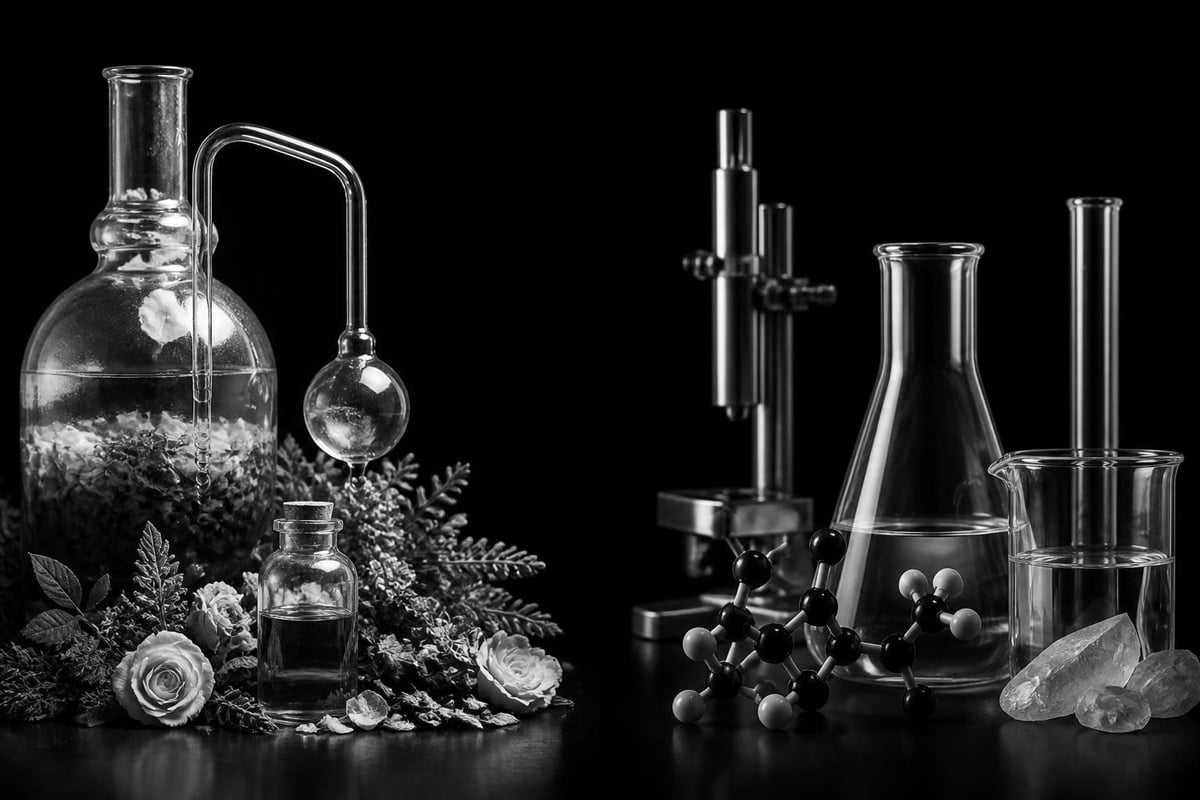
The molecular complexity of natural materials means they contain hundreds or thousands of aromatic compounds working together. A single rose absolute might contain over 400 different molecules, each contributing to the overall scent impression. This complexity creates depth and evolution that single synthetic molecules cannot achieve alone.
How Botanical Sources Create Unique Scent Profiles
Natural perfume materials come from diverse plant parts, each offering distinct aromatic characteristics. Flowers provide delicate, often sweet notes through absolutes and essential oils. Woods contribute grounding, warm tones through distillation or CO2 extraction. Resins offer rich, complex aromas that have been valued in perfumery for thousands of years.
The terroir of botanical materials affects their scent profile significantly. Climate, soil composition, rainfall, and harvesting time all influence the aromatic compounds present in plant materials. This variability creates uniqueness but also presents challenges for perfumers seeking consistency.
| Material Type | Common Sources | Extraction Method | Scent Character |
|---|---|---|---|
| Floral Absolutes | Jasmine, Rose, Tuberose | Solvent Extraction | Rich, Deep, Complex |
| Citrus Oils | Bergamot, Lemon, Orange | Cold Pressing | Fresh, Bright, Uplifting |
| Woody Oils | Cedarwood, Sandalwood, Vetiver | Steam Distillation | Warm, Grounding, Lasting |
| Resins | Frankincense, Myrrh, Benzoin | Steam or Solvent | Deep, Spiritual, Anchoring |
For those interested in exploring botanical ingredients used in natural perfumery, understanding these source materials provides context for how complex scents are constructed.
Why Do People Choose Perfume Natural Scent Over Conventional Options
People choose perfume natural scent primarily for health considerations, ingredient transparency, aromatherapeutic benefits, and environmental values. The absence of synthetic chemicals appeals to those with sensitivities or those seeking cleaner personal care products.
Health-conscious consumers increasingly scrutinize ingredient lists in all personal care products. Synthetic fragrances often appear simply as "fragrance" or "parfum" on labels, which can mask dozens or hundreds of undisclosed chemicals. Natural perfumes offer complete transparency, with each botanical component identifiable and traceable.
Many individuals experience sensitivity to synthetic fragrance compounds, reporting headaches, respiratory irritation, or skin reactions. Natural perfumes using plant-based ingredients often prove gentler for those with such sensitivities, though individual responses vary depending on specific plant materials.
The aromatherapeutic dimension of botanical scents adds functional benefits beyond simple fragrance. Essential oils and plant extracts carry therapeutic properties that have been recognized across cultures for millennia. While wearing perfume differs from clinical aromatherapy, the presence of these compounds can influence mood and wellbeing.
Environmental and Ethical Considerations
Environmental impact drives many consumers toward natural perfumes. Synthetic fragrance production relies on petrochemical processing, which carries a substantial carbon footprint and generates chemical waste. Botanical materials, when sourced responsibly, offer renewable alternatives with lower environmental impact.
The sustainability conversation extends to sourcing practices. Ethical natural perfumers prioritize sustainable harvesting, fair trade relationships with growers, and support for biodiversity. This contrasts with the industrial scale of synthetic production, which concentrates manufacturing in chemical facilities.
Vegan consumers find natural perfumes particularly appealing when formulated without animal-derived materials. Traditional perfumery historically used animal musks, civet, and ambergris. Modern botanical perfumery creates entirely plant-based compositions, eliminating ethical concerns around animal welfare.
How Does Perfume Natural Scent Perform Compared to Synthetic Alternatives
Perfume natural scent typically offers shorter wear time than synthetic alternatives but provides more complex scent evolution and a closer-to-skin presence. Performance differences reflect the fundamental chemistry of natural versus synthetic materials.
Longevity represents the most common concern about natural perfumes. Synthetic musks and fixatives can last 12-24 hours on skin, while natural perfumes might offer 4-8 hours depending on composition and carrier. This difference stems from molecular weight and volatility.
However, longevity alone does not define performance quality. Natural perfumes evolve on skin in ways synthetics cannot replicate. The hundreds of aromatic compounds interact with body chemistry, creating a personalized scent experience that shifts throughout the wear.
Key Performance Characteristics:
- Sillage tends to be softer and more intimate with natural perfumes
- Scent evolution shows more pronounced stages as different compounds volatilize
- Skin chemistry interaction creates greater individual variation
- Reapplication may be necessary for all-day wear
- Oil-based formulations last longer than alcohol-based naturals
The comparison between natural and synthetic ingredients reveals trade-offs in performance, cost, and sensory experience. Neither category is categorically superior; rather, they serve different preferences and priorities.
Understanding Carrier Systems in Natural Perfumery
Carrier choice significantly impacts performance in natural perfumes. While conventional perfumes use alcohol as a carrier, many natural perfumes employ oil-based systems that interact differently with skin.
Oil-based carriers like jojoba, fractionated coconut oil, or grapeseed oil provide several advantages for botanical scents. They slow evaporation, extending wear time for volatile top notes. They nourish skin while delivering fragrance. They eliminate the need for alcohol, which some users find drying or irritating.
The absence of alcohol creates a different scent experience. Alcohol-based perfumes project intensely upon application as alcohol evaporates rapidly, dispersing fragrance molecules into the air. Oil-based perfumes develop more gradually, warming on skin and releasing scent at a gentler pace.
What Are the Economic and Practical Realities of Natural Perfumes
Natural perfumes cost more than synthetic alternatives due to raw material expenses, labor-intensive production, and lower economies of scale. Understanding these economic factors helps consumers appreciate pricing differences.
Raw material costs drive pricing in natural perfumery. A kilogram of synthetic vanillin might cost less than ten dollars, while a kilogram of natural vanilla absolute can exceed one thousand dollars. Rose absolute, jasmine absolute, and aged resins command premium prices reflecting cultivation, harvesting, and extraction labor.
Production scale affects pricing structure significantly. Synthetic perfume ingredients benefit from industrial manufacturing volumes, reducing per-unit costs. Natural perfumes often come from small-batch artisans who cannot achieve similar economies of scale.
Cost Factors in Natural Perfume:
- Raw botanical material procurement and quality verification
- Traditional extraction processes requiring specialized equipment and expertise
- Longer aging periods for optimal scent development
- Smaller production runs increasing per-unit overhead
- Sustainable and ethical sourcing certifications
- Artisan labor for formulation and hand-crafting
For brands like Haus of Smell, handmade production in Manhattan reflects a commitment to quality and craftsmanship that requires appropriate pricing to sustain. Those interested in experiencing this approach can explore botanical eau de parfum offerings that showcase oil-based formulations.
Shelf Life and Storage Considerations
Natural perfumes require different storage practices than synthetic alternatives. Without preservatives common in conventional products, botanical scents remain vulnerable to oxidation, heat, and light exposure.
Proper storage extends the life of natural perfumes significantly. Dark glass bottles protect light-sensitive compounds. Cool storage slows oxidation processes. Tight seals prevent volatile compounds from evaporating and keep oxygen exposure minimal.
| Storage Factor | Impact on Natural Perfume | Best Practice |
|---|---|---|
| Light Exposure | Degrades photosensitive compounds | Dark glass bottles, drawer storage |
| Temperature | Accelerates oxidation above 70°F | Cool, consistent temperature |
| Oxygen | Oxidizes delicate materials | Minimal headspace, tight closures |
| Humidity | Can affect oil-based formulations | Dry storage environment |
Expected shelf life for well-stored natural perfumes typically ranges from one to three years, depending on composition. Citrus-heavy blends oxidize faster than resin-rich compositions. Regular users who apply perfume daily will likely use products well before degradation becomes noticeable.
How Is the Natural Perfume Market Evolving in 2026
The natural perfume market is experiencing accelerated growth in 2026, driven by consumer demand for transparency, wellness-oriented products, and sustainable luxury. Market dynamics reflect broader shifts in personal care and beauty industries.
Industry analysis shows the natural fragrance market expanding significantly, with projections indicating continued growth through the next decade. This expansion reflects not just niche interest but mainstream adoption of natural alternatives.
Consumer demographics for natural perfumes have broadened beyond early adopters. While the category initially attracted primarily health-conscious and environmentally aware consumers, appeal now extends to luxury seekers, wellness enthusiasts, and those exploring scent categories beyond conventional department store offerings.
Innovation in Natural Perfumery Techniques
Technical innovation continues advancing what is possible within natural perfumery constraints. New extraction methods preserve delicate aromatic compounds previously lost in traditional processes. CO2 extraction has become more accessible, offering supercritical extraction that captures fuller scent profiles without solvent residues.
Perfumers are also exploring unconventional botanical sources, moving beyond classic florals and woods. Seaweed, mushroom extracts, and unusual roots expand the available palette. These materials create novel scent experiences while maintaining natural credentials.
The concept of terroir in perfumery gains recognition parallel to wine and coffee industries. Consumers increasingly appreciate how growing conditions affect aromatic profiles. This awareness supports premium pricing for single-origin materials and vintage extracts.
Understanding cultural evolution of perfumes provides historical context for current trends toward natural complexity and away from monolithic synthetic compositions.
What Should You Know Before Purchasing Natural Perfumes
Before purchasing natural perfumes, understand that scent will vary between batches, longevity differs from synthetics, and skin chemistry significantly affects how fragrances develop. These factors require adjusted expectations compared to conventional perfume shopping.
Testing on skin remains essential because natural perfumes interact with individual body chemistry more variably than synthetics. A scent that smells appealing on a friend may develop entirely differently on your skin. Temperature, pH, diet, and even medication can influence how botanical compounds evolve.
Pre-Purchase Considerations:
- Request samples when possible to test wear time and evolution
- Apply to pulse points and allow full dry-down before evaluating
- Consider seasonal appropriateness of different scent profiles
- Understand ingredient sourcing and production methods
- Verify vegan and cruelty-free certifications if important to you
- Ask about carrier type (oil versus alcohol) and how it affects wear
Batch variation in natural perfumes differs from synthetic consistency. Two bottles from different production runs may show subtle differences reflecting harvest variations in raw materials. Many consumers appreciate this artisanal quality, while others prefer standardized consistency.
The journal section of specialized natural perfume retailers often provides educational content helping consumers understand what to expect from botanical scents.
Reading and Understanding Natural Perfume Compositions
Natural perfume descriptions typically list botanical ingredients rather than abstract fragrance families. Understanding key organic ingredients helps decode these compositions and predict scent profiles.
Perfume structures traditionally divide into top, heart, and base notes, a framework that applies to natural perfumes as well. Top notes provide initial impression but evaporate quickly. Heart notes form the main character. Base notes provide depth and longevity.
In natural compositions, citrus and light florals typically serve as top notes. More substantial florals, spices, and green materials form heart notes. Woods, resins, and roots anchor compositions as base notes. This structure helps predict how a perfume will evolve over hours of wear.
Frequently Asked Questions
How long does perfume natural scent typically last on skin
Natural perfume typically lasts four to eight hours on skin, varying based on composition, carrier type, and individual skin chemistry. Oil-based formulations generally last longer than alcohol-based natural perfumes, with resin-rich compositions showing the best longevity. Synthetic perfumes often last longer due to synthetic musks and fixatives.
Can natural perfumes cause allergic reactions like synthetic fragrances
Natural perfumes can cause allergic reactions in sensitive individuals, though reactions typically differ from synthetic fragrance sensitivities. Plant materials contain complex compounds that some people react to, particularly with certain essential oils. However, natural perfumes avoid many synthetic chemicals that commonly trigger sensitivities, making them preferable for many people with fragrance sensitivities.
Why do natural perfumes cost more than department store fragrances
Natural perfumes cost more because botanical raw materials are significantly more expensive than synthetic alternatives, requiring labor-intensive cultivation, harvesting, and extraction. Small-batch artisan production cannot achieve the economies of scale that industrial perfume manufacturing enjoys. Ethical sourcing, sustainable practices, and handcrafted production add to costs while ensuring quality and environmental responsibility.
Do natural perfumes smell different from person to person
Natural perfumes show more individual variation than synthetic fragrances because botanical compounds interact more dynamically with skin chemistry, pH levels, body temperature, and even diet. This creates a personalized scent experience unique to each wearer. Many consider this interaction a benefit, as the perfume becomes truly individual rather than smelling identical on everyone.
How should you store natural perfumes to maintain quality
Store natural perfumes in cool, dark places away from direct sunlight, heat sources, and humidity to maintain quality. Keep bottles tightly closed to minimize oxygen exposure and prevent evaporation of volatile compounds. Dark glass bottles protect light-sensitive ingredients. Consistent temperatures below seventy degrees Fahrenheit slow oxidation and preserve scent integrity for one to three years.
Are oil-based natural perfumes better than alcohol-based versions
Oil-based natural perfumes offer different benefits than alcohol-based versions rather than being categorically better. Oil carriers extend longevity, nourish skin, and create intimate sillage, while alcohol-based perfumes project more strongly initially and feel lighter on skin. The choice depends on personal preference, desired performance characteristics, and skin tolerance. Both can deliver exceptional perfume natural scent experiences when well-formulated.
Natural perfumery offers a compelling alternative for those seeking transparency, botanical purity, and connection to traditional scent-making practices. Understanding the differences in composition, performance, and pricing helps align expectations with the realities of plant-based fragrances. If you are ready to explore handcrafted botanical scents made without synthetics or alcohol, Haus of Smell creates vegan perfumes in Manhattan using pure plant and resin extracts that bring natural complexity to personal fragrance.