
Perfume meaning encompasses far more than pleasant scent. It represents personal identity, cultural heritage, emotional memory, and intentional self-expression through carefully selected botanical compounds. Fragrance serves as an invisible signature that communicates values, experiences, and aesthetic sensibilities to the world while anchoring memories in the wearer's consciousness.
The relationship between fragrance and identity runs deeper than surface-level preferences. What you choose to wear on your skin becomes part of how others perceive you and how you perceive yourself. In cities like Manhattan, where personal space contracts and sensory experiences intensify, the choice of scent becomes a deliberate act of communication in crowded subway cars, office elevators, and boutique shopping experiences throughout neighborhoods like NoMad.
What Does Your Choice of Perfume Say About You?
Your perfume selection directly reveals personality traits, values, and lifestyle priorities to those around you. Someone drawn to botanical compositions demonstrates environmental consciousness and appreciation for authenticity. The shift toward natural ingredients reflects broader cultural movements around transparency, sustainability, and rejection of synthetic excess.
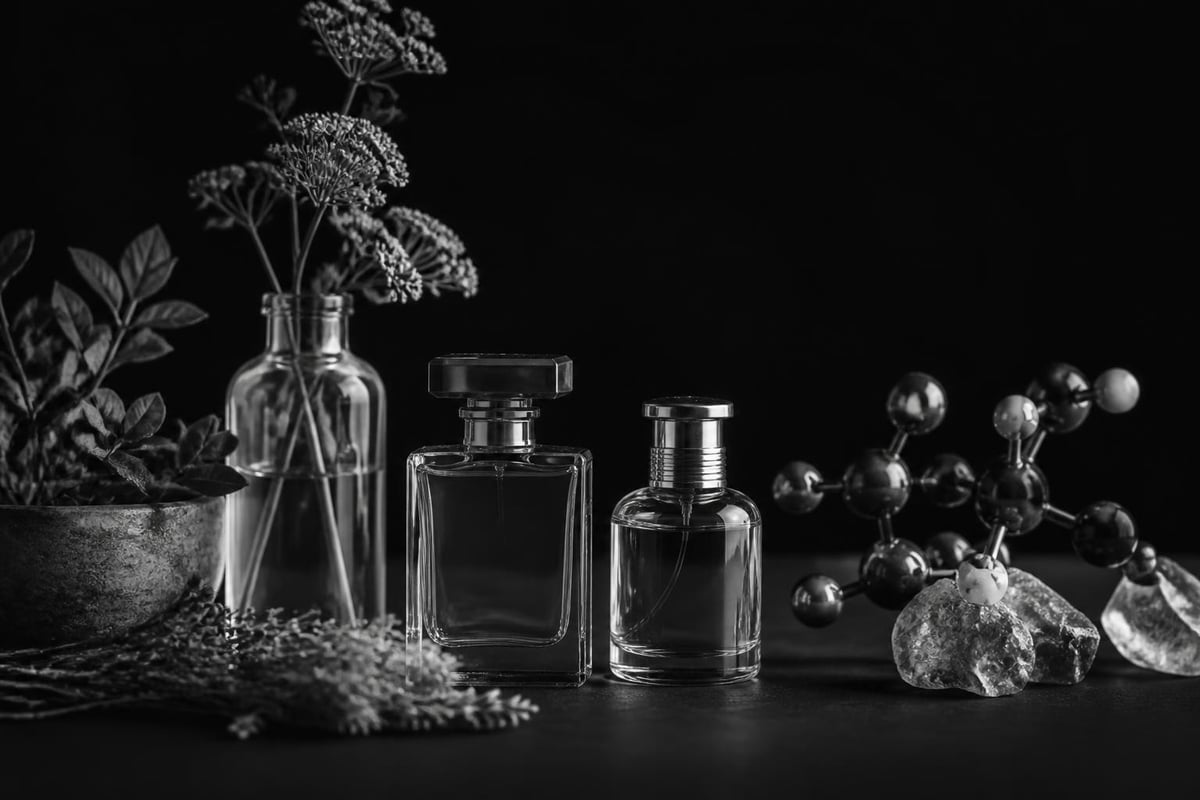
Preference patterns tell distinct stories:
- Botanical and natural scents signal environmental awareness and appreciation for traditional craft
- Complex layered compositions indicate patience with nuance and comfort with sophistication
- Simple single-note fragrances suggest minimalist values and preference for clarity
- Seasonal rotation demonstrates adaptability and attention to context
The vessels and application methods matter too. Oil-based formulations appeal to those who value longevity and intimate scent throw over broadcast projection. These choices communicate consideration for shared spaces and preference for discovery rather than announcement.
How Cultural Background Shapes Perfume Meaning
Cultural heritage fundamentally influences how individuals interpret and assign perfume meaning across different societies. Middle Eastern traditions emphasize rich resinous materials and generous application as hospitality gestures. European perfumery historically centered on floral compositions tied to garden cultivation and aristocratic leisure. Asian fragrance traditions often incorporate incense materials with spiritual significance.
In contemporary New York, these traditions converge and remix. A handmade perfume crafted in Manhattan might draw on frankincense from Oman, oakmoss from France, and application rituals adapted from Japanese minimalism. This synthesis creates new meaning structures that honor lineage while building something distinct.
Migration and diaspora add additional layers. Second and third-generation New Yorkers often seek fragrances that bridge their family's origin culture with their American present. Botanical compositions offer this bridge through plant materials that grow across continents, creating olfactory vocabularies that transcend single cultural frameworks.
Why Do Certain Scents Hold Emotional Significance?
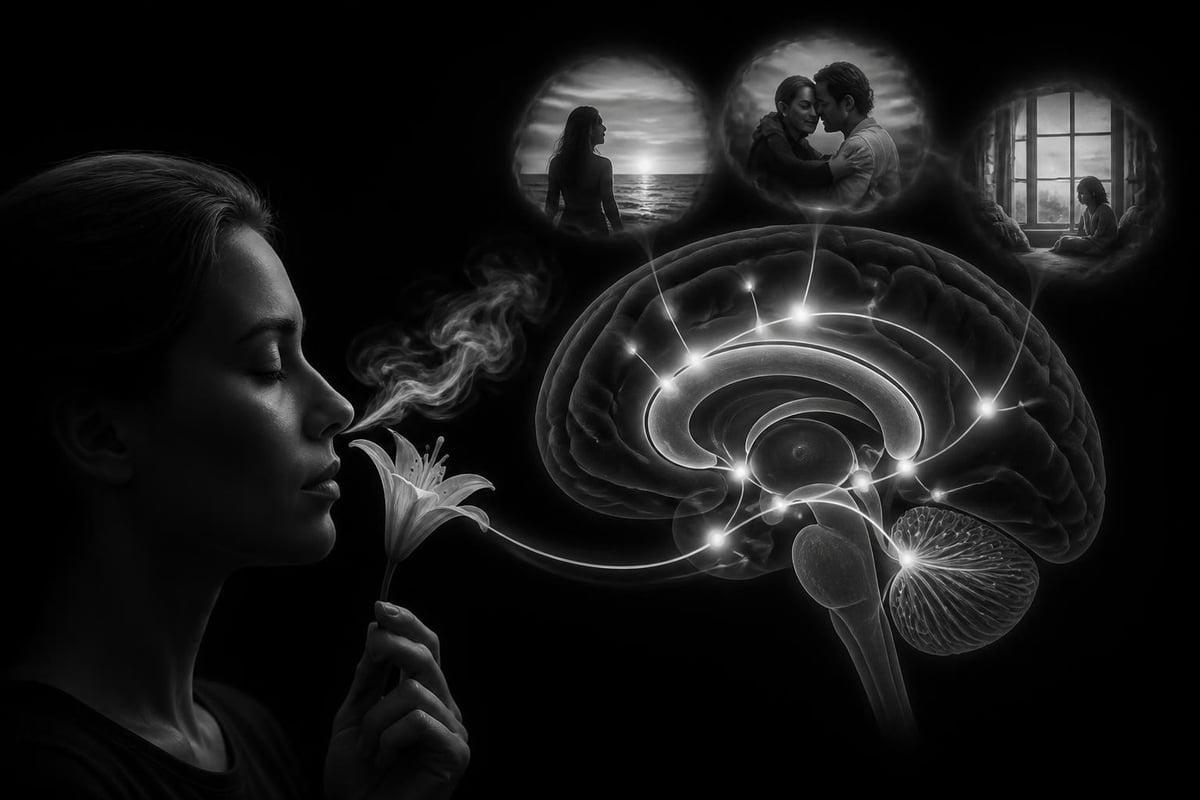
Certain scents carry emotional weight because the olfactory bulb connects directly to the brain's limbic system, which processes memory and emotion before conscious thought. This neurological pathway makes fragrance the most immediate and visceral trigger for recall. A particular botanical combination can instantly transport you to a specific moment, place, or relationship with photographic clarity.
The phenomenon intensifies with personally significant experiences:
- First encounters imprint powerfully, whether a childhood garden or a parent's signature scent
- Repeated associations deepen emotional resonance through neurological reinforcement
- Transitional moments attach fragrance to major life changes and milestones
- Sensory isolation makes scent the primary memory anchor when other details fade
This mechanism explains why perfume meaning becomes so intensely personal. The same botanical extract evokes completely different emotional landscapes for different wearers based on their unique experiential histories. What smells like comfort to one person might trigger grief or joy in another.
The Role of Memory in Fragrance Selection
Memory guides fragrance selection more than conscious aesthetic preference in most cases. People gravitate toward scents that echo positive past experiences or recreate emotional states they want to inhabit. Someone who felt confident during a period when they wore cedar-based fragrances will likely return to woody compositions during challenging transitions.
The memory-fragrance loop creates interesting patterns:
| Memory Type | Fragrance Response | Selection Pattern |
|---|---|---|
| Childhood comfort | Seeks familiar botanicals from youth | Consistent repurchase |
| Romantic attachment | Avoids or seeks partner's scent profile | Extreme reactions |
| Travel experiences | Collects regional ingredients | Diverse rotation |
| Professional success | Anchors to "power scent" | Ritualistic use |
Understanding this connection helps explain why fragrance conversations often become unexpectedly emotional. You're not just discussing olfactory preferences but accessing deeply embedded memories and their associated meanings. The botanical perfumes people choose often map directly to emotional territories they want to explore or reclaim.
What Is the Difference Between Perfume as Product and Perfume as Practice?
Perfume as product refers to the physical bottle and its contents, while perfume as practice encompasses the rituals, intentions, and meanings individuals construct around fragrance application. The product remains static, but the practice evolves with the wearer's life circumstances, emotional states, and self-conception over time.
Practice-based approaches transform fragrance from commodity to tool:
- Morning application rituals establish intention and presence before entering public space
- Pulse point selection creates intimacy gradients based on desired scent throw
- Seasonal rotation aligns personal scent with environmental shifts and internal rhythms
- Layering techniques develop signature compositions unique to individual body chemistry
In Manhattan's NoMad neighborhood, boutiques like Haus of Smell support practice-based relationships with scent through made-to-order options that encourage participation in the creation process. This shifts perfume meaning from passive consumption to active collaboration.
The practice dimension extends to how fragrance integrates with other sensory elements. Someone might coordinate their scent with the candles they burn at home or the botanical oils they use in bathing rituals, creating layered olfactory environments that reinforce specific moods or aspirations throughout daily life.
Intentional Versus Habitual Fragrance Use
Intentional fragrance use involves conscious selection based on specific occasions, moods, or desired effects. Habitual use defaults to familiar scents without active consideration. Both approaches carry meaning, but intentional practice deepens the relationship between wearer and fragrance over time.
Intentional practitioners typically:
- Maintain multiple fragrances for different contexts and emotional registers
- Consider recipients and settings before selection
- Adjust application amount and location based on proximity expectations
- Treat fragrance as communication rather than decoration
Habitual users often discover their relationship with scent has become unconscious background rather than active choice. This isn't necessarily negative but suggests different priorities. The signature scent wearer who applies the same fragrance daily for decades makes a statement about consistency and recognizability that carries its own meaning.
The shift from habitual to intentional often occurs during life transitions. Moving to a new city, changing careers, or ending significant relationships frequently prompts fragrance reevaluation. These moments reveal how deeply scent intertwines with identity and how changing one element requires examining the whole constellation.
How Does Perfume Meaning Vary Across Different Occasions?
Perfume meaning shifts dramatically based on context, transforming from professional armor to intimate invitation depending on setting and audience. The same botanical composition communicates differently in a conference room versus a dinner party versus solitary creative work at home.
Professional contexts typically favor restraint:
| Setting | Typical Approach | Meaning Communicated |
|---|---|---|
| Office environment | Minimal projection, clean botanicals | Competence without distraction |
| Client meetings | Subtle sophistication | Professional polish |
| Presentations | Confidence anchors | Personal authority |
| Networking events | Memorable but approachable | Distinctive presence |
Social occasions permit greater expression. Evening gatherings allow richer, more complex compositions that unfold over hours of conversation and movement. The fragrance becomes part of the overall sensory experience you offer to others, alongside your words, gestures, and energy.
Solitary contexts often involve completely different selections. Many people maintain private fragrances they wear only when alone, creating olfactory spaces for introspection, creativity, or comfort. These scents carry meaning exclusively for the wearer, functioning as mood regulation tools rather than social signals.
Seasonal and Environmental Considerations
Environmental factors fundamentally alter how fragrance performs and what meanings emerge from specific compositions. Summer heat amplifies projection and can turn pleasant scents overwhelming. Winter cold dampens volatility, requiring different concentrations to achieve similar effects.
New York's distinct seasons create natural rotation patterns. Spring might call for green botanical notes that echo the city's brief flowering moment. Summer heat suits lighter compositions that won't become oppressive on subway platforms. Fall invites richer, more grounded materials. Winter permits the heaviest, most enveloping scents that provide olfactory warmth against bitter cold.
The urban environment adds another layer. Someone living in a small Manhattan apartment might choose fragrances differently than someone with suburban space, considering how scent will fill limited square footage. Understanding how to make a small apartment smell luxurious often influences personal fragrance choices as well.
Geographic location shapes availability and cultural context too. Regional plants create local scent vocabularies. A botanical perfume featuring northeastern forest materials carries different associations in New York than it would in California or Texas, connecting wearers to their immediate ecological context.
What Makes Botanical Fragrances Meaningful in 2026?
Botanical fragrances carry heightened meaning in 2026 because they represent transparency, environmental ethics, and rejection of unnecessary synthetic intervention in a cultural moment that values all three. The shift toward plant-based formulations reflects broader consciousness around ingredient sourcing, production impact, and long-term sustainability.
The meaning extends beyond environmental concern:
- Material honesty appeals to those exhausted by manufactured scarcity and artificial complexity
- Vegan formulations align personal care with dietary and lifestyle ethics
- Handmade production supports craft traditions and local economies
- Alcohol-free bases accommodate sensitive skin and religious considerations
These factors converge in urban centers like Manhattan, where consumers have access to diverse options and information to make informed choices. A botanical eau de parfum crafted from real plant and resin extracts becomes a statement about values that extends far beyond olfactory preference.
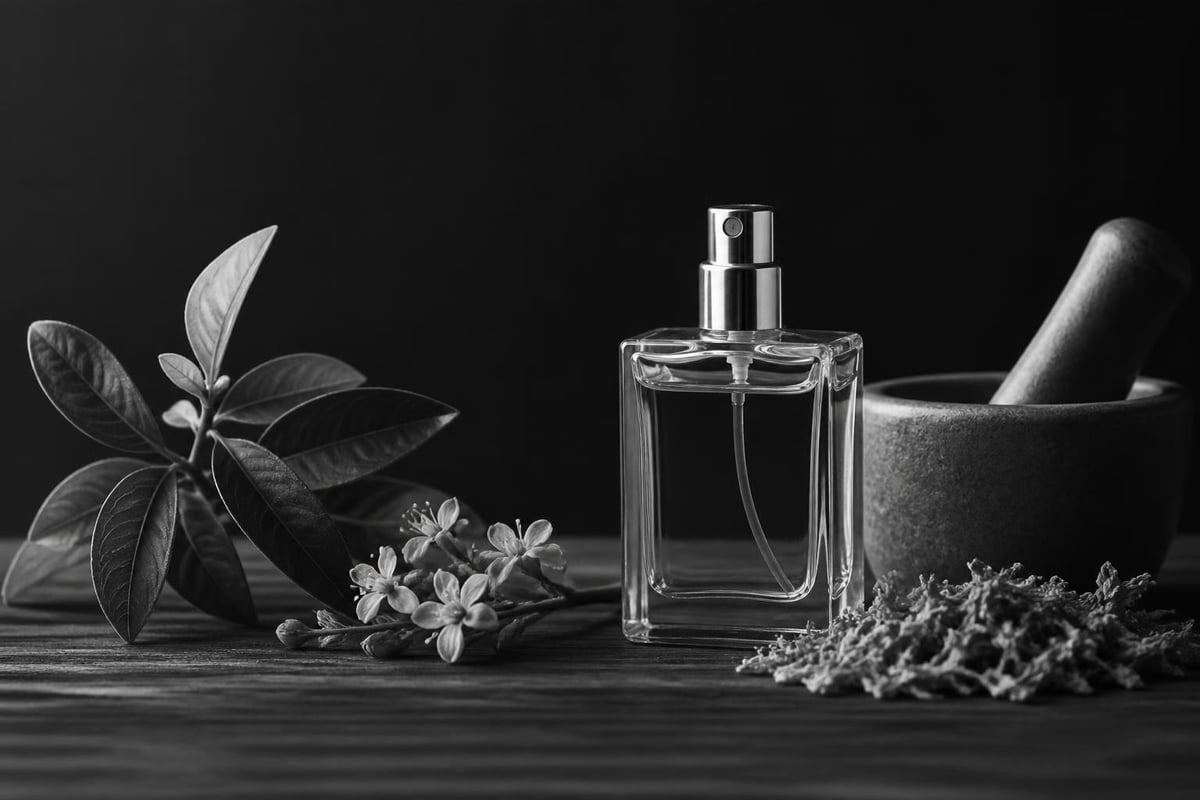
The artisanal dimension matters increasingly. Mass production creates homogeneity that many find alienating. Knowing your fragrance was set by hand in a specific Manhattan workshop creates connection to place, maker, and process. This knowledge transforms the bottle from anonymous commodity into artifact with traceable lineage.
The Link Between Personal Values and Fragrance Ingredients
Personal values increasingly drive fragrance ingredient preferences as consumers gain literacy around formulation transparency. Someone committed to veganism extends that commitment to perfume, rejecting traditional animal-derived materials. Environmental activists seek sustainably harvested botanicals. People with chemical sensitivities require pure plant-based compositions.
This values alignment creates deeper perfume meaning than aesthetic preference alone. Your fragrance becomes visible evidence of invisible principles. It demonstrates consistency between stated beliefs and daily choices in an arena many consider trivial but which actually offers constant reinforcement of core commitments.
The trend particularly resonates with younger consumers who view purchasing as political act. Every product selection either supports or contradicts their broader worldview. Fragrance shopping becomes an opportunity to vote with dollars for production methods, ingredient sourcing, and business practices that reflect their vision of how commerce should function.
Accessories often follow similar value patterns. Someone drawn to botanical perfumes might also appreciate natural gemstone bracelets that emphasize authentic materials and craftsmanship over trend-driven fashion. These choices create coherent personal aesthetics built on consistent principles across categories.
How Do You Discover Your Personal Perfume Meaning?
You discover your personal perfume meaning through deliberate exploration combined with attention to emotional and physical responses across different compositions. This process requires patience, curiosity, and willingness to move beyond marketing narratives into direct sensory experience and honest self-assessment.
The discovery process unfolds in stages:
- Identify current preferences by examining what you already wear and why
- Notice emotional responses to unexpected scents in daily life
- Experiment systematically with different botanical families and structures
- Track context variations in how scents perform across situations
- Reflect on memory associations that emerge during testing
- Refine based on feedback from trusted others and your own observations
Many people find that their understanding of perfume meaning evolves significantly during this exploration. Early preferences often reflect external influences rather than authentic resonance. Deeper investigation reveals more accurate alignments between scent and self.
Working with Fragrance Professionals and Boutiques
Fragrance professionals can accelerate discovery by offering expertise, structured testing approaches, and access to compositions you wouldn't encounter independently. Boutique environments in particular encourage conversation and experimentation that department store counters rarely permit.
Manhattan offers unique advantages for this exploration. Neighborhoods like NoMad host specialized shops where staff understand botanical perfumery and can guide you through how natural ingredients combine and transform on skin. These consultations often uncover unexpected directions based on your responses to samples.
The made-to-order approach takes personalization further. Some boutiques offer systems where you select from numerous botanical options to create custom compositions. This participatory process often clarifies what you actually want versus what you thought you wanted, revealing authentic preferences through the decision-making sequence itself.
Workshop experiences deepen understanding even more. Learning basic perfume construction principles through hands-on creation helps you articulate what you respond to and why. The technical knowledge transforms you from passive consumer into informed collaborator in your own scent development.
What Role Does Perfume Play in Self-Expression?
Perfume functions as non-verbal self-expression that operates in intimate proximity, creating an olfactory signature that becomes inseparable from your presence in others' memories. Unlike visual presentation, which broadcasts broadly, fragrance communicates selectively to those who enter your personal space, creating tiered revelation based on physical distance.
This selectivity makes perfume particularly powerful for controlled disclosure:
- Professional settings require subtle scents that suggest rather than announce
- Social gatherings permit fuller expression that contributes to overall impression
- Intimate relationships allow richest, most complex compositions
- Solitary moments support entirely private olfactory choices
The layering mirrors how you reveal different aspects of personality based on relational proximity. Your fragrance essentially says "this is who I am at this distance" with different truths available at different ranges.
Personal style coherence matters for many people. They seek alignment between visual presentation, linguistic patterns, and olfactory signature so all elements communicate consistent messages about identity and values. Someone drawn to minimalist aesthetics might prefer simple botanical compositions. Someone who layers vintage textiles and contemporary pieces might seek similarly complex fragrance structures.
Building a Fragrance Wardrobe
A fragrance wardrobe consists of multiple scents selected for different moods, occasions, and seasonal contexts rather than relying on a single signature. This approach treats perfume as fluid tool for self-expression that adapts to circumstances rather than fixed identifier that remains constant.
Strategic wardrobe building typically includes:
| Category | Purpose | Typical Characteristics |
|---|---|---|
| Professional anchor | Daily confidence baseline | Clean, subtle, universally appropriate |
| Social signature | Memorable personal scent | Distinctive but approachable |
| Seasonal rotations | Environmental alignment | Weather-appropriate projection |
| Mood modulators | Emotional state tools | Energizing or calming as needed |
| Special occasion | Celebration and ritual | Luxurious, complex, meaningful |
The wardrobe approach requires more investment and storage but offers flexibility that single-scent commitment cannot provide. You gain the ability to match internal state with external presentation more precisely, selecting fragrances that support how you want to feel and what you want to communicate on any given day.
Curation matters as much as accumulation. A focused collection of four to six well-chosen fragrances serves better than twenty random purchases. Each selection should occupy distinct territory in your olfactory landscape, offering something the others cannot provide.
Frequently Asked Questions
What is the primary meaning of wearing perfume?
The primary perfume meaning centers on intentional self-expression through scent that communicates identity, values, and mood to others while anchoring personal memories and emotional states. Fragrance functions as invisible signature that becomes inseparable from how you present yourself and how others remember you, creating olfactory identity markers.
How does botanical perfume differ in meaning from synthetic fragrance?
Botanical perfume carries meanings of environmental consciousness, material transparency, and craft appreciation that synthetic fragrances typically lack. Natural formulations signal values alignment around sustainability and authenticity while connecting wearers to plant origins and traditional perfumery methods. The choice communicates prioritization of ingredient integrity over cost efficiency or standardized reproduction.
Can perfume meaning change over time for the same person?
Perfume meaning absolutely changes as individuals evolve through life stages, relationship shifts, and value development. A scent worn during one period may become unwearable after major transitions because its associations no longer align with current identity. Conversely, fragrances rejected initially often gain appeal as taste sophistication develops and new contexts create fresh meaning frameworks.
Why do people have such strong emotional reactions to certain scents?
Strong emotional reactions occur because olfactory processing bypasses cognitive filtering and connects directly to limbic brain regions governing memory and emotion. Specific scents trigger immediate recall of experiences, relationships, and feelings associated with previous encounters, creating visceral responses that precede conscious thought. This neurological pathway makes fragrance the most powerful sensory memory trigger.
What should I consider when choosing a signature scent?
Consider how the fragrance performs on your specific skin chemistry, whether it aligns with your values and lifestyle, if it communicates your intended identity, and how it makes you feel across different contexts. Test extensively over days rather than minutes, notice others' responses, and ensure the composition supports rather than contradicts your broader self-presentation goals.
How can I develop a more meaningful relationship with fragrance?
Develop meaningful fragrance relationships through deliberate exploration of diverse compositions, attention to emotional and physical responses, education about ingredients and construction methods, and conscious selection based on authentic preference rather than marketing influence. Visit specialized boutiques, attend workshops if available, and treat scent as practice requiring ongoing refinement rather than one-time purchase decision.
Understanding perfume meaning reveals how fragrance operates as powerful tool for identity expression, memory creation, and values communication in daily life. The scents you choose become inseparable from how you inhabit the world and how others experience your presence. Haus of Smell supports this exploration through handmade botanical compositions crafted in Manhattan from pure plant materials, offering fragrance that aligns with contemporary values around transparency and sustainability. Discover how natural perfumery can deepen your relationship with scent at HAUS OF SMELL.