
Natural scent refers to fragrance derived exclusively from botanical sources such as essential oils, absolutes, resins, and plant extracts, with no synthetic aroma chemicals added. These scents are obtained through methods like steam distillation, CO2 extraction, or solvent processing that preserve the original molecular complexity of flowers, woods, leaves, and roots. True natural fragrance contains only compounds present in the living plant, offering a scent profile that evolves and shifts on skin or in air.
The fragrance industry has seen a fundamental shift in how consumers understand and value authenticity. Between 2020 and 2026, demand for transparent sourcing and botanical ingredients has reshaped not just boutique perfumery but also candle making, home fragrance, and personal care products across Manhattan and beyond. The question is no longer whether natural ingredients matter, but rather what standards define them and how to distinguish genuine botanical scent from greenwashed alternatives.
What qualifies as a natural scent?
A natural scent must be composed entirely of materials extracted from plants, resins, or other botanical sources without chemical modification of the molecular structure. This definition excludes any synthetic aroma compounds, whether nature-identical or entirely lab-created, and requires that extraction methods preserve the natural complexity of the source material. Industry bodies like IFRA establish guidelines that help define Natural Complex Substances and their proper use in fragrance formulations.
The distinction matters because many products labeled "natural" contain a mix of botanical extracts and synthetic extenders. True botanical scent carries the full spectrum of volatile compounds found in the living plant, including trace molecules that contribute depth and evolution over time.
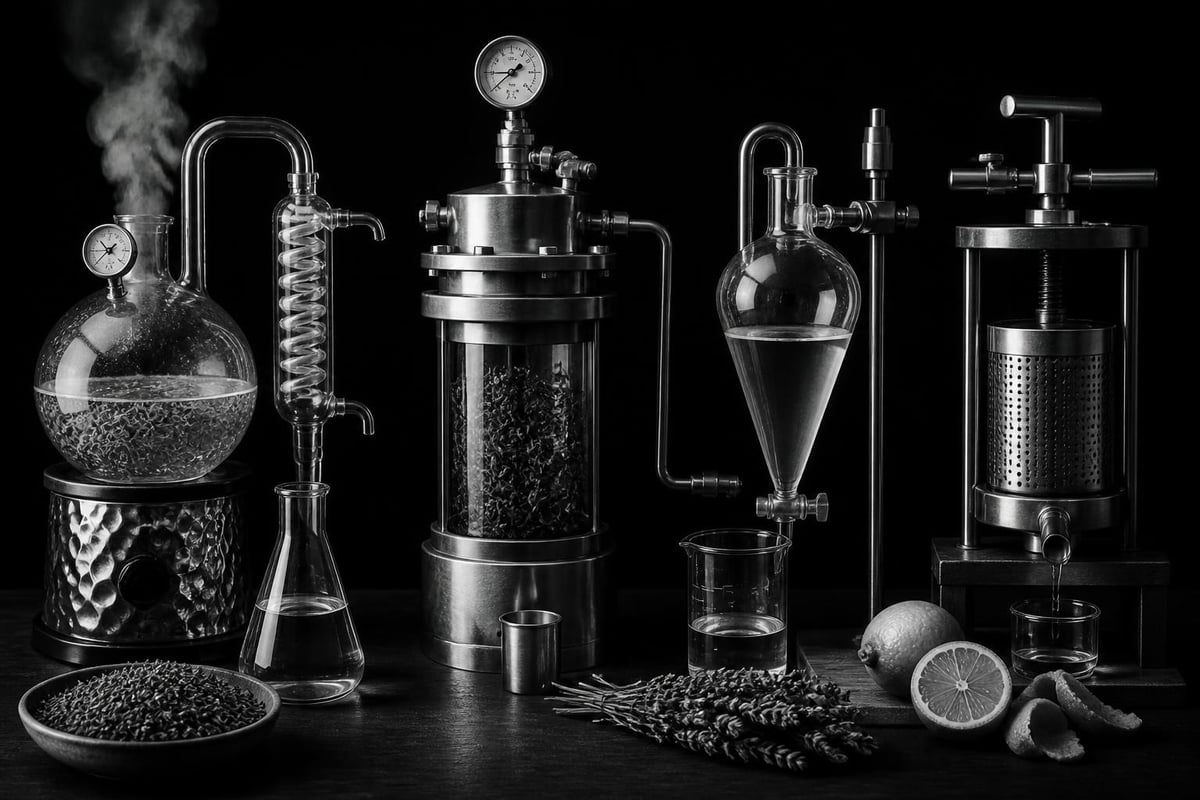
Common extraction methods for botanical materials
Different extraction techniques yield different types of natural scent materials, each with distinct characteristics:
- Steam distillation: produces essential oils by passing steam through plant material and condensing the vapor
- CO2 extraction: uses supercritical carbon dioxide to capture scent molecules at lower temperatures
- Solvent extraction: creates absolutes and concretes by dissolving aromatic compounds in ethanol or hexane
- Expression: mechanically presses citrus peels to release oils without heat
Research on extraction methods shows that temperature, pressure, and solvent choice significantly affect which compounds make it into the final extract. Steam distillation favors lighter, more volatile molecules, while CO2 extraction captures heavier resins and waxes that contribute fixative properties.
How does natural scent differ from synthetic fragrance?
Natural scent contains hundreds of molecular compounds in ratios determined by the plant itself, while synthetic fragrance isolates or recreates individual aroma molecules in precise concentrations. Botanical materials shift and fade in ways that reflect their chemical instability, whereas lab-created molecules often hold steady for years. The difference is not just philosophical but structural, affecting how a fragrance develops on skin and in space.
Synthetic aroma chemicals allow perfumers to achieve consistency, volume, and specific effects impossible with botanicals alone. A single synthetic musk molecule smells identical in every batch, while natural oakmoss absolute varies by harvest season, region, and extraction parameters.
Regulatory and safety considerations
Natural does not automatically mean safer or hypoallergenic. Research on fragrance contact allergy identifies several botanical materials as common sensitizers, including certain essential oils and tree moss extracts. Industry safety assessments through RIFM's program evaluate both natural and synthetic materials for potential skin reactions, phototoxicity, and other health concerns.
The IFRA Standards set usage limits for specific natural materials based on peer-reviewed toxicology data. For example, bergamot oil contains furocoumarins that can cause photosensitivity, so IFRA restricts its concentration in leave-on products.
| Aspect | Natural Scent | Synthetic Fragrance |
|---|---|---|
| Source | Plant extraction only | Lab-created molecules |
| Complexity | Hundreds of compounds | Single or few compounds |
| Consistency | Varies by harvest/batch | Identical every time |
| Longevity | Typically shorter wear | Often extended performance |
| Allergen risk | Can be high (known sensitizers) | Can be high (individual molecules) |
| Environmental impact | Depends on farming/harvesting | Depends on manufacturing process |
Why do people choose natural scent over synthetic options?
People select botanical fragrance for reasons ranging from philosophical alignment with plant-based living to a preference for the sensory complexity that natural materials provide. For many, the choice reflects a broader commitment to understanding what goes on skin and into living spaces. The scent itself behaves differently, unfolding in layers as lighter top notes dissipate and heavier base materials emerge.
Natural scent also connects to place and craft in ways that mass-produced synthetic fragrance typically does not. Botanical Eau de Parfum crafted in Manhattan from real plant extracts carries a sense of locality and intention that resonates with consumers seeking alternatives to conventional perfumery.
The role of transparency in modern fragrance
Transparency has become non-negotiable for conscious consumers in 2026. Brands that list every ingredient, disclose extraction methods, and explain sourcing practices build trust that vague "fragrance" or "parfum" labels cannot.
Ingredient transparency allows people with sensitivities to avoid specific botanicals. Someone allergic to lavender can make an informed choice, whereas a generic fragrance listing offers no such clarity.
- Full disclosure of botanical sources and extraction methods
- Batch-to-batch variation acknowledged rather than hidden
- Clear communication about what "natural" means for each product
- Honest discussion of performance trade-offs compared to synthetics
What are the limitations of natural scent?
Botanical materials present real constraints in perfumery and home fragrance. Certain scent profiles cannot be achieved without synthetics, and some beloved flowers yield no extractable oil at all. Natural scent also tends to be more expensive per unit due to agricultural costs, lower yields, and labor-intensive processing.
Stability is another challenge. Natural materials oxidize, shift in color, and change scent over time, especially when exposed to light and heat. A natural candle formulated in 2025 may smell subtly different by late 2026, even with proper storage.
Sustainability and environmental impact
The environmental profile of natural scent is complex. While botanical materials are renewable, high demand for specific plants can strain ecosystems and encourage monoculture farming. Sandalwood overharvesting and frankincense tree decline illustrate how "natural" does not guarantee sustainable.
Market guidance on essential oils emphasizes the importance of traceability, fair labor practices, and regenerative agriculture in the botanical supply chain. Ethical sourcing requires relationships with growers, verification of wild-harvesting practices, and sometimes choosing less exotic materials grown closer to the point of production.
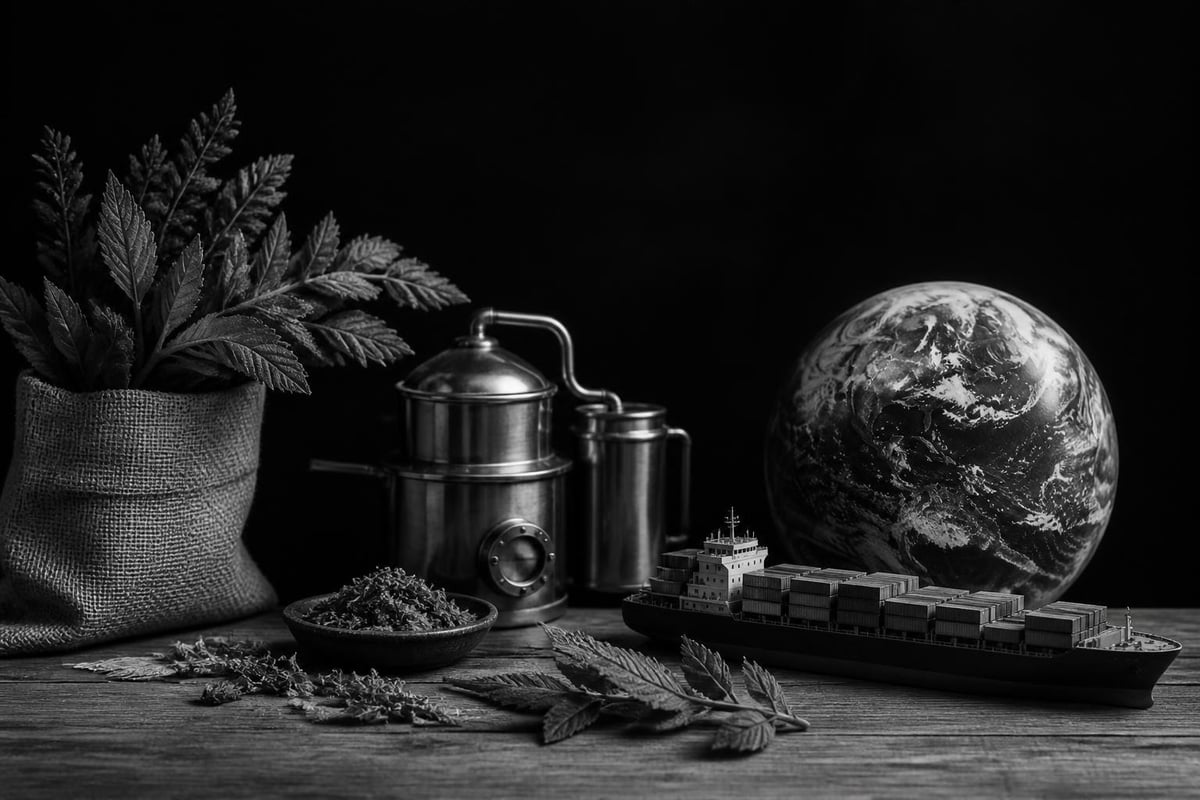
CO2 extraction and steam distillation consume energy, and solvent-based processes generate chemical waste that requires proper disposal. The full lifecycle assessment of natural versus synthetic is rarely straightforward.
How can you identify genuine natural scent products?
Genuine natural scent products list every botanical ingredient by its common and botanical name, specify extraction method when relevant, and avoid proprietary blend language that obscures contents. The ingredient list should read like a botanical inventory rather than a chemistry textbook.
Price often signals authenticity. Natural jasmine absolute costs hundreds of dollars per pound, so a $15 "all-natural jasmine perfume" in a large bottle raises questions. The economics of botanical extraction make truly natural products more expensive to produce.
Reading labels and certifications
Several certification bodies offer verification for natural and organic fragrance products. Look for third-party validation rather than self-awarded "natural" badges.
Key label indicators include:
- Specific plant names and parts used (e.g., "Citrus aurantium dulcis peel oil" rather than "orange fragrance")
- Disclosure of carrier oils or base materials
- Absence of terms like "fragrance," "parfum," or "aroma" without further specification
- Reference to extraction method for each material
- Clear statement of what the brand defines as "natural"
Vague language like "infused with botanicals" or "inspired by nature" often signals a primarily synthetic formula with minor natural additions. If a brand truly uses only plant-based materials, they typically state it plainly and prominently.
What role does natural scent play in Manhattan's fragrance scene?
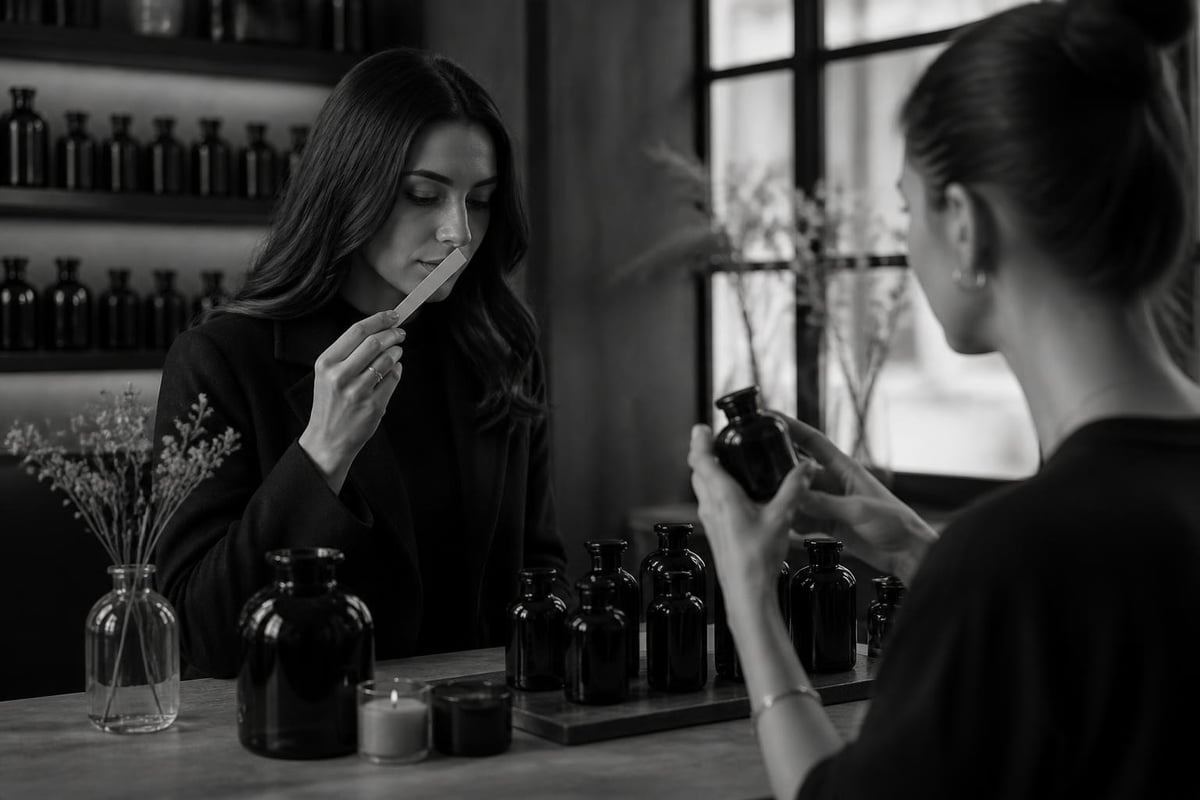
Manhattan has cultivated a fragrance culture that values craft, locality, and botanical ingredients alongside conventional luxury perfumery. Neighborhoods like NoMad host boutiques where customers can smell the difference between steam-distilled and CO2-extracted materials, ask about sourcing, and understand the connection between place and scent.
The city's density creates unique opportunities for experiencing natural scent. A candle shop where products are poured by hand in the same building where they are sold offers transparency impossible in mass production. Customers can observe the process, ask questions about specific batches, and develop relationships with makers who know their materials intimately.
The appeal of locally-made botanical products
New York-made natural fragrance carries cachet beyond mere locality. It represents a choice to maintain production in one of the world's most expensive cities, prioritizing craft over margin and accepting the constraints of small-batch work.
For those exploring ways to make living spaces smell naturally appealing, products crafted in Manhattan from genuine botanicals offer an alternative to both conventional synthetic air fresheners and the impersonal mass-market "natural" brands found in every chain store.
What is the future of natural scent in 2026 and beyond?
The trajectory for natural scent points toward greater sophistication in both formulation and consumer understanding. As more people learn to distinguish genuine botanical complexity from simple natural additives in otherwise synthetic products, demand for transparent, fully natural options continues to grow.
Technology is improving extraction efficiency and expanding the palette of available botanical materials. Advances in CO2 extraction allow perfumers to capture scents from previously unusable plants, while better storage and handling preserve natural materials longer without oxidation.
Evolving standards and definitions
Industry definitions of "natural" continue to evolve. Fragrance safety resources now include detailed assessments of Natural Complex Substances, helping formulators navigate both safety and authenticity.
The conversation has moved beyond simple natural-versus-synthetic dichotomies toward nuanced discussions of sustainability, ethics, transparency, and sensory experience. Consumers in 2026 ask not just whether a product is natural, but where the plants were grown, how workers were paid, and whether the sourcing supports ecosystem health.
Key trends shaping natural scent:
- Increased transparency requirements from retailers and consumers
- Focus on regenerative agriculture and ecosystem restoration
- Documentation of supply chains from field to finished product
- Education about the real costs and trade-offs of botanical ingredients
- Growing appreciation for scent variation as a feature rather than flaw
Frequently Asked Questions
What is the difference between natural and organic scent?
Natural scent comes from plant materials extracted without synthetic chemicals, while organic scent specifically uses botanicals grown without synthetic pesticides or fertilizers and certified by bodies like USDA Organic. All organic scent is natural, but not all natural scent qualifies as organic since the plants may be conventionally farmed. Organic certification adds agricultural standards to the definition of natural.
Do natural scents last as long as synthetic fragrances?
Natural scents typically have shorter longevity than synthetic fragrances because botanical molecules are more volatile and prone to oxidation. Light top notes from citrus oils may last one to two hours, while heavier base notes from resins and woods can persist for six to eight hours. Synthetics often include fixatives engineered for extended wear, sometimes lasting multiple days on fabric or skin.
Can natural scent cause allergic reactions?
Yes, natural scent materials can trigger allergic reactions in sensitive individuals, sometimes more readily than synthetics. Common allergens include tree moss extracts, certain floral absolutes, and spice oils. The complex molecular mixtures in botanical extracts contain multiple potential sensitizers, whereas single synthetic molecules offer more predictable allergen profiles. Patch testing remains important regardless of whether fragrance is natural or synthetic.
Are all essential oils considered natural scent?
Essential oils are natural scents when extracted through physical processes like steam distillation or cold pressing without chemical modification. However, some products sold as essential oils contain synthetic extenders or nature-identical compounds added to reduce cost. True essential oils list only the botanical source and extraction method, with no additional fragrance ingredients. Third-party testing can verify purity.
How should natural scent products be stored?
Natural scent products should be stored in dark glass containers away from direct sunlight and heat to prevent oxidation and degradation. Ideal storage temperatures range from 60 to 70 degrees Fahrenheit in low-humidity environments. Exposure to air accelerates breakdown of volatile compounds, so keeping containers tightly sealed between uses extends shelf life. Most natural perfumes and essential oils maintain quality for one to three years under proper conditions.
Why do natural scents smell different from batch to batch?
Natural scents vary between batches because plant chemistry changes with growing conditions, harvest timing, weather, soil composition, and processing variables. A rose absolute from May harvest will differ slightly from October harvest due to temperature and rainfall affecting the plant's volatile compound production. These variations reflect the living nature of botanical materials, offering subtle complexity that uniform synthetic fragrance cannot replicate.
Natural scent represents a return to fragrance rooted in the complexity and variation of living plants, offering depth and authenticity that synthetics cannot fully replicate. For those in New York seeking botanical alternatives crafted with transparency and intention, Haus of Smell creates vegan, alcohol-free perfumes and candles by hand in Manhattan from real plant extracts. Visit the NoMad workshop to experience the difference botanical fragrance makes in both personal scent and living spaces.