
Natural perfume oils are concentrated botanical extracts suspended in carrier oils, containing zero alcohol and zero synthetic ingredients. They offer pure plant-based scent derived from flowers, resins, woods, and leaves through distillation or cold-pressing. Unlike conventional fragrances, these oils provide long-lasting wear that evolves with your skin chemistry throughout the day.
The fragrance industry has undergone significant transformation over the past century. Research analyzing perfume evolution since 1900 reveals shifting cultural preferences toward authenticity and natural compositions. This trend reflects growing consumer awareness about ingredient transparency and the desire for products that align with health-conscious values.
What Makes Natural Perfume Oils Different From Conventional Fragrances
Natural perfume oils contain exclusively botanical ingredients without any synthetic compounds or alcohol. The difference lies in both composition and production method. Conventional perfumes typically contain 70-90% alcohol as a carrier, along with synthetic aroma chemicals that replicate natural scents at lower costs.
The Natural Perfume Academy defines natural perfume as formulations using 100% all-natural aromatic raw materials. This excludes petroleum-derived ingredients, phthalates, parabens, and artificial colorants. The extraction methods preserve the complete aromatic profile of plants, including hundreds of trace compounds that contribute to complexity.
How Botanical Extraction Preserves Scent Complexity
Plant materials yield essential oils through several methods:
- Steam distillation for flowers, leaves, and stems
- Cold-pressing for citrus peels
- Solvent extraction for delicate florals
- CO2 extraction for temperature-sensitive botanicals
Each method captures different molecular weights and aromatic compounds. Steam distillation produces lighter, more volatile molecules. Solvent extraction preserves heavier, resinous components that provide depth and longevity.
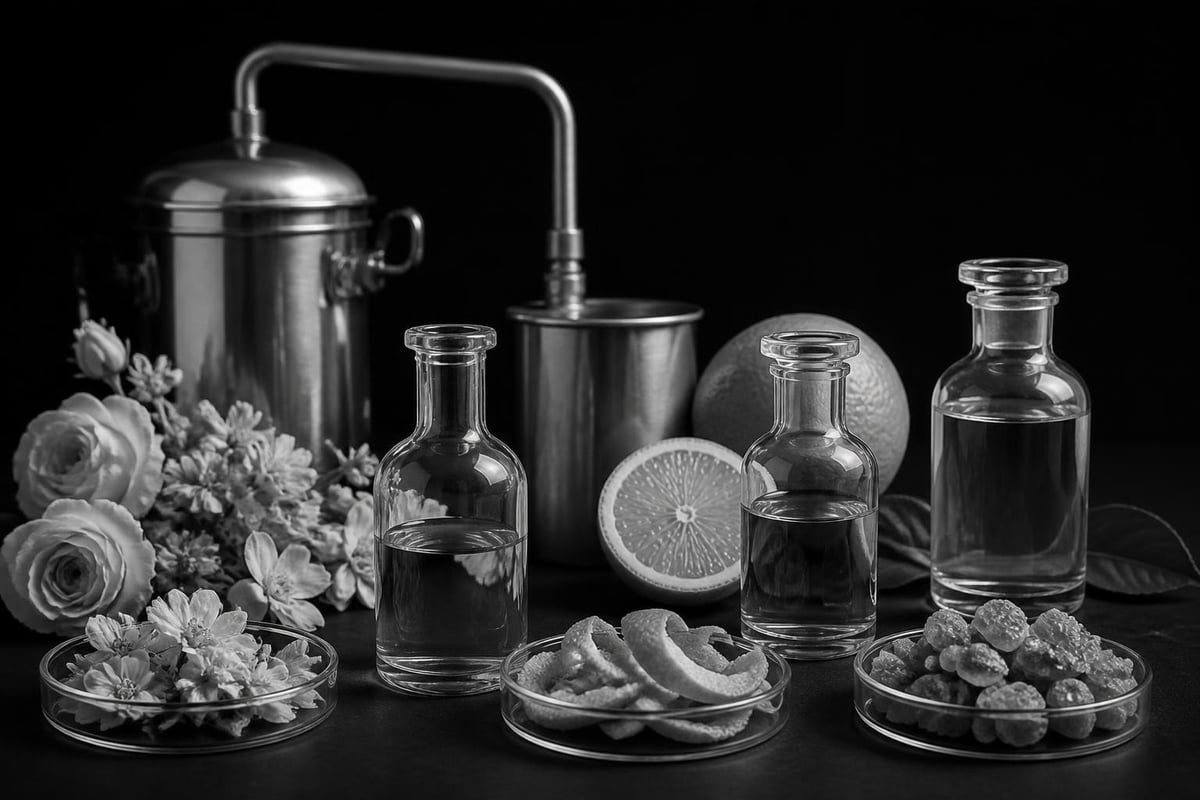
The absence of alcohol fundamentally changes how natural perfume oils interact with skin. Oil-based formulations don't evaporate rapidly. Instead, they warm against the body and release scent molecules gradually over six to twelve hours.
| Feature | Natural Perfume Oils | Conventional Perfumes |
|---|---|---|
| Base carrier | Plant oils (jojoba, fractionated coconut) | Alcohol (70-90%) |
| Ingredients | 100% botanical extracts | Synthetics and/or naturals |
| Sillage | Close to skin, intimate | Projects outward, fills room |
| Longevity | 6-12 hours | 2-6 hours (varies by concentration) |
| Development | Gradual, warm evolution | Sharp initial burst, faster fade |
| Skin compatibility | Moisturizing, gentle | Can dry or irritate sensitive skin |
Are Natural Perfume Oils Better for Sensitive Skin
Natural perfume oils are generally gentler on sensitive skin because they lack alcohol and synthetic irritants. The oil base provides moisturizing benefits rather than the drying effect of alcohol-based fragrances. However, individual plant allergies still require attention.
Understanding purity standards helps identify potential irritants. Even natural ingredients can trigger reactions in susceptible individuals. Common allergens include certain floral absolutes and spice-derived oils.
Testing remains essential. Apply a small amount to the inner wrist and wait 24 hours. Skin reactions typically manifest within this window. Quality matters significantly when considering skin compatibility.
What Purity Standards Mean for Your Skin
Issues of adulteration in essential oils affect both scent quality and skin safety. Diluted or contaminated oils may contain hidden synthetic extenders or pesticide residues. Reputable suppliers provide GC-MS testing documentation that verifies botanical purity.
The carrier oil quality matters equally. Rancid or oxidized carrier oils develop off-odors and lose their skin-nourishing properties. Fresh jojoba and fractionated coconut oil remain stable for extended periods when stored properly.
Natural doesn't automatically mean hypoallergenic. Plants produce defensive compounds that can irritate skin. The concentration level and specific botanical selection determine safety for individual users.
How Do You Apply Natural Perfume Oils Correctly
Apply natural perfume oils to pulse points where warmth activates the scent: inner wrists, behind ears, base of throat, and inside elbows. Use fingertips to press oil gently into skin rather than rubbing, which breaks down the molecular structure. Start with one drop per location.
The oil-based formula requires different application than alcohol sprays. Rolling or dabbing delivers the right amount. Overapplication creates an overwhelming concentration because oils don't dissipate into the air like alcohol.
Best pulse points for maximum longevity:
- Inner wrists (most accessible for reapplication)
- Behind earlobes (warmth concentrates scent)
- Base of throat at collarbone (rises with body heat)
- Inside of elbows (subtle and long-lasting)
- Behind knees (for fuller-body scent)

Hair application extends wear time. Apply sparingly to brush bristles and run through hair lengths, avoiding the scalp. Hair's porous structure holds scent molecules effectively. This works particularly well with oil-based formulas that won't dry out strands.
Layering with unscented products maximizes natural perfume oil performance. Heavily scented lotions or body washes compete with the perfume's composition. Neutral products allow the botanical blend to express itself fully.
What Should You Look for When Buying Natural Perfume Oils
Look for products labeled 100% natural with complete ingredient lists and botanical source information. Reputable makers disclose extraction methods and carrier oil types. Avoid vague terms like "fragrance" or "parfum" without further specification, as these typically indicate synthetic components.
The International Perfume Foundation's standards provide benchmarks for authenticity and transparency. Certification programs verify that products meet natural perfumery criteria. These standards address ingredient sourcing, production methods, and disclosure requirements.
Price reflects ingredient quality and concentration. Genuine botanical extracts cost significantly more than synthetic alternatives. A 10ml bottle priced comparably to mass-market fragrances likely contains diluted or adulterated materials.
Reading Labels and Verifying Authenticity
Ingredient lists should name specific botanicals. "Rose absolute" or "vetiver essential oil" indicates real plant materials. Generic terms like "natural fragrance blend" without details warrant skepticism.
The carrier oil matters. Jojoba, fractionated coconut oil, and grapeseed oil are common quality bases. They remain stable and odorless, allowing botanical scents to shine. Mineral oil or synthetic carriers compromise the natural formulation.
For those interested in exploring how different scent categories organize fragrance families, understanding classification systems helps identify preferred profiles before purchasing. This knowledge guides selection toward compatible botanical compositions.
Verification checklist:
- Complete botanical ingredient list provided
- Extraction methods specified
- Country of origin for plant materials listed
- Batch or lot numbers for traceability
- Third-party testing documentation available
- Clear statement: no synthetic ingredients, no alcohol
| Red Flag | What It Indicates | What to Look For Instead |
|---|---|---|
| "Fragrance" without details | Likely synthetic components | Named botanical extracts |
| Suspiciously low pricing | Dilution or synthetic extenders | Market-appropriate pricing |
| No ingredient list | Lack of transparency | Complete disclosure |
| "Natural fragrance oils" | May contain nature-identical synthetics | "100% botanical" or "pure essential oils" |
| Alcohol listed | Not a true oil-based perfume | Oil carriers only |
How Long Do Natural Perfume Oils Last on Skin
Natural perfume oils last six to twelve hours on skin depending on body chemistry, application method, and environmental conditions. Oil-based formulations release scent gradually rather than evaporating quickly like alcohol perfumes. Resin-based botanicals provide the longest wear time.
Individual skin chemistry significantly affects longevity. Oily skin holds scent longer than dry skin. Hydrated skin provides better molecular adhesion. Diet, medication, and hormonal factors alter how botanicals develop on each person.
The concentration level determines intensity and duration. Pure perfume oils contain higher percentages of botanical extracts compared to diluted versions. This concentration translates directly to wear time and sillage.
Factors That Extend or Shorten Wear Time
Environmental humidity preserves scent molecules. Dry climates cause faster evaporation. Cold weather slows molecular movement, reducing projection but extending overall duration. Hot weather amplifies initial strength but may shorten total wear.
Activity level matters. Physical exertion and perspiration alter scent development. The body's natural oils mix with perfume oils, creating unique variations. This interaction represents one of natural perfumery's defining characteristics.
Application to moisturized skin extends longevity. The oils bond with skin lipids more effectively when the surface isn't dehydrated. Unscented lotion applied first creates an ideal base.
Can You Make Your Own Natural Perfume Oils at Home
You can make natural perfume oils at home by blending essential oils with carrier oils, though creating balanced compositions requires practice and knowledge. Start with a carrier oil base and add botanical extracts drop by drop, testing as you blend. Document ratios for reproducibility.
Learning basic perfume-making techniques provides foundation knowledge about composition structure and ingredient interaction. The traditional pyramid of top, heart, and base notes guides balanced creation.
Basic supplies needed:
- Quality carrier oil (jojoba or fractionated coconut)
- Essential oils from reputable suppliers
- Small glass bottles with tight seals
- Pipettes or droppers for precise measuring
- Testing strips or journals for tracking blends
Safety considerations include proper dilution rates and understanding which botanicals require special handling. Some essential oils are photosensitizing or contraindicated during pregnancy. Research each ingredient thoroughly before use.
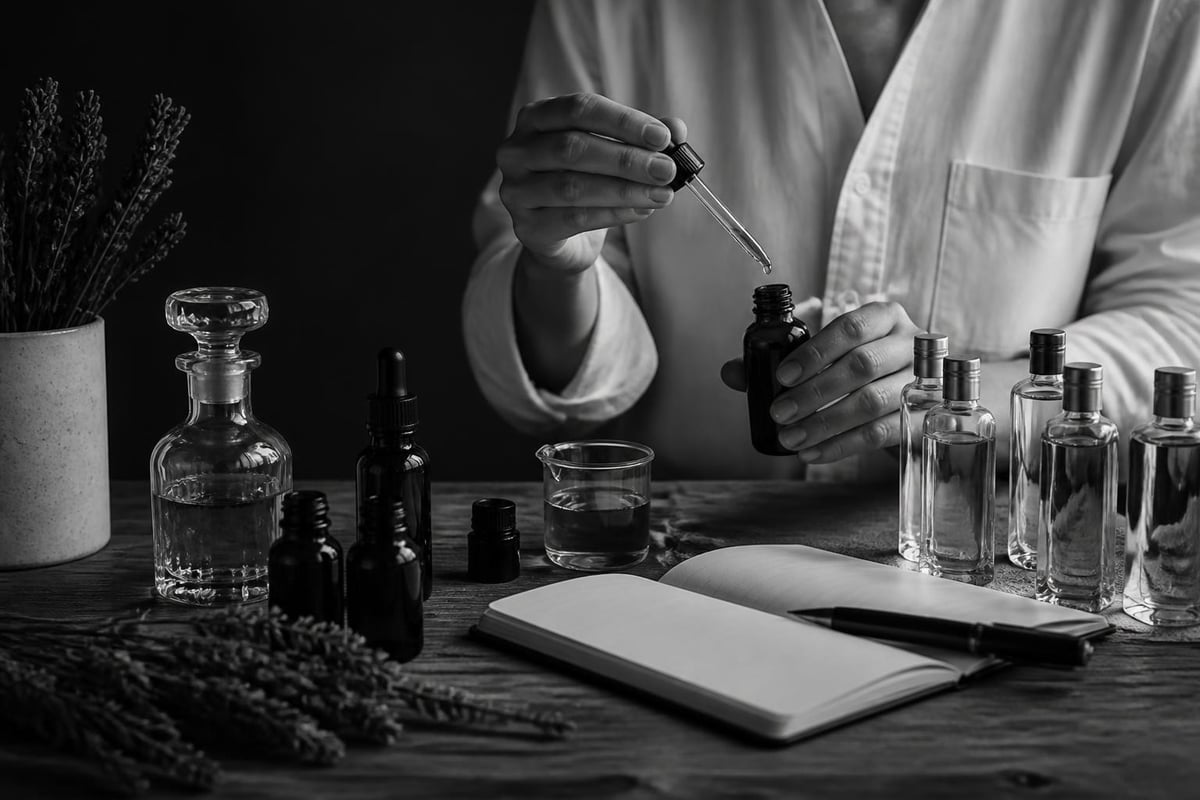
The maturation process matters. Freshly blended oils smell different than compositions that rest for two to four weeks. Molecular marriage occurs as compounds interact and stabilize. Patience yields more sophisticated results.
For those seeking professionally crafted compositions without the learning curve, Botanical Eau de Parfum collections offer expertly balanced formulations made from verified plant extracts. These demonstrate how complex botanical blending achieves depth and character.
Where Can You Find Quality Natural Perfume Oils in New York
Quality natural perfume oils are available in New York through specialized boutiques focused on botanical ingredients and artisan perfumery. Manhattan neighborhoods like NoMad host makers who emphasize ingredient transparency and handcrafted production. Direct interaction with perfumers allows customization and education about botanical sourcing.
Visiting physical locations provides the essential opportunity to test formulations on your skin. Natural perfumes develop differently on each person. What smells appealing on a testing strip may transform entirely once warmed by body chemistry.
The expertise available at specialized shops surpasses typical retail experiences. Perfumers trained in botanical composition can guide selection based on preference, skin type, and desired wear characteristics. This consultation process often reveals unexpected preferences.
Why Location Matters for Natural Perfume Shopping
Local production ensures freshness. Botanical oils oxidize over time, particularly after opening. Products made nearby spend less time in distribution channels. This proximity preserves aromatic integrity.
Artisan workshops often offer customization services not available through larger retailers. The ability to select specific botanical profiles or adjust concentration levels creates truly personal fragrances. These services connect directly to the maker's expertise.
Supporting local makers maintains craft traditions. Pioneers in natural perfumery have established standards and techniques that artisan perfumers continue developing. Regional communities of botanical perfumers share knowledge and advance the field.
How Do Natural Perfume Oils Compare in Price to Synthetic Fragrances
Natural perfume oils typically cost more than synthetic fragrances due to expensive raw materials, labor-intensive extraction, and limited yields from botanical sources. A 10ml bottle of quality natural perfume oil ranges from forty to two hundred dollars depending on ingredient rarity. Conventional designer perfumes often cost less per milliliter despite larger bottle sizes.
The price difference reflects true production costs. Harvesting jasmine flowers at dawn for optimal oil content, then extracting absolute through solvent processing, yields tiny quantities. One kilogram of jasmine absolute requires approximately eight million hand-picked flowers.
Understanding what defines natural fragrance clarifies why botanical ingredients command premium pricing. Synthetics can be manufactured consistently at industrial scale. Natural materials depend on growing seasons, weather patterns, and agricultural variables.
| Cost Factor | Natural Perfume Oils | Synthetic Fragrances |
|---|---|---|
| Raw materials | Expensive botanical extracts | Laboratory-created molecules |
| Production scale | Small batch, artisan | Industrial manufacturing |
| Yield consistency | Variable by harvest | Highly consistent |
| Ingredient complexity | Hundreds of natural compounds | Targeted single molecules |
| Development time | Months of maturation | Immediate stability |
Value assessment extends beyond initial price. Concentration levels in natural oils mean less product achieves the same effect. One drop suffices where alcohol perfumes require multiple sprays. The cost per wearing becomes more comparable.
Longevity factors into value calculation. Natural perfume oils lasting eight to twelve hours compete favorably with alcohol fragrances requiring reapplication. The total uses per bottle often exceed conventional options despite smaller volumes.
What Storage Methods Keep Natural Perfume Oils Fresh
Store natural perfume oils in dark glass bottles away from direct sunlight, heat, and temperature fluctuations to preserve their aromatic integrity. Cool, stable environments between 60-70 degrees Fahrenheit prevent oxidation and degradation. Amber or cobalt glass blocks UV light that breaks down delicate botanical compounds.
Oxygen exposure accelerates deterioration. Keep bottles tightly sealed when not in use. Transfer larger quantities into smaller bottles as you use them, minimizing air space. This practice significantly extends shelf life.
The bathroom represents the worst storage location despite convenience. Temperature swings from showers and humidity promote faster degradation. Bedroom drawers or closet shelves provide better conditions.
Optimal storage practices:
- Use dark glass bottles (amber, violet, or cobalt)
- Store in consistently cool locations
- Keep away from windows and heat sources
- Minimize air exposure by using appropriate bottle sizes
- Avoid bathroom storage
- Consider refrigeration for long-term storage of unopened bottles
Properly stored natural perfume oils maintain quality for two to three years. Citrus-based compositions have shorter lifespans due to volatile top notes. Resin-heavy formulations improve with age as components continue integrating.
Signs of degradation include color changes, separation of carrier and essential oils, or off-odors. Rancid carrier oil smells stale or crayonic. These indicators suggest the product has passed its optimal use period.
FAQ
What is the difference between essential oils and natural perfume oils?
Essential oils are single-plant extracts used in aromatherapy and diluted before skin application, while natural perfume oils are pre-blended compositions combining multiple botanical extracts in carrier oils at skin-safe concentrations. Essential oils typically require dilution to 1-5%, but perfume oils arrive ready to wear. Perfume oils are formulated for scent artistry rather than therapeutic purposes.
Can natural perfume oils cause allergic reactions?
Natural perfume oils can cause allergic reactions in individuals sensitive to specific botanical ingredients, despite containing no synthetic compounds. Common allergens include certain floral absolutes, spice oils, and tree resins. Always patch test new products on inner wrist skin and wait 24 hours before full application. Natural origin doesn't guarantee hypoallergenic properties for all users.
Do natural perfume oils stain clothing?
Natural perfume oils can stain light-colored or delicate fabrics because they contain concentrated botanical extracts and carrier oils. Apply oils directly to skin rather than clothing, allowing absorption time before dressing. Oil-based formulations leave residue unlike alcohol perfumes that evaporate. If transfer occurs, treat stains promptly with gentle dish soap before laundering.
How much natural perfume oil should you apply at once?
Apply one to two drops total of natural perfume oil across all pulse points for appropriate strength without overwhelming. Start with a single drop on one wrist, assess intensity after five minutes, then add more if desired. Oil-based formulations concentrate scent close to skin, requiring less product than alcohol sprays. You can always add more but cannot remove excess.
Why do natural perfume oils smell different on everyone?
Natural perfume oils smell different on everyone because individual skin chemistry, pH levels, diet, and hormonal factors alter how botanical compounds develop and interact. Skin bacteria, moisture levels, and natural oils create unique chemical environments. This personalization represents a defining characteristic of natural perfumery, where the wearer's body completes the composition.
Where should beginners start with natural perfume oils?
Beginners should start with natural perfume oils in familiar scent families that match their existing preferences, testing formulations on skin rather than relying on bottle descriptions. Visit specialty shops offering samples and expert guidance. Start with simpler compositions before exploring complex blends. Allow each new perfume oil to develop fully over several hours before deciding compatibility.
Natural perfume oils offer an alternative approach to fragrance through botanical ingredients, oil-based carriers, and alcohol-free formulations that develop uniquely on each wearer. Understanding their composition, application methods, and quality indicators helps you select products that align with your preferences and values. If you're in New York and want to experience handcrafted botanical perfumery firsthand, explore the collections at Haus of Smell, where every oil-based fragrance is made in Manhattan using 100% natural, vegan ingredients.