
Memory scent describes a fragrance that triggers vivid recollection of a specific moment, person, or place from your past. Unlike visual or auditory cues, scents bypass cognitive filters and connect directly to brain regions responsible for emotion and long-term memory storage. This phenomenon explains why a particular botanical aroma can instantly transport you to your grandmother's garden or a childhood vacation, often with surprising emotional intensity.
The relationship between fragrance and memory represents one of the most powerful sensory experiences available to humans. While we often rely on sight and sound to navigate daily life, our olfactory system maintains a unique connection to the parts of our brain that store personal history and emotional context. Understanding how this connection works reveals why certain aromas carry such weight in our lived experience.
What Makes Memory Scent Different from Other Sensory Memories?
Memory scent differs from other sensory memories because fragrances travel directly to the limbic system without passing through the thalamus, which filters most sensory information. This direct pathway connects smell to the hippocampus and amygdala, the brain structures responsible for memory formation and emotional processing. Research on olfactory imagery demonstrates how this unique neural architecture enables scents to retrieve autobiographical memories with exceptional vividness and emotional resonance.
When you encounter a memory scent, your brain processes it differently than visual or verbal cues. The olfactory bulb sits close to brain areas that consolidate experiences into lasting memories. This proximity explains why a whiff of pine resin might recall a specific December morning from childhood, complete with emotional details that photographs fail to capture.
The Neural Pathway of Scent Memory
The journey from fragrance molecule to remembered moment follows a distinct biological route. Odor molecules enter the nasal cavity and bind to receptors in the olfactory epithelium. These receptors send signals through the olfactory bulb directly to the piriform cortex, hippocampus, and amygdala.
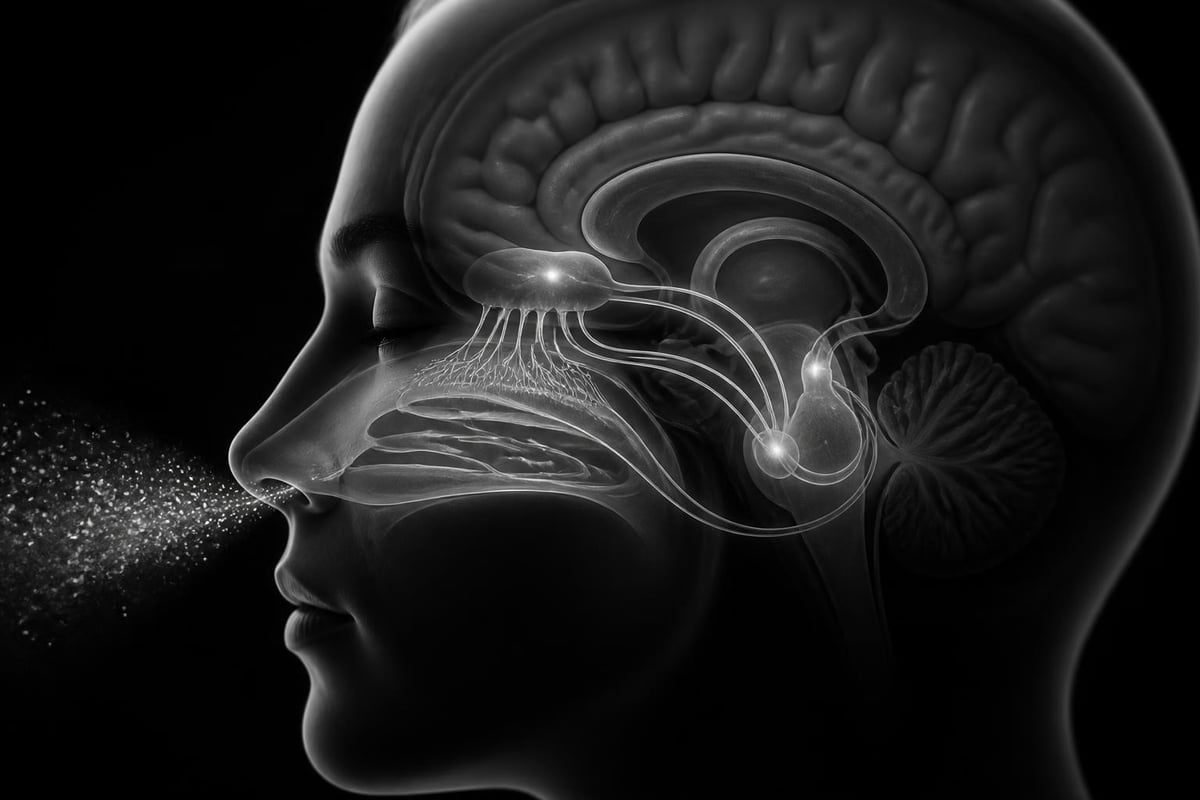
Unlike visual information that requires processing through multiple relay stations, scent takes an express route to memory centers. The Cleveland Clinic explains how this neurological shortcut allows fragrances to bypass rational thought and trigger immediate emotional responses. You smell something and feel transported before you consciously identify what you're smelling.
Why Do Certain Scents Trigger Stronger Memories Than Others?
Certain scents trigger stronger memories because they were present during emotionally significant moments when your brain actively encoded experiences into long-term storage. The hippocampus prioritizes memory formation during periods of heightened emotion, novelty, or personal relevance. When a fragrance accompanies these moments, it becomes woven into the memory itself as a retrieval cue.
Personal history shapes which fragrances become powerful memory triggers. A scent that holds deep meaning for one person might register as neutral for another. This individuality reflects the subjective nature of autobiographical memory and the unique constellation of experiences each person carries.
Several factors determine memory scent potency:
- Emotional intensity during the original experience
- Frequency of exposure during formative periods
- Personal significance of the associated event
- Age at first exposure to the fragrance
- Context uniqueness where the scent appeared
Studies on autobiographical odor memory reveal that scent-triggered memories tend to come from earlier life periods compared to memories triggered by other senses. This "reminiscence bump" suggests that fragrances encountered during childhood and adolescence gain exceptional retrieval power, perhaps because those developmental periods involve intense memory formation.
How Can You Use Memory Scent Intentionally?
You can use memory scent intentionally by selecting specific botanical fragrances for important life periods, creating olfactory markers that will later serve as retrieval cues for those experiences. This practice involves consciously pairing a distinctive scent with activities, relationships, or environments you want to remember. The key lies in choosing fragrances complex enough to be memorable but specific enough to remain associated with a particular context.
Many people discover this technique accidentally. They wear the same fragrance during a significant relationship or burn a particular candle while studying for exams. Years later, encountering that memory scent retrieves the entire emotional landscape of that period.
Steps for Creating Intentional Scent Memories
Building deliberate olfactory memories requires thoughtful selection and consistent use:
- Choose a distinctive botanical fragrance that differs from your regular rotation
- Use it exclusively during a specific period or activity
- Apply it consistently to strengthen the association
- Limit its use to the designated context
- Store it carefully for future reminiscence
Botanical fragrances work particularly well for this purpose because their complexity provides rich sensory information. Unlike single-note synthetic scents, botanical compositions contain hundreds of aromatic compounds that create layered, memorable impressions. Botanical eau de parfum crafted from real plant and resin extracts offers the chemical complexity needed for strong memory formation, with each application providing consistent olfactory information your brain can reliably encode and retrieve.
The practice of scent journaling extends this concept. Some people keep fragrance diaries noting which scents they wore during significant events, creating a deliberate archive of olfactory memory markers they can revisit.
What Role Does Context Play in Memory Scent?
Context plays a fundamental role in memory scent because fragrances rarely exist in isolation within our experiences. The brain encodes smells alongside environmental details, emotional states, people present, and activities occurring. This contextual binding means that encountering a memory scent often retrieves not just the fragrance itself but the entire scene in which it originally appeared.
Environmental psychologists recognize this phenomenon as state-dependent memory. When external conditions during recall match conditions during encoding, retrieval becomes easier and more vivid. A memory scent serves as one element of this environmental recreation, triggering associated contextual details.
| Memory Component | How Scent Connects | Retrieval Effect |
|---|---|---|
| Emotional state | Direct amygdala activation | Recreates original feelings |
| Physical location | Environmental association | Recalls spatial details |
| People present | Social context binding | Remembers relationships |
| Time period | Developmental markers | Ages the memory accurately |
| Activities | Behavioral pairing | Retrieves actions and routines |
The power of context explains why certain fragrances carry different meanings in different settings. Lavender might trigger memories of a specific person if they wore lavender perfume, or it might recall a geographic location if lavender grew there abundantly. The same botanical scent acquires different memory associations based on the contexts in which you encountered it.

How Does Memory Scent Change Over Time?
Memory scent changes over time as your brain consolidates, reconsolidates, and sometimes distorts the memories associated with specific fragrances. Each time you recall a memory, you slightly alter it through the process of reconsolidation. This means the emotional quality or contextual details linked to a particular scent may shift gradually, even though the core association remains.
Research on olfactory learning and memory indicates that scent memories demonstrate remarkable longevity compared to other sensory memories. The same direct neural pathway that makes them so vivid also appears to protect them from degradation. People often report that scent-triggered memories feel more immediate and emotionally accurate than memories triggered by photographs or songs.
Aging introduces another dimension to how memory scent evolves. Studies examining age-related differences in olfactory recognition memory show that while overall scent identification may decline with age, emotionally significant fragrance memories often remain accessible. The personal relevance of these memories appears to protect them from typical age-related memory loss.
Memory Reconsolidation and Scent
Every time you encounter a memory scent and recall its associated experiences, your brain opens that memory for potential modification. This reconsolidation window allows new information or current emotional states to influence how you remember the original event.
Understanding this process offers both opportunity and caution. You can potentially update negative scent associations by deliberately pairing them with positive experiences. Conversely, encountering a beloved memory scent during a difficult moment might tint that cherished memory with new emotional shading.
Can Memory Scent Be Used Therapeutically?
Memory scent can be used therapeutically through practices like aromatherapy, trauma processing, and cognitive enhancement, though effectiveness varies based on individual history and application method. Mental health professionals sometimes incorporate scent work into treatment protocols, recognizing that olfactory cues can access memories and emotions that verbal processing struggles to reach.
The therapeutic applications range from simple mood regulation to complex trauma work. Because scent bypasses cognitive defenses, it can sometimes unlock experiences that remain difficult to access through conversation alone. However, this same quality requires careful handling, as unexpected memory scent encounters can trigger overwhelming emotional responses.
Therapeutic uses of memory scent include:
- Anchoring positive states for stress management
- Processing traumatic memories in controlled settings
- Enhancing meditation practices through olfactory focus
- Supporting dementia care via familiar fragrance exposure
- Marking therapeutic milestones with distinctive scents
Clinical applications differ significantly from casual fragrance use. Therapists working with memory scent typically employ specific protocols and maintain awareness of each client's olfactory history. The goal involves using fragrance as a tool for accessing, processing, or regulating emotional material rather than simply creating pleasant sensory experiences.
What Makes Botanical Scents Particularly Effective for Memory?
Botanical scents prove particularly effective for memory because their chemical complexity provides rich, multi-dimensional olfactory information that your brain can encode more distinctively than simple synthetic fragrances. A single botanical extract contains dozens or hundreds of aromatic compounds that create a complex scent profile. This complexity offers more sensory detail for your memory systems to process and store.
Natural plant materials also tend to vary slightly between batches due to growing conditions, harvest timing, and processing methods. While perfumers often view this variability as a challenge, it can actually enhance memory formation by providing unique olfactory signatures for different life periods. The botanical scents you encounter carry subtle differences that make them memorable markers rather than generic background notes.
Synthetic fragrances, designed for consistency and stability, lack this natural variation. Their uniform composition across batches means less distinctive sensory information for memory encoding. Additionally, many synthetic fragrances smell similar to each other because they rely on common aroma chemicals, reducing their effectiveness as unique memory triggers.
| Aspect | Botanical Scents | Synthetic Fragrances |
|---|---|---|
| Chemical complexity | 50-300+ compounds | 5-20 compounds |
| Batch variation | Natural subtle differences | Identical across batches |
| Memory distinctiveness | High individual character | Often similar across products |
| Emotional resonance | Connects to nature experiences | May lack depth |
| Longevity in memory | Complex profiles stick | Simple notes fade |
The evolutionary dimension also matters. Humans evolved detecting and remembering plant scents as survival information. Which plants provided food, medicine, or danger? This biological heritage means our olfactory systems excel at processing and remembering botanical aromatic information.
How Do Cultural Factors Influence Memory Scent?
Cultural factors influence memory scent by shaping which fragrances appear in significant life contexts and how communities assign meaning to different aromatic experiences. The scents that populate your childhood, mark your celebrations, and accompany your rituals vary dramatically based on cultural background. These culturally embedded fragrances become powerful memory triggers precisely because they appear during personally and communally significant moments.
Someone raised in a culture where specific incenses mark religious ceremonies will form strong memory associations with those fragrances. Another person from a different background might have no emotional response to the same scents. This cultural specificity extends to cooking aromas, traditional medicines, seasonal celebrations, and even the plants that grow in different geographic regions.
Geographic location intersects with cultural practice to create distinctive scent landscapes. Growing up in Manhattan versus rural Montana exposes you to entirely different olfactory environments. Urban smells, neighborhood-specific aromas, and even the scent of particular buildings become memory markers for city dwellers. The smell of a specific subway station or the particular fragrance blend of a neighborhood market can trigger vivid New York memories for those who live there.
Food traditions represent one of the strongest cultural influences on memory scent. The aromatic signature of your family's cooking becomes deeply embedded in your sense of home and identity. These food-related fragrances often trigger not just memories but also feelings of belonging and cultural connection.
FAQ
What is the difference between memory scent and regular fragrance?
Memory scent refers to any fragrance that triggers specific personal memories, while regular fragrance simply provides a pleasant smell without retrieval function. The distinction lies in personal history rather than the scent itself. Any fragrance becomes a memory scent when your brain associates it with significant experiences. The same botanical perfume might trigger vivid memories for one person while smelling merely pleasant to another who lacks that experiential connection.
How long does it take for a scent to become a memory trigger?
A scent can become a memory trigger through a single intense exposure or through repeated pairing with significant experiences over weeks or months. Highly emotional moments create immediate strong associations, while everyday contexts require consistent exposure. The hippocampus encodes memories more strongly during novel or emotionally charged situations, so a fragrance present during such moments gains retrieval power quickly. Routine use during a specific life period creates gradual association through repetition.
Can you lose a memory scent association over time?
You can lose or weaken a memory scent association through lack of exposure or through creating new, stronger associations with the same fragrance. Memory reconsolidation means each recall potentially modifies the original memory. If you regularly encounter a memory scent in new contexts, those fresh associations may eventually overshadow older ones. However, deeply encoded scent memories, especially those from childhood or emotionally significant periods, demonstrate remarkable persistence even after decades without exposure.
Why do some memory scents trigger sadness or discomfort?
Some memory scents trigger sadness or discomfort because they connect to difficult experiences, lost relationships, or painful life periods. The same direct neural pathway that makes scent memories vivid also means they bypass rational processing and trigger immediate emotional responses. A fragrance associated with a deceased loved one or a traumatic event carries that emotional weight forward. This phenomenon explains why people sometimes avoid certain fragrances despite finding the smell itself pleasant.
Do natural scents create stronger memories than synthetic ones?
Natural scents often create stronger memories than synthetic ones because their chemical complexity provides more distinctive sensory information for encoding. Botanical fragrances contain numerous aromatic compounds that create unique, memorable profiles, while synthetic fragrances typically use fewer, more standardized molecules. This complexity gives your brain richer material to process and store. Additionally, natural scents vary slightly between batches, creating unique olfactory signatures for different time periods that enhance their function as memory markers.
How can I choose a memory scent for a specific life event?
Choose a memory scent for a specific life event by selecting a distinctive botanical fragrance you have not worn before and using it exclusively during that period. The scent should differ enough from your regular fragrances to stand out but appeal enough that you will enjoy wearing it consistently. Apply it daily throughout the event or time period you want to mark. Store the fragrance carefully afterward for intentional reminiscence. Botanical compositions work particularly well because their complexity creates memorable impressions your brain encodes effectively.
Memory scent represents one of the most powerful tools we possess for accessing our personal histories and emotional landscapes. By understanding how fragrances connect to memory formation and retrieval, you can use botanical aromas intentionally to mark important life moments and create lasting sensory anchors. Whether you are seeking to preserve current experiences or reconnect with past ones, working with natural plant-based fragrances offers a way to harness this remarkable aspect of human neurology. Explore the handcrafted botanical perfumes and candles at Haus of Smell, where every scent is made in Manhattan using 100% vegan, alcohol-free formulations designed to create memories worth keeping.