
Eau de parfum contains 15-20% fragrance oil and lasts 6-8 hours on skin, while cologne (eau de cologne) holds just 2-5% fragrance oil and fades within 2-3 hours. The primary difference lies in concentration strength, which determines longevity, intensity, and price. Eau de parfum offers richer scent development through top, heart, and base notes, whereas cologne provides a lighter, fresher application suited to casual wear or warm weather.
Understanding the eau de parfum vs cologne distinction helps you select fragrances that match your lifestyle, budget, and scent preferences. Both categories follow industry-standard concentration ranges, though these terms function as common descriptors rather than strictly regulated definitions across global markets. The choice between them often comes down to how long you want a scent to last and how intensely you want it to project from your skin.
What Is the Difference Between Eau de Parfum and Cologne?
The primary difference between eau de parfum and cologne is fragrance concentration. Eau de parfum contains 15-20% aromatic compounds suspended in alcohol, while cologne (properly termed eau de cologne) contains only 2-5% fragrance oil. This concentration gap creates cascading differences in longevity, projection, complexity, and cost.
Higher concentration means more scent molecules remain on your skin after the alcohol evaporates. Eau de parfum develops fully across three scent stages: bright top notes that open the fragrance, deeper heart notes that emerge after 15-30 minutes, and rich base notes that anchor the scent for hours. Cologne, by contrast, emphasizes fresh top notes with minimal base development, creating a lighter experience that refreshes rather than envelops.
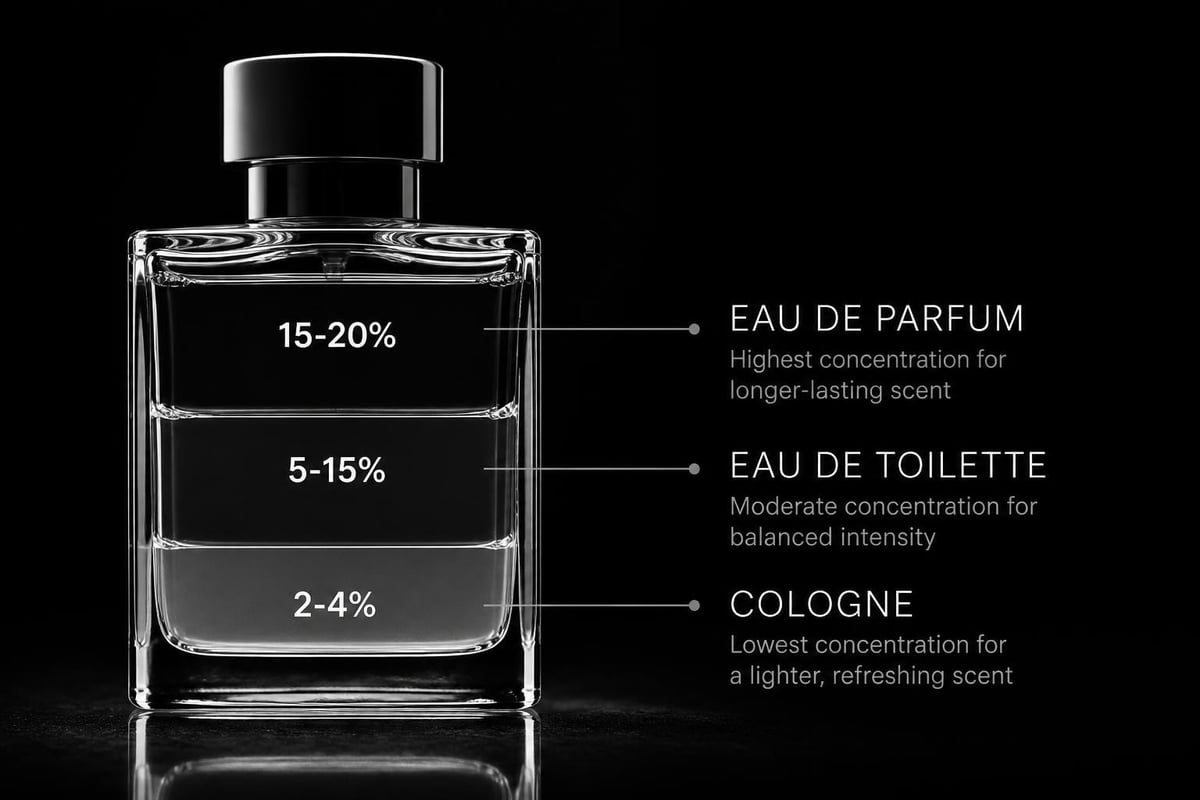
Fragrance Oil Concentration Breakdown
| Fragrance Type | Oil Concentration | Typical Longevity | Projection |
|---|---|---|---|
| Parfum (Extrait) | 20-30% | 8-12 hours | Intimate |
| Eau de Parfum | 15-20% | 6-8 hours | Moderate |
| Eau de Toilette | 5-15% | 4-6 hours | Light |
| Eau de Cologne | 2-5% | 2-3 hours | Very Light |
These ranges reflect industry standards, though individual formulations vary. A well-crafted botanical eau de parfum using oil-based carriers rather than alcohol can achieve even longer wear, as natural oils evaporate more slowly than alcohol and interact differently with skin chemistry.
The concentration also affects how a fragrance feels on skin. Eau de parfum carries more weight and warmth, while cologne feels cooler and more fleeting. This tactile difference matters for those sensitive to heavy scents or working in close quarters where projection becomes a consideration.
How Long Does Eau de Parfum Last Compared to Cologne?
Eau de parfum lasts 6-8 hours on average skin, while cologne fades within 2-3 hours under the same conditions. Longevity depends on concentration, skin type, climate, and application method. Oily skin holds fragrance longer than dry skin, and humid environments slow evaporation compared to dry, air-conditioned spaces.
Application site also influences duration. Pulse points (wrists, neck, inner elbows) generate warmth that amplifies scent but also accelerates evaporation. Applying fragrance to clothing or hair extends wear time, though fabric can absorb and alter the scent profile differently than skin.
For maximum longevity with either category, layer fragrance over unscented moisturizer. Hydrated skin retains scent molecules better than dry, flaky skin. Some wearers reapply cologne throughout the day to maintain presence, treating it as a refreshing ritual rather than a single-use product.
Factors That Affect Fragrance Longevity
- Skin chemistry: pH balance, moisture level, and natural oils interact with fragrance compounds
- Climate conditions: Heat and humidity slow alcohol evaporation, cold and dry air speed it
- Activity level: Physical exertion and perspiration dilute and wash away scent molecules
- Application amount: More sprays extend duration but risk overwhelming nearby people
- Storage practices: Light, heat, and air exposure degrade fragrance oils over months
Professional perfumers account for these variables during formulation. Industry safety standards ensure concentrations remain safe for skin contact while maximizing performance, though regulatory frameworks focus primarily on ingredient safety rather than longevity claims.
Which Costs More: Eau de Parfum or Cologne?
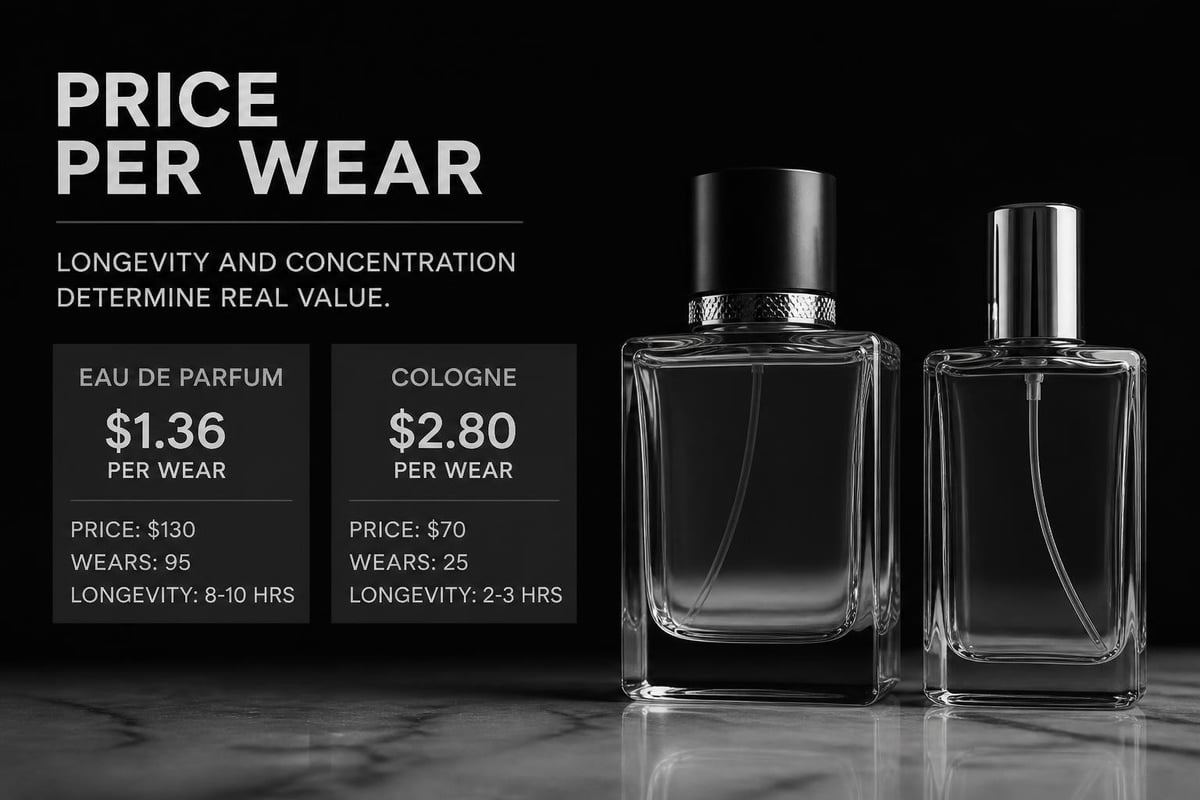
Eau de parfum costs more per ounce than cologne due to higher fragrance oil content and more complex ingredient sourcing. A 50ml bottle of quality eau de parfum typically ranges from $80-$200, while comparable cologne might cost $40-$100. Price reflects not just concentration but also ingredient quality, brand positioning, and production scale.
The cost-per-wear calculation often favors eau de parfum despite higher upfront expense. Because it lasts longer, you use less per application. A single spray of eau de parfum might provide all-day scent, whereas cologne requires multiple reapplications to maintain presence.
Botanical fragrances command premium pricing regardless of concentration, as natural plant and resin extracts cost significantly more than synthetic aromatic chemicals. A botanical eau de parfum crafted from real plant extracts reflects the expense of sourcing, extracting, and blending ingredients that cannot be replicated in laboratories.
Luxury pricing also accounts for artisan production methods. Handmade fragrances produced in small batches in locations like Manhattan carry higher labor and facility costs than mass-manufactured products, though many wearers value the craftsmanship and ingredient transparency that accompanies this approach.
When Should You Wear Eau de Parfum vs Cologne?
Wear eau de parfum for evening events, cooler weather, and situations where you want lasting scent presence without reapplication. Its intensity suits formal occasions, intimate gatherings, and personal spaces where you control scent projection. The richer concentration develops complexity over hours, rewarding patience with evolving layers.
Choose cologne for daytime wear, warm climates, office environments, and active situations where heavy fragrance feels inappropriate. Its lightness refreshes without overwhelming, making it ideal for summer heat, gyms, crowded spaces, or workplaces with scent-sensitivity policies. Cologne allows frequent reapplication without building to cloying intensity.
Consider context beyond just occasion. Eau de parfum works well when you want scent to feel like part of your presence rather than an announcement. Cologne functions more like a grooming step, similar to aftershave or hair product, providing subtle freshness rather than signature scent.
Practical Application Guidelines
- Morning routine: Apply cologne to pulse points after showering for clean, light presence
- Pre-event preparation: Spray eau de parfum 30-60 minutes before arrival to let top notes settle
- Midday refresh: Carry cologne for quick reapplication between meetings or during long days
- Evening transition: Layer eau de parfum over same-scent cologne base for maximum depth
- Travel consideration: Pack cologne in carry-on for post-flight freshening without overpowering enclosed spaces
Season also guides selection. Many wearers maintain separate warm-weather and cold-weather fragrance wardrobes, using cologne during humid months and eau de parfum when cold air requires stronger formulations to project. This approach prevents scent fatigue and keeps fragrance choices feeling intentional rather than habitual.
What Ingredients Differ Between Eau de Parfum and Cologne?
Both eau de parfum and cologne use the same categories of ingredients (aromatic compounds, solvents, and fixatives), but their proportions differ dramatically. Eau de parfum contains more fragrance oils and fixatives that slow evaporation, while cologne relies on higher alcohol content and lighter aromatic molecules that volatilize quickly.
Traditional cologne formulations emphasize citrus oils (bergamot, lemon, orange), light florals (neroli, lavender), and fresh herbal notes (rosemary, mint). These ingredients naturally evaporate faster than the heavier resins, woods, and musks common in eau de parfum bases. The lighter ingredient profile creates cologne's characteristic freshness.
Eau de parfum incorporates more complex fixatives (oakmoss, labdanum, benzoin, patchouli) that anchor volatile top notes and extend overall wear time. These heavier molecules require higher concentration to express properly. At cologne concentrations, many base materials smell thin or unbalanced, which is why cologne formulas typically avoid them.
Alcohol content follows an inverse relationship to fragrance oil. Cologne might be 90-95% alcohol, while eau de parfum typically contains 75-85% alcohol. Some artisan perfumers, particularly those working with botanical ingredients, replace alcohol entirely with natural oil carriers like jojoba or fractionated coconut oil, creating alcohol-free formulations with entirely different evaporation profiles.
European regulations on fragrance allergen labeling affect both categories equally. Ingredients like linalool, limonene, and citronellol must be listed on packaging when present above specific thresholds, regardless of whether the product is labeled eau de parfum or cologne. These transparency requirements help consumers make informed choices about potential skin sensitivities.
How Do You Choose Between Eau de Parfum and Cologne?
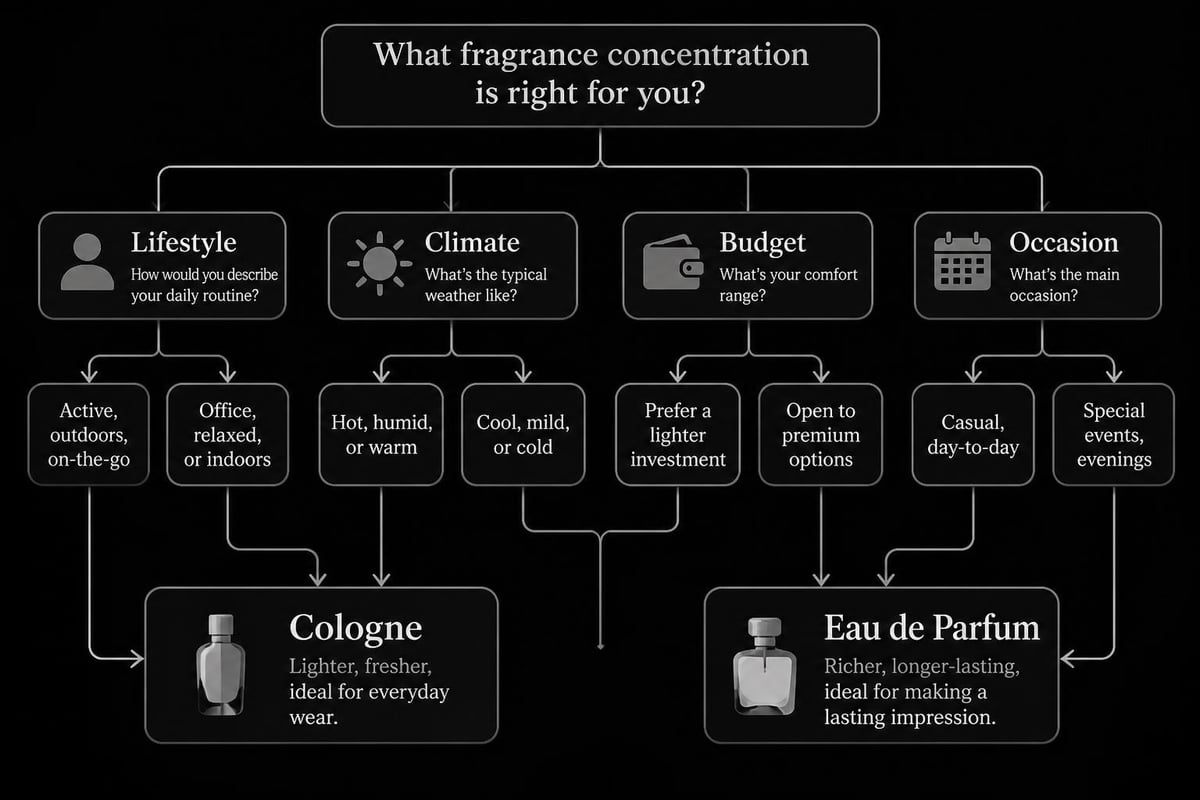
Choose based on desired longevity, scent intensity, budget, and wearing context. If you want fragrance that lasts through a full workday or evening without reapplication, eau de parfum delivers better value despite higher cost. If you prefer light, refreshing scent that you control through multiple applications, cologne offers flexibility and affordability.
Test both concentrations of the same fragrance family when possible. A scent you love as cologne might feel overwhelming as eau de parfum, or a subtle eau de parfum might barely register as cologne. Concentration changes more than just duration; it alters the balance between different scent components.
Consider your sensitivity to alcohol. High-alcohol cologne formulations can dry or irritate sensitive skin, particularly when applied multiple times daily. Oil-based alternatives or lower-concentration alcohol formulas provide gentler options for those who experience reactions to conventional fragrances.
Decision Framework for Selecting Concentration
| Priority | Recommended Choice | Reason |
|---|---|---|
| Maximum longevity | Eau de Parfum | Higher oil content extends wear time |
| Budget-conscious | Cologne | Lower upfront cost, though cost-per-wear may be higher |
| Warm climate | Cologne | Lighter formula feels less heavy in heat |
| Sensitive skin | Oil-based or low-alcohol options | Reduces alcohol-related irritation |
| Office wear | Cologne or light EDT | Subtle presence respects shared spaces |
| Special occasions | Eau de Parfum | Richer development suits memorable events |
The Guardian's fragrance coverage frequently addresses the practical aspects of choosing between concentrations, offering consumer perspectives on testing, purchasing, and daily wear patterns. Reading reviews from multiple sources helps calibrate expectations before investing in full-sized bottles.
Are There Safety Differences Between Eau de Parfum and Cologne?
Both eau de parfum and cologne must meet the same safety standards when sold as cosmetic products in regulated markets. The concentration difference does not inherently make one safer than the other, though higher fragrance oil content in eau de parfum means more potential allergen exposure per application. Fragrance safety standards apply to ingredients regardless of final product concentration.
Alcohol content presents different considerations. Cologne's higher alcohol percentage can cause more skin dryness and potential irritation, particularly for those with sensitive or compromised skin barriers. Conversely, the concentrated aromatic compounds in eau de parfum may trigger sensitivities in those reactive to specific fragrance molecules, even at lower application volumes.
Regulatory bodies focus on ingredient safety rather than concentration categories. European allergen labeling requirements mandate disclosure of specific materials above threshold levels, helping consumers identify potential irritants before purchase. These rules apply equally to eau de parfum, cologne, and all other cosmetic fragrance products.
Synthetic-free botanical formulations eliminate many common allergens found in conventional perfumery but may still contain naturally occurring sensitizers like citral, geraniol, or eugenol. Natural does not automatically mean hypoallergenic. Anyone with known fragrance sensitivities should patch-test new products regardless of concentration or natural claims.
The EPA's Safer Choice Criteria for Fragrances provides a framework for evaluating ingredient safety beyond regulatory minimums, addressing chronic exposure, environmental impact, and manufacturing transparency. While voluntary, these guidelines influence reformulation efforts across the industry.
Can You Layer Eau de Parfum and Cologne Together?
Yes, layering eau de parfum and cologne creates customizable scent intensity and longevity. Apply cologne first as a lighter base, then add eau de parfum to specific pulse points for concentrated presence. This technique allows you to control projection while extending overall wear time through strategic placement.
Layering works best with fragrances from the same family or complementary profiles. Mixing competing scent directions (fresh citrus cologne with heavy oriental eau de parfum, for example) creates muddled results rather than harmonious complexity. Start with subtle combinations and adjust based on how the layers develop on your skin chemistry.
Some wearers use cologne for daytime base and add eau de parfum in evening to transform the scent without complete reapplication. This approach conserves expensive eau de parfum while maintaining fragrance presence throughout long days. Others layer different concentrations of identical formulations to fine-tune intensity.
Application order matters. Lighter (more volatile) fragrances should go on first, followed by heavier (less volatile) ones. This prevents the strong eau de parfum from overwhelming the delicate cologne before it has time to develop. Allow 2-3 minutes between layers for initial alcohol evaporation.
Unscented base products (moisturizers, oils) enhance layering by creating a neutral foundation that holds fragrance without competing scent profiles. This technique particularly benefits those exploring botanical perfume oils, which layer naturally over alcohol-based products due to their oil-based carrier systems.
What Role Does Skin Type Play in Eau de Parfum vs Cologne Performance?
Skin type significantly affects how both eau de parfum and cologne perform throughout the day. Oily skin retains fragrance longer because oil molecules bond with fragrance compounds and slow evaporation. Dry skin allows both alcohol and aromatic molecules to evaporate rapidly, shortening wear time across all concentration levels.
People with dry skin often find eau de parfum provides adequate longevity where cologne fades almost immediately. The higher oil concentration compensates for rapid evaporation, though proper skin preparation (moisturizing before application) extends performance further. Those with naturally oily skin may find even cologne lasts surprisingly long without additional measures.
Skin pH also influences scent development. Slightly acidic skin (pH 4.5-5.5) preserves fragrance differently than alkaline skin (pH above 6), sometimes amplifying certain notes while muting others. This variation explains why the same fragrance smells different on different people, even when applied at the same concentration.
Temperature regulation affects fragrance behavior on skin. People who run warm naturally amplify scent projection, as heat volatilizes aromatic compounds faster. They might prefer cologne's lighter concentration to avoid overwhelming projection. Those who run cool may need eau de parfum's intensity to achieve noticeable scent presence.
Skin-Specific Application Strategies
- Dry skin: Apply fragrance over unscented oil or balm, focus on hair and clothing for longer wear
- Oily skin: Use lighter concentrations, reduce spray count to prevent overwhelming intensity
- Sensitive skin: Choose alcohol-free formulations or eau de parfum with lower alcohol content
- Combination skin: Target oily areas (behind ears, chest) with fragrance for better retention
Testing fragrance on your own skin remains the only reliable way to predict performance. Scent strips and bottle caps provide initial impressions but cannot replicate the complex interaction between fragrance, skin chemistry, body heat, and environmental factors that determine real-world wear.
How Has the Eau de Parfum vs Cologne Category Evolved?
The eau de parfum vs cologne distinction has blurred significantly in contemporary perfumery as brands expand beyond traditional concentration categories. Many modern fragrances launch in multiple concentrations simultaneously, allowing consumers to choose intensity while maintaining scent identity. This flexibility acknowledges that context matters as much as personal preference.
Gender boundaries have dissolved as well. Cologne historically marketed to men and eau de parfum to women, but these associations no longer hold. Fragrance houses now emphasize scent profile over gender marketing, with concentration choice driven by desired performance rather than outdated categorization. The term "cologne" sometimes still appears in men's marketing, though it rarely reflects actual concentration standards.
Niche and independent perfumers increasingly challenge concentration conventions entirely. Some create "eau de parfum intense" or "cologne absolue" formulations that fall outside traditional ranges. Others abandon concentration labeling altogether, focusing instead on ingredient transparency, sourcing, and craft production methods that resonate with ingredient-conscious consumers.
Botanical and natural perfumery has introduced alternative formats that sidestep the eau de parfum vs cologne framework entirely. Oil-based perfumes, solid fragrances, and alcohol-free sprays perform according to different rules, offering longevity and projection that cannot be directly compared to conventional concentration categories. These alternatives appeal to consumers seeking cleaner ingredients or avoiding alcohol for personal or cultural reasons.
Market education has improved significantly compared to previous decades. Consumers now understand concentration differences and make informed choices rather than defaulting to traditional category assumptions. This shift has encouraged brands to provide clearer labeling and performance descriptions rather than relying solely on historical terminology.
Frequently Asked Questions
Is eau de parfum stronger than cologne?
Yes, eau de parfum is stronger than cologne due to higher fragrance oil concentration (15-20% versus 2-5%). This difference creates more intense scent projection and longer-lasting presence on skin. Eau de parfum develops through multiple scent layers over hours, while cologne provides lighter, fresher fragrance that fades within 2-3 hours. Strength affects both detectability and complexity of the scent experience.
Can men wear eau de parfum or is it only for women?
Men can absolutely wear eau de parfum. Concentration level has no gender association; it simply indicates fragrance strength and longevity. Modern perfumery emphasizes scent profile over outdated gender marketing. Choose eau de parfum or cologne based on desired intensity, wearing context, and personal preference rather than historical gender conventions. The scent itself matters more than the concentration category or marketing label.
How many sprays of eau de parfum vs cologne should you apply?
Apply 2-3 sprays of eau de parfum to pulse points for moderate presence, or 4-6 sprays of cologne for comparable intensity. Eau de parfum requires fewer applications due to higher concentration. Start conservatively with any new fragrance and adjust based on projection, longevity, and feedback from trusted sources. Overapplication creates overwhelming scent clouds; underapplication wastes potential. Climate, skin type, and occasion also influence ideal spray count.
Does cologne have less alcohol than eau de parfum?
No, cologne typically contains more alcohol than eau de parfum (90-95% versus 75-85%). Higher alcohol content balances the lower fragrance oil concentration, keeping the product fluid and sprayable. This increased alcohol can cause more skin dryness in sensitive individuals. The inverse relationship between fragrance oil and alcohol maintains consistent product viscosity across concentration categories while delivering different scent intensities and longevity.
Why is eau de parfum more expensive than cologne?
Eau de parfum costs more because it contains 3-10 times more fragrance oil than cologne, and aromatic ingredients represent the most expensive component in any fragrance. Higher concentration requires more raw materials per bottle. Additionally, eau de parfum formulations often use more expensive base notes and fixatives that extend longevity. Production complexity, ingredient quality, and brand positioning further influence pricing. Cost-per-wear may favor eau de parfum despite higher upfront expense.
Do eau de parfum and cologne smell different if they're the same fragrance?
Yes, the same fragrance smells noticeably different at eau de parfum versus cologne concentration. Cologne emphasizes lighter top notes with minimal base development, while eau de parfum reveals deeper heart and base notes that require higher concentration to express properly. The balance between scent layers shifts with concentration, sometimes making them smell like related but distinct fragrances. Testing both concentrations helps determine which version matches your preference and lifestyle needs.
The eau de parfum vs cologne choice ultimately depends on how you want fragrance to function in your daily life-whether as a subtle refresher or a lasting signature. Understanding concentration, longevity, and ingredient differences empowers you to select fragrances that match your needs rather than defaulting to marketing assumptions. If you're seeking fragrances built from genuine botanical ingredients rather than synthetic replicas, explore what Haus of Smell creates in Manhattan: alcohol-free, vegan perfume oils that perform outside conventional concentration categories entirely, offering a different approach to scent that prioritizes ingredient transparency and handmade craft.