
The term eau de translates from French as "water of" and designates the concentration level of aromatic compounds in a fragrance composition. This classification system determines how long a perfume lasts on skin, how intensely it projects, and how the formula balances volatile top notes against persistent base materials. Understanding these categories helps you select fragrances that match your wearing preferences and daily routines.
The perfume industry relies on this French nomenclature because modern Western perfumery developed in France during the 17th and 18th centuries. These concentration categories remain the global standard for classifying scent products, from drugstore colognes to niche botanical blends crafted in Manhattan workshops.
What Does Eau de Mean in Perfume Terms
Eau de functions as a prefix that indicates the dilution ratio of concentrated perfume oils within an alcohol or oil base. The full phrase always pairs with a second word: cologne, toilette, or parfum. Each pairing specifies a different concentration range, measured as the percentage of aromatic materials relative to the total formula weight.
Traditional alcohol-based perfumery uses ethanol as the carrier solvent because it evaporates quickly and disperses scent molecules into the air. The higher the concentration of aromatic oils, the less alcohol the formula contains. This relationship affects both longevity and price, since concentrated aromatic extracts cost significantly more than the carrier solvents that dilute them.
Botanical Eau de Parfum reverses this traditional structure by using plant oils as both the aromatic material and the carrier base, eliminating alcohol entirely while maintaining concentration levels comparable to conventional formulations.
The Historical Origins of Eau de Classification
European perfumers standardized these categories during the 19th century as industrial production replaced small-batch compounding. Manufacturers needed consistent terminology to communicate formula strength across borders and languages. The French terms persisted because Paris dominated the luxury fragrance trade throughout this period.
Before this standardization, perfumers created bespoke concentrations for individual clients. A wealthy patron might request an extrait for evening wear and a lighter preparation for daytime. The eau de system simplified this custom practice into reproducible commercial categories.
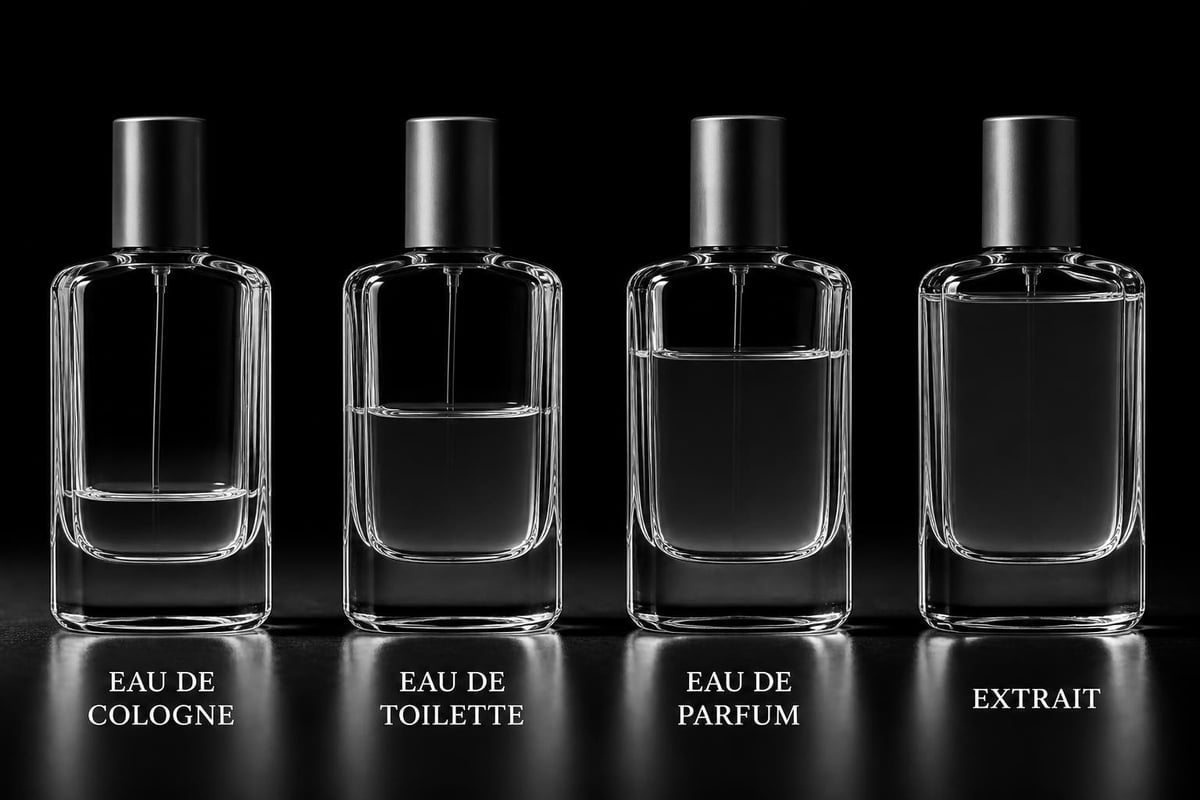
What Is the Difference Between Eau de Parfum and Eau de Toilette
Eau de parfum contains 15 to 20 percent aromatic compounds, while eau de toilette holds 5 to 15 percent. This concentration gap translates directly to wearing time: parfum formulations typically last six to eight hours on skin, whereas toilette versions fade after three to five hours.
The intensity difference affects how you experience the fragrance structure throughout the day. Higher concentrations reveal base materials more prominently, since these heavier molecules persist after lighter top notes evaporate. Lower concentrations emphasize the opening accords, creating a fresher initial impression that diminishes more quickly.
| Category | Concentration | Longevity | Projection | Typical Use |
|---|---|---|---|---|
| Eau de Cologne | 2-4% | 2 hours | Light | Refreshing splash |
| Eau de Toilette | 5-15% | 3-5 hours | Moderate | Daily wear |
| Eau de Parfum | 15-20% | 6-8 hours | Strong | All-day wear |
| Extrait de Parfum | 20-40% | 12+ hours | Intimate | Special occasions |
Price per ounce rises with concentration because you pay for a higher proportion of expensive aromatic materials. However, stronger concentrations require fewer applications, which can offset the initial cost over time. Vogue's analysis of these categories confirms that parfum formulations deliver better value for consumers seeking longevity.
How Concentration Affects Scent Development
Fragrance composition follows a three-tier structure: top notes appear immediately, heart notes emerge after 15 to 30 minutes, and base notes dominate the final hours. Concentration level determines which tier receives the most emphasis in the finished formula.
Eau de toilette formulations showcase volatile top materials like citrus and green leaves because these light molecules represent a larger proportion of the total aromatic content. The base remains subtle, providing just enough anchor to prevent the scent from vanishing instantly.
Eau de parfum reverses this balance. The higher oil content allows perfumers to load the base with rich materials that develop slowly over hours. Top notes still provide the opening impression, but they transition more smoothly into the heart and base rather than fading abruptly.
How Do You Choose Between Different Eau de Concentrations
Choose based on wearing duration needs and preferred scent intensity. Select eau de toilette for situations requiring light, inoffensive presence: office environments, crowded spaces, or warm weather when heavy fragrances become overwhelming. Opt for eau de parfum when you want continuous scent from morning through evening without reapplication.
Your skin chemistry influences how concentrations perform on your body. Dry skin absorbs and metabolizes fragrance molecules faster than oily skin, which means a toilette formulation might fade within two hours on some wearers. Test concentrations on your own skin rather than relying solely on manufacturer longevity claims.
Climate conditions also affect concentration performance. Humid environments amplify projection, making lighter toilette versions more comfortable. Dry, cold air suppresses scent diffusion, which favors stronger parfum concentrations that push through environmental resistance.
Testing Fragrance Concentrations Effectively
Apply the concentration to pulse points where warmth activates scent molecules: inner wrists, behind ears, or the base of the throat. Wait at minimum 15 minutes before evaluating, since the initial alcohol flash distorts your perception of the true fragrance character.
Track the development over several hours rather than judging from the opening spray alone. Note when you stop detecting the scent on yourself, when others can no longer smell it at arm's length, and when it disappears entirely. This timeline reveals whether the concentration matches your wearing needs.
Purchase small samples before committing to full bottles, especially for parfum concentrations that represent significant investment. Many botanical scent specialists offer discovery sets that let you compare concentration levels within the same fragrance family.
What Is Eau de Cologne Compared to Other Categories
Eau de cologne contains 2 to 4 percent aromatic compounds, making it the lightest concentration category. Originally formulated in Cologne, Germany during the 18th century, these preparations emphasized fresh citrus and herbal materials that provided momentary refreshment rather than lasting fragrance.
The term cologne became genericized in American English to mean any men's fragrance, regardless of actual concentration. This linguistic shift creates confusion, since a product labeled simply "cologne" might contain toilette or even parfum levels of aromatic material. The Daily Beast's fragrance guide clarifies these distinctions for consumers navigating ambiguous product labeling.
Modern eau de cologne serves specific purposes where extended longevity would be undesirable. Post-shower splashes, gym bag refreshers, and quick midday pick-me-ups all benefit from formulations that dissipate within an hour or two. The low concentration also makes cologne suitable for fragrance layering, where you build complexity by combining multiple scent products without overwhelming intensity.
Regional Variations in Eau de Usage
European markets maintain stricter adherence to traditional concentration categories than American retailers. A French parfumerie clearly differentiates between toilette and parfum versions of the same fragrance, often displaying them side by side with visible price differences reflecting the concentration gap.
American fragrance counters sometimes obscure these distinctions, offering only a single concentration labeled generically as "perfume" or using designer-specific terminology that abandons the eau de system entirely. This marketing approach prioritizes brand identity over transparent concentration disclosure.
Understanding the standard categories protects you from paying parfum prices for toilette concentrations. Examine the fine print on packaging or ask sales staff directly about aromatic compound percentages when the front label uses ambiguous terminology.
Why Do Classic Perfumes Reformulate Their Eau de Versions
Regulatory restrictions force reformulation when governing bodies ban or limit specific aromatic materials. The International Fragrance Association regularly updates its standards based on allergen research and environmental concerns, which affects availability of traditional perfume ingredients. Le Monde's investigation into classic perfume changes documents how these regulatory shifts alter beloved formulations.
Natural material availability fluctuates based on harvest conditions, geopolitical instability, and agricultural pressures. When a key botanical becomes scarce or prohibitively expensive, perfumers must substitute alternative materials that approximate the original character. These adjustments accumulate over decades, gradually shifting a fragrance away from its initial composition.
Cost reduction drives some reformulations as brands seek to maintain profit margins while facing rising production expenses. Replacing expensive natural extracts with cheaper synthetic approximations reduces manufacturing costs, though the sensory result rarely matches the original formula exactly.
How Reformulation Affects Different Concentrations
Parfum concentrations suffer most noticeably from reformulation because the higher aromatic content makes any material substitution more apparent. A 20 percent concentration of slightly altered ingredients produces a very different experience than the same alteration in a 5 percent toilette version where diluent masks the change.
Vintage perfume collectors specifically seek pre-reformulation batches of classic fragrances, particularly in extrait concentration where the original formula survives most intact. These bottles command premium prices because they preserve aromatic profiles no longer available in current production.
Botanical perfumery avoids many reformulation pressures by working directly with plant materials rather than relying on isolated chemical compounds subject to regulatory restriction. The natural ingredients approach ties fragrance character to actual botanical sources rather than industrial chemical synthesis.
How Has Eau de Perfumery Changed Since 1900
Academic analysis reveals that perfume complexity increased dramatically during the 20th century, with modern fragrances incorporating significantly more individual aromatic materials than early compositions. Research on cultural perfume evolution demonstrates how societal changes influenced fragrance development, including the shift from simple floral waters to complex multi-layered constructions.
The introduction of synthetic aroma chemicals after 1920 expanded the perfumer's palette beyond naturally occurring botanicals. These synthetics enabled new scent categories impossible to create using only plant and animal extracts, fundamentally altering what consumers expected from fine fragrance.
Concentration preferences shifted alongside these compositional changes. Early 20th century consumers favored extrait formulations applied sparingly, while contemporary markets emphasize eau de parfum as the standard luxury concentration. This shift reflects changing application habits and social norms around fragrance projection.
The Movement Toward Transparency in Fragrance
Consumer demand for ingredient disclosure increased significantly during the 2010s and 2020s, driven by wellness concerns and skepticism about synthetic chemicals. This transparency movement particularly affects eau de parfum and extrait categories, where consumers paying premium prices expect detailed information about formula composition.
Regulatory requirements for allergen labeling provide minimum disclosure, but many consumers now seek complete ingredient lists comparable to those required for cosmetics and food products. Traditional perfume houses resist this transparency, citing proprietary formulation secrecy and competitive concerns.
Botanical perfumers often embrace full disclosure because natural plant materials require no proprietary protection and appeal to consumers seeking recognizable ingredients. Listing actual botanical sources rather than generic "fragrance" creates trust and differentiates natural fragrance collections from conventional synthetic formulations.
What Are Extrait and Absolue in Eau de Terms
Extrait de parfum represents the highest concentration category at 20 to 40 percent aromatic compounds. Sometimes called pure perfume or parfum extrait, these formulations contain minimal alcohol and deliver maximum longevity, often persisting 12 to 24 hours on skin.
The concentration allows for intimate rather than projecting fragrance experiences. Extrait sits close to the skin, revealing its complexity primarily to the wearer and those in immediate proximity. This personal quality makes extrait suitable for situations where broadcasting scent across a room would be inappropriate.
Absolue technically refers to a specific extraction method that produces highly concentrated aromatic material from botanical sources, but some brands use the term as a marketing designation for premium concentration levels. Who What Wear's extrait guide explores how luxury houses position these concentrated formulations.
Price and Value in Concentrated Formulations
Extrait typically costs two to three times more per ounce than eau de parfum from the same house. The price reflects both higher aromatic material content and smaller production volumes, since extrait versions sell in much lower quantities than mainstream concentrations.
The per-wearing cost may actually favor extrait despite higher bottle prices. A single drop of 30 percent concentration provides equivalent scent to three sprays of 10 percent toilette, which means the expensive bottle lasts proportionally longer.
Oil-based botanical formulations achieve parfum-level concentrations without alcohol, creating an alternative to traditional extrait that eliminates the drying effects some wearers experience from high-proof ethanol carriers. These oil bases also allow concentration levels above 40 percent without the formula becoming unstable.
FAQ
What does eau de mean in English?
Eau de translates from French as "water of" and indicates the concentration level of aromatic compounds in perfume. The phrase combines with cologne, toilette, or parfum to specify different dilution ratios. This classification system helps consumers understand how long a fragrance will last and how intensely it projects on skin.
Which lasts longer eau de parfum or eau de toilette?
Eau de parfum lasts longer because it contains 15 to 20 percent aromatic compounds compared to 5 to 15 percent in eau de toilette. Parfum formulations typically persist six to eight hours on skin, while toilette versions fade after three to five hours. The higher concentration also creates stronger projection and more prominent base materials.
Can you layer different eau de concentrations together?
You can layer different concentrations to customize intensity and longevity. Apply eau de parfum to pulse points for lasting base scent, then add eau de toilette spray for fresh top notes. Start with the strongest concentration first and add lighter versions over it. Test combinations on your skin before wearing them publicly since some materials clash when combined.
Why is eau de parfum more expensive than eau de toilette?
Eau de parfum costs more because it contains a higher percentage of expensive aromatic materials relative to inexpensive carrier solvents. The concentrated formula requires less diluent per bottle, meaning you pay primarily for actual fragrance oils rather than alcohol. Production volumes also tend to be lower for parfum concentrations, which increases per-unit manufacturing costs.
Does skin type affect how eau de concentrations perform?
Skin type significantly affects fragrance performance across all concentrations. Dry skin absorbs and metabolizes scent molecules faster, requiring stronger concentrations for adequate longevity. Oily skin holds fragrance longer and amplifies projection, which means lighter concentrations may suffice. Climate humidity and body temperature also influence how different eau de levels develop throughout the day.
Are alcohol-free perfumes considered eau de formulations?
Alcohol-free perfumes can match eau de concentration levels when they use oil carriers instead of ethanol. The classification refers to aromatic compound percentage, not the specific solvent type. Oil-based formulations at 15 to 20 percent concentration deliver comparable performance to traditional eau de parfum, though they diffuse differently due to the non-volatile carrier base.
Understanding eau de classifications empowers you to select fragrances that match your lifestyle needs rather than relying on marketing claims or price points alone. The concentration level determines not just longevity but the entire character of how a scent develops on your skin throughout the day. If you seek botanical alternatives to conventional alcohol-based formulations, Haus of Smell handcrafts vegan perfumes in Manhattan using only natural plant extracts, delivering parfum-level concentrations without synthetic ingredients or ethanol carriers.