
In-person perfume workshops in New York City let you blend botanical extracts, learn scent architecture, and bottle a custom fragrance in one session. Studios across Manhattan-particularly in NoMad and surrounding neighborhoods-offer drop-in classes, private bookings, and build-your-own fragrance experiences that teach you how perfumes are structured while you create a scent you'll actually wear.
The city's fragrance scene has shifted toward natural, botanical formulations and hands-on education. Whether you want to understand how top, heart, and base notes interact or simply leave with a signature scent, workshops provide both the knowledge and the product. You'll work with real plant extracts, resins, and essential oils under guidance from experienced perfumers who explain blending ratios, scent families, and how to balance a formula that lasts.
Where Can You Create Your Own Perfume In Person NYC?
You can create your own perfume in person NYC at specialty fragrance studios, continuing education programs, and boutique scent shops throughout Manhattan. Most in-person workshops operate in neighborhoods like NoMad, SoHo, and the Lower East Side, where small-batch perfumers maintain blending studios open to the public.
Several formats exist:
- Drop-in workshops at craft studios, often listed on Time Out's crafting classes roundup
- Certificate programs such as Pratt Institute's Advanced Perfumery course, which runs multi-week modules in Brooklyn
- Boutique custom-blend services where you book an appointment and walk out with a finished bottle
If you're exploring things to do in NoMad, you'll find studios that specialize in botanical formulations and alcohol-free bases. These spaces prioritize natural ingredients and often let you choose your vessel, cap, and concentration level alongside the scent itself.
What Do You Learn When You Create Your Own Perfume In Person NYC?
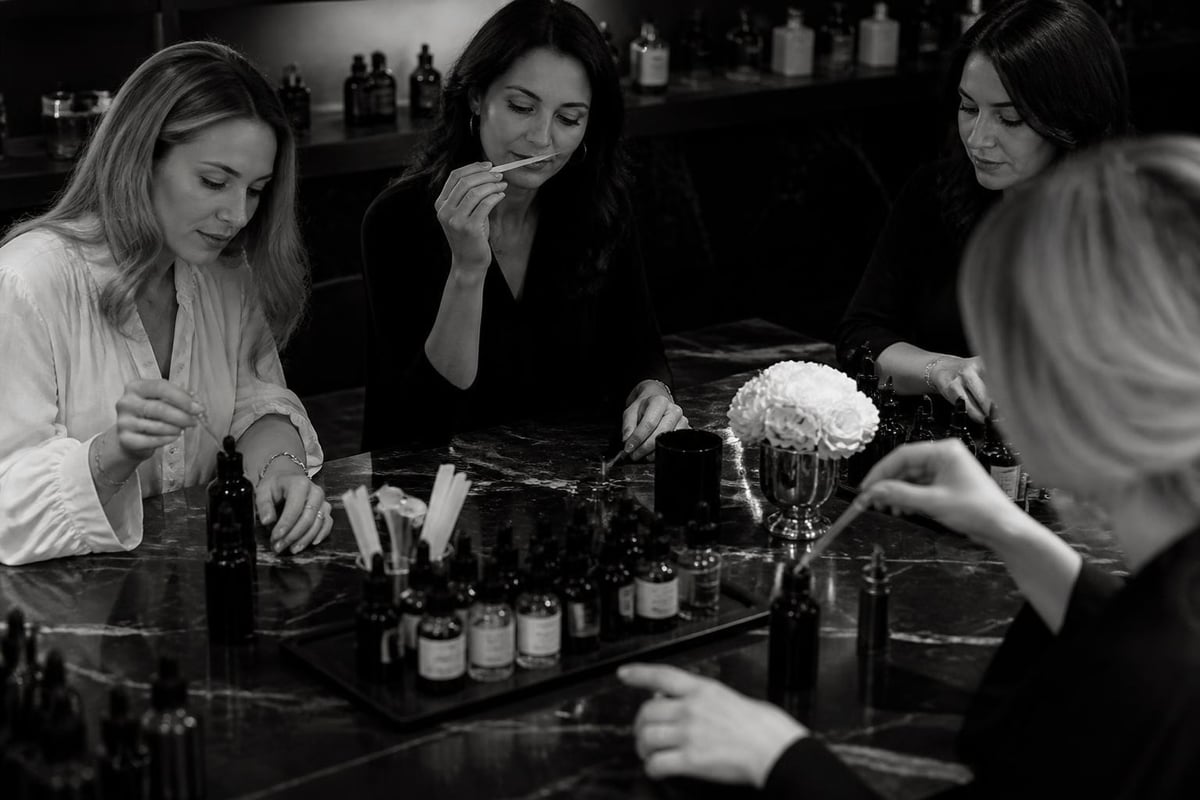
When you create your own perfume in person NYC, you learn scent structure, blending ratios, and how fragrances evolve on skin over several hours. Most workshops begin with an introduction to how fragrances are made, covering extraction methods, raw materials, and the difference between natural and synthetic ingredients.
Instructors typically walk you through:
- Top notes – volatile compounds that evaporate within 15 minutes
- Heart notes – the body of the fragrance, lasting 2–4 hours
- Base notes – fixatives that anchor the scent and persist on skin
You'll smell dozens of essences, often organized by family (citrus, resin, wood, floral, herbal). The goal is to recognize what you like and understand why certain combinations work. Perfume composition and perception involve both chemistry and psychology, and good workshops explain both.
Blending Ratios and Safety
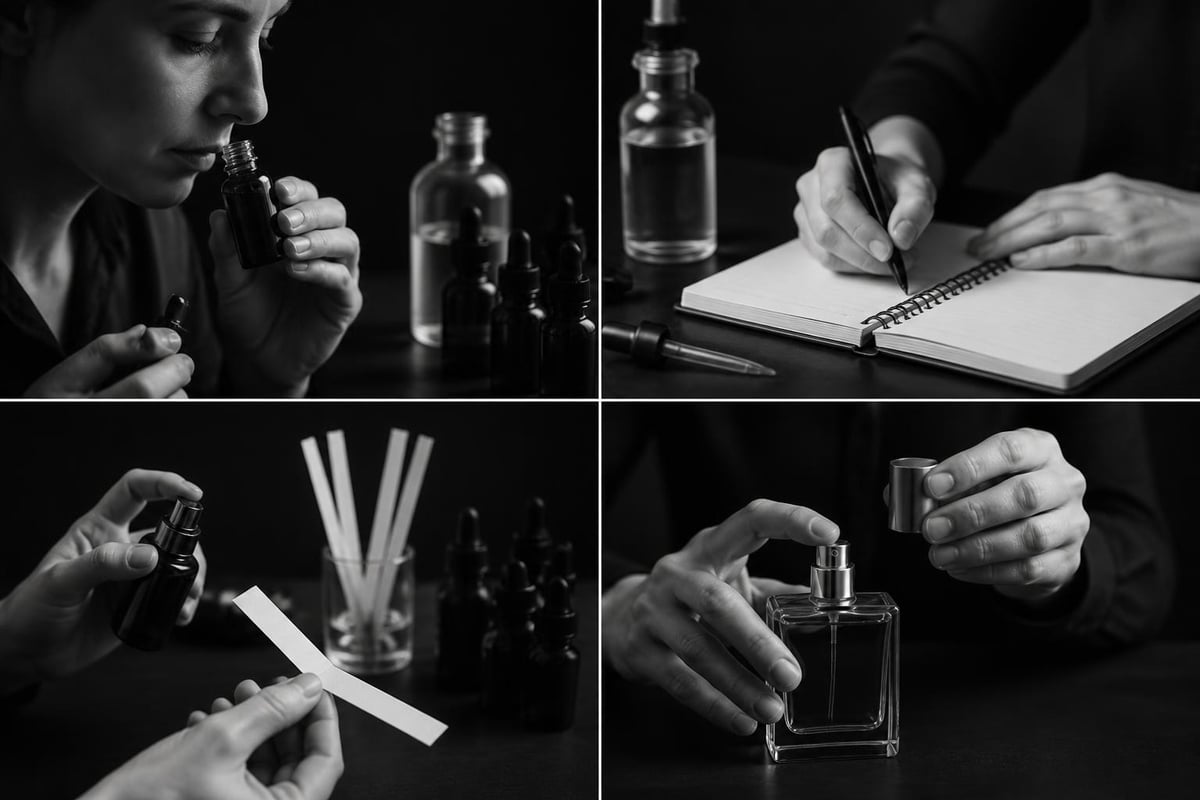
Professional perfumers use precise dilution rates and adhere to industry safety standards when formulating for commercial sale. In a workshop setting, you'll work with pre-diluted essences or blending bases that are already skin-safe. Instructors provide pipettes, beakers, and blotter strips so you can test each addition before committing it to your bottle.
Most natural workshops avoid synthetic musks, phthalates, and alcohol carriers. Instead, they use jojoba, fractionated coconut oil, or other non-volatile bases that let botanical extracts shine without evaporation spikes.
How Much Does It Cost to Create Your Own Perfume In Person NYC?
Creating your own perfume in person NYC typically costs between seventy and two hundred fifty dollars, depending on session length, bottle size, and ingredient quality. Drop-in group workshops start around seventy-five dollars for a one-hour session and a small roll-on bottle. Private one-on-one blending sessions with extended consultation and larger vessels can reach two hundred fifty dollars or more.
Here's a comparison of common formats:
| Format | Duration | Price Range | What You Get |
|---|---|---|---|
| Group workshop | 60–90 min | $70–$120 | Small bottle, guided blending, group instruction |
| Private session | 90–120 min | $150–$250 | Full-size bottle, one-on-one consultation, custom formula card |
| Certificate course | 8–12 weeks | $1,200–$2,500 | Multi-session training, advanced techniques, portfolio of samples |
Custom-blend boutiques often let you choose your vessel and size. A 10ml roll-on will cost less than a 30ml spray bottle, and the base (oil versus alcohol) affects price. Botanical, alcohol-free formulations may carry a premium because natural extracts are more expensive than synthetics.
If you're weighing options, consider what you want to take home. A workshop that teaches theory and blending skill may be more valuable than one that simply assembles pre-made accords into a bottle.
What Should You Bring to a Perfume Workshop in NYC?
You should bring a notebook, an open mind, and any reference scents you love when you create your own perfume in person NYC. Most studios provide all blending materials, bottles, and tools, but taking notes helps you replicate or refine your formula later. Some participants photograph their blending cards or write down the exact drops of each essence they used.
Preparation Tips
- Avoid wearing fragrance on the day of your workshop. Residual perfume on your skin or clothes will interfere with your ability to smell the essences accurately.
- Hydrate and eat beforehand. Hunger and dehydration dull your sense of smell.
- Bring a scent reference if you have one. A sample vial or blotter strip from a fragrance you admire gives the instructor context for your preferences.
If the studio allows it, bring a small bag for your finished bottle. Glass vessels are fragile, and you'll want to protect your work on the subway ride home.
How Long Does the Fragrance You Make Last?
The fragrance you create in a New York workshop typically lasts three to six months when stored properly, though oil-based botanical perfumes can remain stable for a year or longer. Longevity depends on the base, the storage conditions, and the volatility of the essences you chose.
Alcohol-based perfumes degrade faster because alcohol evaporates and oxidizes. Oil-based formulations, common in botanical workshops, are more stable. Keep your bottle in a cool, dark place-heat and light break down delicate plant compounds. Avoid storing perfume in the bathroom, where temperature and humidity fluctuate.
On skin, a well-balanced botanical perfume lasts four to eight hours. Top notes fade within the first hour, heart notes carry the middle of the day, and base notes linger into evening. If you used a high percentage of fixatives (resins, woods), your scent will have better staying power than a citrus-heavy blend.
Are NYC Perfume Workshops Suitable for Beginners?
NYC perfume workshops are designed for beginners and require no prior experience with fragrance blending or chemistry. Instructors assume you're starting from zero and walk you through scent families, blending techniques, and safety in accessible language.
You'll work alongside other first-timers in most group settings. The communal aspect-smelling each other's trials, discussing what works, sharing reactions-makes the learning curve less intimidating. Studios that focus on education, such as those affiliated with the Institute for Art and Olfaction, prioritize pedagogy and hands-on experimentation over sales.
If you're concerned about making mistakes, remember that perfume blending is iterative. You'll test on blotter strips before committing to your bottle, and instructors help you adjust ratios until you're satisfied.
What to Expect in Your First Session
- Introduction to scent families – you'll smell curated essences and learn to categorize them
- Blending exercise – instructors demonstrate a simple three-note formula
- Independent creation – you build your own blend with guidance and feedback
- Bottling and labeling – you pour your finished formula and take it home
Most workshops end with a discussion of how to care for your perfume and how to tweak the formula if you want to refine it later.
What Makes Botanical Perfume Workshops Different?
Botanical perfume workshops focus exclusively on plant-derived ingredients and avoid synthetic aroma chemicals, creating a more transparent and natural blending experience. You'll work with essential oils, absolutes, concretes, and CO2 extracts-all sourced from flowers, leaves, roots, resins, and bark.
The scent palette is narrower than synthetic perfumery but richer in texture. Botanical extracts carry waxes, terpenes, and trace compounds that give them complexity. A rose absolute smells layered and slightly green; a synthetic rose molecule smells clean and singular. When you create your own perfume in person NYC at a botanical studio, you're engaging with the full character of the plant.
Many botanical workshops also emphasize sustainability and ingredient sourcing. Instructors explain where their extracts come from, how they're processed, and why certain plants (like sandalwood or oud) raise ethical or conservation concerns. This transparency helps you make informed choices about what you wear.
Vegan and Alcohol-Free Formulations
Botanical workshops in New York often use vegan bases and skip animal-derived ingredients like musk, civet, or ambergris. Instead, they rely on plant resins, balsams, and woods for warmth and depth.
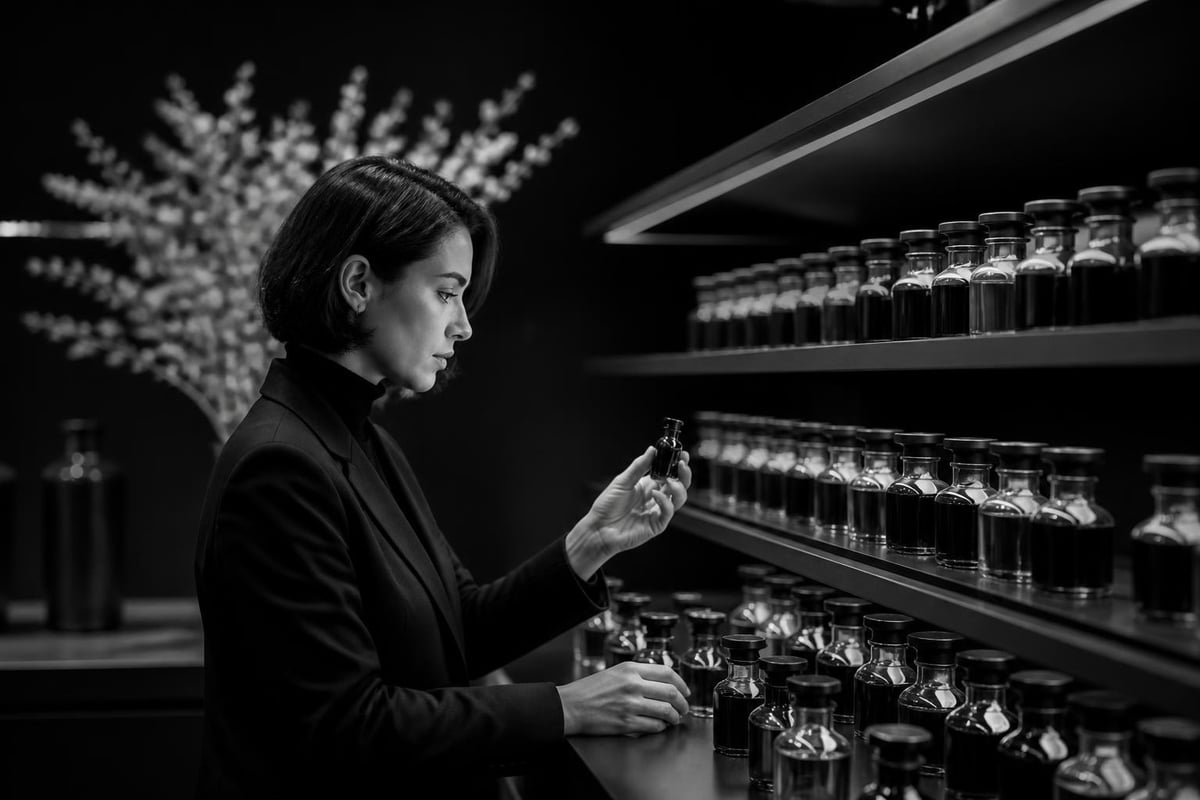
Alcohol-free formulations use oils (jojoba, fractionated coconut) as carriers. These bases don't evaporate as quickly, so the perfume unfolds more slowly on skin. The 212 - Build Your Own Botanical Perfume offering, for example, lets you choose from over two hundred botanical scents and bottle them in an oil base, all made in Manhattan and available for pickup on Lexington.
Can You Recreate Your Formula at Home?
You can recreate your formula at home if you document your recipe and source the same ingredients, though professional-grade botanical extracts can be difficult to find retail. Most workshops give you a formula card listing the essences and ratios you used. With this card, you can order the same oils from specialty suppliers and remix your blend.
Challenges include:
- Ingredient availability – some rare absolutes are only sold wholesale
- Dilution rates – workshop essences are often pre-diluted; buying pure oils requires you to dilute them yourself
- Storage and safety – undiluted essential oils can irritate skin and require proper handling
If you want to experiment further, start with a basic palette of five to ten essences and a neutral carrier oil. Practice blending on blotter strips before applying to skin. As you gain confidence, expand your collection.
What Are the Best Neighborhoods for Perfume Workshops in NYC?
The best neighborhoods to create your own perfume in person NYC are NoMad, SoHo, and the Lower East Side, where independent perfumers maintain accessible studios and offer regular workshops. NoMad in particular has seen growth in artisanal fragrance retail and hands-on experiences tied to the area's creative and hospitality density.
| Neighborhood | Workshop Style | Accessibility |
|---|---|---|
| NoMad | Botanical, custom-blend boutiques, small-batch production | Central, near Penn Station and Grand Central |
| SoHo | High-end, design-focused, often part of retail experience | Tourist-friendly, evening and weekend availability |
| Lower East Side | Experimental, community-oriented, educational non-profits | Younger demographic, affordable options |
Brooklyn neighborhoods like Williamsburg and Greenpoint also host perfume classes, often as part of broader maker studios or co-working spaces. These tend to be more casual and community-driven.
When choosing a location, consider transit access, session timing, and whether the studio offers private bookings. Some spaces only run group workshops on weekends; others allow you to book a one-on-one session during the week.
How Do You Choose the Right Workshop for You?
Choose a perfume workshop based on your goals, budget, and preferred ingredient philosophy-whether you want to learn technique, create a wearable scent, or understand botanical sourcing. If education is your priority, look for studios that teach scent structure and blending theory, not just assembly of pre-made accords.
Ask these questions before booking:
- What ingredients do you use? Natural, synthetic, or a mix? Alcohol-free or traditional bases?
- What's the session format? Group or private? How many participants?
- What do I take home? Bottle size, concentration, and formula documentation?
- Can I adjust my formula later? Some studios offer free tweaks within a set timeframe.
Read reviews or ask for a sample class outline. Studios that prioritize education will share a curriculum or list of essences you'll work with. If a workshop focuses heavily on upselling retail products rather than teaching, it may not deliver the hands-on experience you want.
What Happens to Indoor Air Quality During Perfume Blending?
Indoor air quality during perfume blending depends on ventilation, ingredient volatility, and session size, with workshops using natural plant extracts generally producing fewer volatile organic compounds than synthetic perfume labs. Studios should have adequate airflow to prevent headaches or sensory fatigue from concentrated essences.
The EPA notes that VOCs from consumer products can affect indoor air, though botanical oils release different compounds than synthetic fragrances. Well-run workshops limit the number of participants, provide breaks, and encourage stepping outside if anyone feels overwhelmed.
If you're sensitive to scents, let the instructor know in advance. They can seat you near a window or adjust the pace so you're not exposed to too many essences at once.
How Do You Store and Use Your Custom Perfume?
Store your custom perfume in a cool, dark place away from direct sunlight and heat sources to preserve its scent profile and prevent oxidation. Glass bottles with tight-fitting caps work best. Avoid plastic, which can leach chemicals into oil-based formulations over time.
Apply oil-based botanical perfumes to pulse points-wrists, neck, behind ears-where warmth helps diffuse the scent. Because oil doesn't evaporate like alcohol, the fragrance stays close to the skin and develops slowly. You can also apply to hair or clothing, though oils may stain delicate fabrics.
If your perfume's scent shifts after a few months, it's likely oxidation. Citrus top notes are particularly fragile and fade first. This is normal with natural ingredients. Some perfumers appreciate the way botanical blends mature, developing deeper, rounder profiles as volatile compounds mellow.
Can You Turn Your Workshop Formula Into a Product?
You can turn your workshop formula into a product if you reformulate it to meet safety and labeling regulations, though most personal blends are not commercially viable without significant refinement. Professional perfumers spend months testing stability, skin compatibility, and scent performance before releasing a fragrance for sale.
If you want to scale your blend, you'll need to:
- Reformulate for consistency – ensure each batch smells identical
- Conduct stability testing – verify the formula doesn't separate, discolor, or develop off-notes over time
- Comply with labeling laws – list all ingredients, allergens, and safety warnings
- Source ingredients at scale – wholesale suppliers, bulk pricing, quality control
For personal use, the formula you create in a workshop is yours to enjoy and share with friends. If you dream of launching a fragrance line, consider enrolling in a longer course or working with a contract manufacturer who can help you meet regulatory requirements.
FAQ
How long does a perfume workshop in NYC take?
Most in-person perfume workshops in NYC last between sixty and ninety minutes for group sessions and ninety to one hundred twenty minutes for private consultations. You'll spend the first portion learning scent families and blending basics, then work independently to create your formula. Longer workshops may include multiple rounds of testing and refinement before you settle on a final blend.
Do you need to make an appointment to create your own perfume in person NYC?
Yes, most studios require advance booking for perfume workshops to ensure materials are prepared and instructor availability. Drop-in availability is rare, especially at boutique studios that offer one-on-one consultations. Book at least one week ahead for group workshops and two to three weeks for private sessions, particularly if you want a weekend time slot.
Can children participate in NYC perfume workshops?
Many NYC perfume workshops welcome children aged ten and older when accompanied by an adult, though policies vary by studio. Younger participants may struggle with scent fatigue and fine motor skills required for pipettes and blotter strips. Some studios offer family-friendly sessions with simplified blending exercises designed for mixed-age groups. Always confirm age requirements when booking.
What's the difference between alcohol-based and oil-based perfumes?
Alcohol-based perfumes evaporate quickly, creating a strong initial scent cloud that fades over hours, while oil-based perfumes cling to skin and release fragrance slowly throughout the day. Alcohol carries scent molecules into the air, making the perfume more noticeable to others. Oil keeps the scent closer to your body and doesn't dry out skin. Botanical workshops often favor oil bases because they don't require flammability precautions.
How many scents can you blend in one workshop session?
Most workshop sessions allow you to create one finished perfume blend, though you'll smell and test dozens of individual essences during the process. Instructors encourage experimentation on blotter strips before committing to your bottle. Some advanced or extended workshops let you create two or three variations, but sensory fatigue limits how many meaningful decisions you can make in a single sitting.
Are natural botanical perfumes safe for sensitive skin?
Natural botanical perfumes are generally safe for sensitive skin when properly diluted, but individual plant extracts can still cause irritation or allergic reactions in some people. Essential oils like cinnamon, clove, and citrus are known irritants at high concentrations. Reputable workshops use skin-safe dilution rates and offer patch-test guidance. If you have known allergies to specific plants, inform your instructor before blending.
In-person perfume workshops offer a sensory education and a wearable product in a single session, blending chemistry, creativity, and personal expression. Whether you're drawn to botanical ingredients, curious about scent architecture, or simply want a signature fragrance, New York's studios provide the tools and guidance to create something you'll use daily. If you're looking for a hands-on fragrance experience in Manhattan, Haus of Smell offers made-to-order botanical perfumes crafted in NoMad, with options to build your own scent from over two hundred natural essences.