
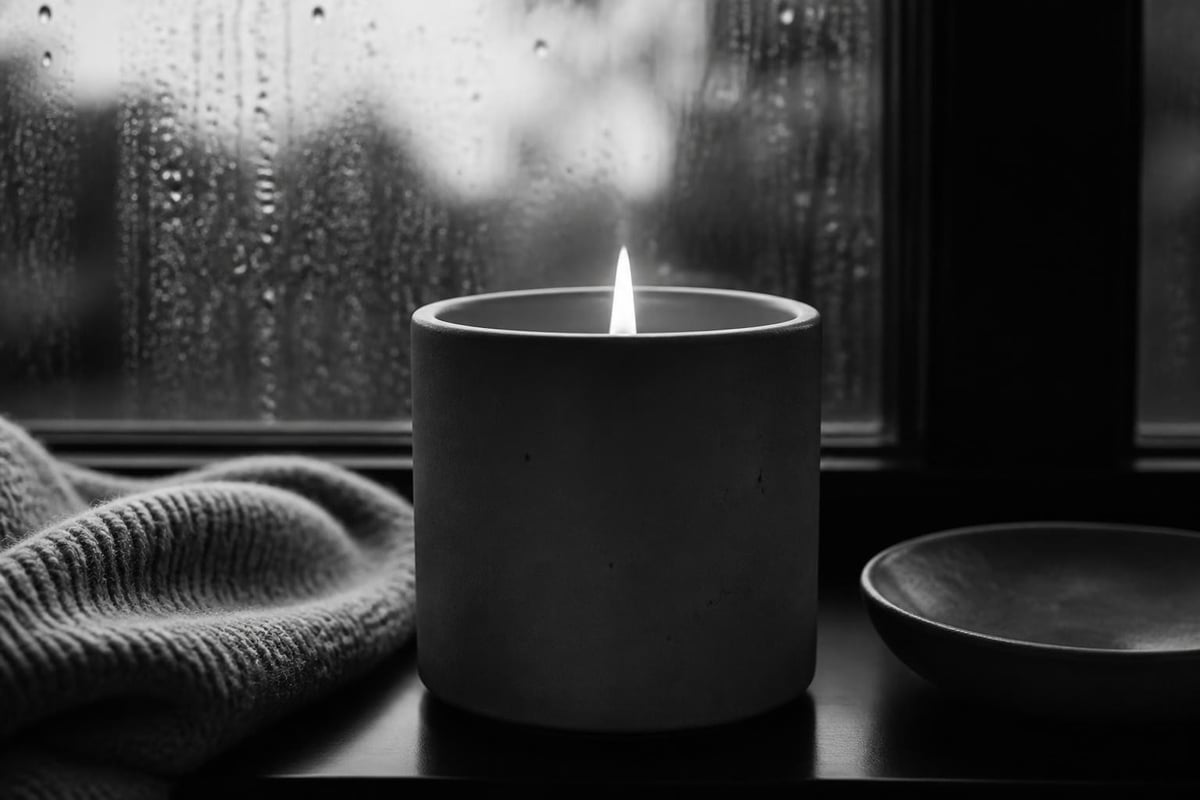
Candles that smell like rain capture the earthy, mineral-fresh scent known as petrichor through botanical extracts and natural compounds. These candles replicate the atmospheric aroma released when raindrops hit dry soil, combining earthy, green, and slightly metallic notes. Quality rain-scented candles rely on plant-based ingredients rather than synthetic chemicals to evoke this distinctive natural phenomenon.
The allure of rain-scented candles lies in their ability to transport us to moments of atmospheric transformation. When storm clouds gather and the first drops hit pavement, something profound happens in our sensory memory. Capturing that fleeting moment in wax requires understanding both the science of smell and the art of botanical extraction. These candles offer more than fragrance-they provide an olfactory bridge to nature's most contemplative moments.
What Makes Candles That Smell Like Rain So Distinctive?
Candles that smell like rain recreate petrichor, the compound produced when rain interacts with dry earth, releasing oils from plants and geosmin from soil bacteria. The distinctiveness comes from this complex natural chemistry rather than a single scent molecule. Rain candles layer earthy, mineral, and green botanical elements to mimic this atmospheric experience.
The science behind petrichor reveals why rain smells resonate so deeply. When raindrops hit dry soil, they release trapped plant oils and disturb bacteria that produce geosmin, a compound our noses detect at remarkably low concentrations. This combination creates the characteristic fresh-earth smell.

Candlemakers translate this chemistry into wax through careful botanical selection. The challenge involves balancing multiple scent dimensions simultaneously.
Key scent components in quality rain candles include:
- Earthy base notes from moss, soil-mimicking resins, and root extracts
- Green middle notes from grass, leaves, and wet vegetation
- Mineral top notes that evoke stone, concrete, and atmospheric freshness
- Subtle ozonic qualities suggesting storm clouds and atmospheric moisture
The ratio between these elements determines whether a candle smells like a gentle spring shower or a dramatic thunderstorm. Natural formulations avoid synthetic ozone chemicals, relying instead on botanical combinations that suggest rather than replicate.
How Do Botanical Rain Candles Differ From Synthetic Versions?
Botanical rain candles use plant and resin extracts to build petrichor scents, while synthetic versions rely on laboratory-created aroma chemicals like calone and cashmeran. The botanical approach creates layered, evolving fragrances that change as the candle burns, whereas synthetic formulations often remain static. Natural rain candles tend toward earthy authenticity while synthetic options lean into sharp, aquatic freshness.
The distinction matters for both scent quality and environmental impact. Understanding natural ingredients reveals how botanical formulations interact with heat differently than synthetic compounds. Natural waxes release plant-based molecules gradually, creating depth and variation.
| Aspect | Botanical Rain Candles | Synthetic Rain Candles |
|---|---|---|
| Scent source | Plant extracts, resins, natural oils | Laboratory aroma chemicals |
| Scent evolution | Changes throughout burn time | Remains consistent |
| Throw strength | Softer, builds gradually | Immediate, often stronger |
| Ingredient transparency | Traceable to source plants | Proprietary chemical blends |
| Vegan compatibility | Always when properly sourced | Varies by formulation |
Natural rain candles from makers focused on botanical scents emphasize authenticity over intensity. The scent unfolds rather than announces itself, mirroring how actual petrichor develops in waves as rain progresses.
Synthetic versions excel at immediate impact and consistency. Every candle in a production run smells identical, and the fragrance hits at full strength within minutes. For those seeking that exact predictability, synthetic formulations deliver.
What Should You Look For When Choosing Rain-Scented Candles?
Look for candles listing specific botanical ingredients rather than generic "fragrance" or "parfum" on labels, natural wax bases like soy or coconut, and transparent sourcing information. Quality rain-scented candles specify which plant extracts create the earthy, green, and atmospheric notes. Avoid candles with artificial dyes, paraffin bases, or unnamed fragrance compounds.
Ingredient transparency separates thoughtful candlemaking from mass production. When a label lists "fragrance," it often conceals dozens of undisclosed chemicals. Botanical candles name their components-vetiver for earthiness, galbanum for greenness, specific moss extracts for forest floor qualities.
Evaluating Scent Authenticity
The most authentic rain candles balance restraint with complexity. Real petrichor never overwhelms-it invites you closer. Test candles both cold and burning, as heat releases different scent layers.
Assessment criteria for quality rain candles:
- Cold sniff test: Should suggest earth and greenery without chemical sharpness
- Initial burn: First thirty minutes reveal top notes and wax quality
- Full burn: After one hour, middle and base notes should develop
- Scent throw: Should fill a room gently, not aggressively
- After extinguishing: Lingering scent should remain pleasant, not acrid
Hand-poured candles from small makers often show slight variations between batches, a sign of natural ingredients responding to seasonal plant variations. This inconsistency actually indicates authenticity rather than quality problems.

Why Do Rain Scents Appeal to Our Sensory Memory?
Rain scents trigger powerful emotional responses because our brains associate petrichor with survival, renewal, and environmental change. The smell signals water availability and plant growth, concepts embedded in human evolutionary history. This primal connection makes candles that smell like rain particularly effective at creating atmospheric comfort and reducing stress.
Research into olfactory perception shows that scent memories form differently than visual or auditory ones. Smell connects directly to the limbic system, bypassing the rational processing that filters other sensory input. A rain candle can transport you to a specific porch during a childhood storm or a transformative moment in a city park.
The appeal crosses cultural boundaries. Whether you grew up in monsoon regions or temperate zones, rain represents transformation. Dry becomes wet, hot becomes cool, still becomes dynamic. Candles capturing this transition offer psychological reset buttons for overstimulated minds.
The Role of Nostalgia in Rain Fragrance Preferences
Different rain candles evoke different rainfall types. Some suggest tropical downpours on warm soil, others capture cold autumn rain on fallen leaves, still others recreate desert rain on sun-baked stone. Your preferred rain candle likely mirrors your most emotionally significant rain memories.
This explains why some people favor green, grassy rain scents while others prefer mineral, stone-like versions. Neither is more authentic-they simply represent different rainfall contexts. The botanical perfume approach allows for these variations through different plant extract combinations.
How Can You Use Rain Candles to Transform Interior Spaces?
Use rain candles in spaces where you seek calm focus or atmospheric reset, lighting them during work sessions, meditation, or transition times between activities. Pair rain scents with natural materials like wood and stone rather than competing fragrances, and burn them in well-ventilated areas to allow subtle scent diffusion. Rain candles work particularly well in bathrooms, home offices, and reading spaces where contemplative moods enhance the environment.
The best rain candles don't announce themselves-they suggest presence. This makes them ideal for layering into existing spaces without overwhelming other sensory elements.
Strategic placement recommendations:
- Home offices: Promotes focus without distraction, pairs well with natural light
- Bathrooms: Enhances spa-like atmosphere, complements water sounds
- Bedrooms: Creates pre-sleep calm, especially during actual rainy weather
- Reading nooks: Supports contemplative mood, doesn't compete with printed page
- Entryways: Offers welcoming atmospheric shift from outdoor to indoor
Timing matters as much as location. Rain candles shine during actual rainy weather, creating synchronicity between interior scent and exterior conditions. They also counter dry winter heating, adding olfactory moisture when air feels desiccated.
For those exploring botanical candles and wax melts made from natural ingredients, rain scents often work year-round in ways florals and spices cannot. They occupy a neutral zone-earthy enough for autumn, fresh enough for spring, contemplative enough for winter.
What Are the Most Common Rain Candle Scent Profiles?
The most common rain candle profiles include spring rain with green and floral undertones, summer storm with ozone and mineral notes, autumn rain with leaf and earth emphasis, and tropical rain combining humidity with vegetation. Each profile uses different botanical extracts to capture seasonal and regional rainfall variations. Understanding these categories helps match candles to personal preference and intended atmosphere.
Spring rain candles emphasize renewal and growth. They incorporate fresh grass, new leaves, and light floral elements alongside core petrichor notes. These work well in bright spaces and morning routines.
Seasonal and Regional Rain Variations
Summer storm candles capture drama-ozone-like qualities suggesting electricity in the air, hot pavement cooling under sudden downpours, and intense mineral notes. These tend toward stronger throw and sharper top notes.
| Rain Type | Primary Botanical Elements | Atmospheric Mood | Best Use Context |
|---|---|---|---|
| Spring rain | Grass, young leaves, light florals | Renewal, optimism | Morning spaces, bright rooms |
| Summer storm | Mineral compounds, wet stone, ozone-suggesting plants | Drama, intensity | Evening unwinding, weather matching |
| Autumn rain | Fallen leaves, wet bark, mushroom notes | Contemplation, transition | Reading spaces, rainy afternoons |
| Tropical rain | Heavy vegetation, humid earth, exotic plants | Lush, immersive | Bathrooms, spa-like settings |
Autumn rain candles lean into decay and transformation. Wet leaves, mushroom-like earthiness, and decomposing vegetation create richer, darker scent profiles. These pair naturally with cooler weather and shorter days.
Tropical rain candles transport users to different climates entirely. Heavy, humid, and lush, they combine intense vegetation notes with warm earth and sometimes subtle exotic florals. The exploration of scent categories reveals how geographical context shapes fragrance preferences.
How Do Candlemakers Recreate Petrichor in Wax Form?
Candlemakers recreate petrichor by extracting and combining compounds from plants that contribute to natural rain scent-mosses for earthiness, specific grasses for greenness, and resins for mineral depth. The process involves testing botanical extract ratios against memory and reference samples of actual petrichor. Quality makers avoid simply adding "rain fragrance oil" and instead build profiles from individual plant components.
The technical challenge involves heat stability. Botanical extracts behave differently when suspended in melted wax versus room temperature oil. Some compounds volatilize quickly, others release slowly. Creating a rain candle that smells consistent from first light to final burn requires understanding these thermal dynamics.
Steps in botanical rain candle formulation:
- Identify target petrichor profile (spring, summer, tropical, etc.)
- Select complementary botanical extracts matching earth, green, and mineral dimensions
- Test heat stability of each extract in wax base
- Blend in small batches to establish baseline ratios
- Burn test across multiple sessions to evaluate scent evolution
- Adjust ratios based on throw strength and note development
- Scale to production while maintaining hand-poured quality control
The understanding of how fragrance notes work applies directly to rain candles, though the goal differs from traditional perfumery. Rain candles aim for atmospheric suggestion rather than personal signature.
Small-batch makers often develop proprietary botanical combinations that become house signatures. One maker's rain might emphasize forest floor darkness while another's captures meadow brightness. Both can be equally authentic to different rainfall experiences.
Can Rain Candles Work in Commercial and Professional Spaces?
Rain candles work exceptionally well in commercial spaces seeking calm, focused atmospheres without gender-coded or divisive fragrances-particularly wellness studios, creative offices, boutique hotels, and therapy practices. The neutral, nature-based scent appeals across demographic boundaries while promoting concentration and stress reduction. Choose subtle formulations for professional contexts, avoiding candles with aggressive throw that might overwhelm clients or colleagues.
Corporate wellness initiatives increasingly incorporate scent design alongside visual and acoustic planning. Rain candles offer professional neutrality that florals and food scents cannot match. They suggest sophistication without pretension.
Ideal commercial applications:
- Yoga and meditation studios seeking grounding atmospheres
- Counseling and therapy offices promoting calm disclosure
- Creative agencies wanting focus without distraction
- Boutique retail spaces creating memorable sensory environments
- Hotel lobbies and spa waiting areas establishing immediate calm
Professional spaces require different candle considerations than homes. Burn time matters more when candles remain lit for eight-hour workdays. Soot production becomes critical in white-walled offices. Scent consistency across multiple candles burning simultaneously affects larger spaces.
The popularity of petrichor-scented fragrances in personal perfumery translates well to professional scent design. What works on skin often works in air, particularly with earth-based profiles.
What Makes Handmade Rain Candles Different From Mass Production?
Handmade rain candles differ through individual wick placement, small-batch botanical blending, and quality control that catches variations before distribution. Mass production prioritizes consistency and cost efficiency, often using synthetic fragrance compounds that perform predictably at scale. Handmade processes allow for seasonal botanical variation and artisan adjustment based on ingredient availability and quality.
The New York approach to botanical candlemaking emphasizes craft over volume. Each candle receives individual attention during pouring, curing, and quality assessment. This labor intensity shows in subtle details-centered wicks, smooth wax surfaces, and scent that develops complexity rather than blaring uniformly.
Mass production cannot accommodate the variability inherent in natural ingredients. When botanical extracts change slightly between harvests, handmade makers adjust ratios. Industrial production either accepts inconsistency or switches to synthetic alternatives that never vary.
The Economics and Ethics of Small-Batch Production
Handmade candles cost more because they cost more to make. Real plant extracts exceed synthetic prices significantly. Hand-pouring requires skilled labor rather than automated filling lines. Small batches mean higher per-unit overhead.
This price difference reflects values rather than mere marketing. Choosing handmade rain candles supports transparent ingredient sourcing, fair labor practices, and environmental consideration. The commitment to vegan formulations ensures no animal-derived ingredients compromise botanical purity.
Mass-produced candles serve different needs-affordability, wide availability, and absolute consistency. Neither approach is inherently superior, but understanding the distinction helps match purchase to priority.
FAQ
What exactly does petrichor smell like in candle form?
Petrichor in candles smells earthy, mineral-fresh, and slightly green, combining wet soil, grass, and stone-like qualities. The scent suggests atmospheric moisture without being aquatic, offering depth and subtlety rather than sharp freshness. Quality petrichor candles layer botanical extracts to create complexity that evolves during burning, mimicking how actual rain scent develops in waves as precipitation continues.
Are rain-scented candles suitable for people with fragrance sensitivities?
Rain-scented candles made from botanical ingredients often suit fragrance-sensitive individuals better than synthetic options because they lack harsh aroma chemicals. However, all candles release compounds when burning, and natural doesn't guarantee hypoallergenic. Test small exposures first, choose candles listing specific plant ingredients, and ensure proper ventilation. Some people tolerate earth-based scents better than florals or spices.
How long should a quality rain candle retain its scent?
Quality rain candles retain scent strength for twelve to eighteen months when stored properly in cool, dark conditions away from temperature fluctuations. Natural botanical extracts fade faster than synthetics but should maintain noticeable fragrance for at least one year. Once lit, the candle should smell consistent from first burn to last, with developing rather than diminishing scent complexity throughout its burn life.
Can you combine rain candles with other scents in the same space?
Rain candles combine best with wood, stone, and other earth-based scents, avoiding competition with florals, spices, or food fragrances. The neutral, atmospheric quality of rain scent serves as background rather than foreground, making it suitable for layering with subtle complementary aromas. Avoid burning multiple strongly scented candles simultaneously, as this creates olfactory confusion rather than enhancement.
What size rain candle works best for different room types?
Small rooms like bathrooms need four to six-ounce candles for adequate scent without overwhelming, while living spaces benefit from eight to twelve-ounce sizes. Large open-plan areas may require multiple candles placed strategically or single larger vessels of sixteen ounces or more. Consider ceiling height and ventilation alongside square footage, as air circulation affects scent distribution significantly.
Do rain candles actually reduce stress or is that marketing?
Rain candles can reduce stress through olfactory association with calming natural environments and the psychological ritual of candle lighting. Research on petrichor indicates humans respond positively to rain scents due to evolutionary associations with water and renewal. While not medical treatment, these candles function as sensory tools for creating calming atmospheres that support stress management practices.
Rain-scented candles offer more than pleasant fragrance-they provide olfactory access to one of nature's most contemplative moments, translating atmospheric transformation into interior experience. Whether you seek the bright renewal of spring showers or the dramatic intensity of summer storms, botanical formulations can capture these variations with authenticity and depth. Haus of Smell creates handmade botanical candles in Manhattan using 100% natural, vegan ingredients that honor the complexity of petrichor without synthetic shortcuts, bringing New York's commitment to craft and transparency into every hand-poured vessel.