
Candles New York options range from mass-market retailers to small-batch botanical makers working in Manhattan studios. The city hosts dozens of local candlemakers who hand-pour natural wax with plant-based scents, alongside specialty boutiques in neighborhoods like NoMad, SoHo, and the Lower East Side that curate vegan and synthetic-free options for residents and visitors seeking alternatives to conventional paraffin products.
The candle market in New York has shifted toward transparency and natural formulations. Consumers now ask about wax origin, wick material, and fragrance composition before purchasing. This demand has created space for botanical makers who disclose every ingredient and pour each vessel by hand in small Manhattan workshops rather than outsourcing production.
Where Can I Find Handmade Candles in New York City?
Handmade candles in New York are available at independent boutiques, craft markets, and direct-to-consumer studios throughout Manhattan and Brooklyn. Neighborhoods with high concentrations of artisan shops include NoMad, West Village, Williamsburg, and the Lower East Side, where makers often operate retail spaces attached to production studios.
Walking through these areas reveals a pattern. Many candlemakers work in shared studio buildings and sell through weekend markets before opening permanent locations. The Union Square Greenmarket, Artists & Fleas, and Brooklyn Flea feature rotating vendors who pour candles on-site and discuss their ingredient sourcing with customers.
Key shopping districts for candles New York:
- NoMad and Flatiron for boutique fragrance studios
- SoHo for curated home goods retailers
- West Village for specialty gift shops
- Williamsburg for maker markets and pop-ups
- Lower East Side for independent craft stores
Manhattan-based makers often list pickup locations on Lexington Avenue or in Chelsea, allowing customers to collect orders directly from the studio. This model eliminates shipping costs and lets buyers see the production space where their candles were poured.

Studio visits provide transparency that online shopping cannot match. You observe the wax being melted, the wicks being centered, and the botanical extracts being measured. Some scented products makers offer this access as standard practice rather than special tours.
What Makes Botanical Candles Different From Conventional Options?
Botanical candles use plant and resin extracts for scent instead of synthetic fragrance oils, with natural waxes like soy, coconut, or beeswax replacing paraffin. The difference appears in both the ingredient list and the scent profile, which tends toward earthy, resinous, and green rather than sweet or artificial.
Conventional candles rely on petroleum-derived paraffin wax and lab-created fragrance compounds designed to mimic natural scents. These formulations allow consistent production at scale but often include phthalates and other additives that botanical makers avoid. The market data shows growing consumer preference for natural alternatives across the United States, with New York leading urban adoption.
Material Composition
| Component | Botanical Candles | Conventional Candles |
|---|---|---|
| Wax Base | Soy, coconut, beeswax | Paraffin (petroleum) |
| Scent Source | Plant extracts, resins | Synthetic fragrance oils |
| Wick Material | Cotton, wood | Cotton, zinc-core |
| Additives | None or minimal | Dyes, stabilizers, phthalates |
| Vegan Status | Often (if no beeswax) | Rarely specified |
The burning characteristics differ as well. Natural waxes tend to burn slower and cooler than paraffin, extending candle life but sometimes reducing scent throw in larger rooms. Botanical extracts also behave differently when heated, creating subtler fragrance that changes as the candle burns rather than maintaining one static note.
Research into olfactory perception suggests that natural plant compounds interact with scent receptors in ways that differ from synthetic recreations, even when the chemical structures appear similar. This may explain why some people report finding botanical candles more pleasant or less headache-inducing than conventional options.
How Do I Verify a Candle Is Truly Natural and Vegan?
Verification requires reading the full ingredient list, asking specific questions about sourcing, and checking for third-party certifications when available. Many makers use terms like "natural" or "botanical" without full disclosure, so direct inquiry about each component reveals the actual formulation.
Start with the wax. Ask whether it contains any paraffin or petroleum derivatives, as some "natural" candles blend soy with paraffin to improve scent throw. Request confirmation that the wax is 100% plant-based if vegan status matters to you. Beeswax is natural but not vegan.
Questions to ask candles New York makers:
- What specific wax or wax blend do you use?
- Are your fragrance ingredients plant-derived or synthetic?
- Do you add dyes, stabilizers, or other chemicals?
- What material is your wick made from?
- Where do you source your botanical extracts?
- Can I see a complete ingredient list?
The wick matters more than most buyers realize. Some wicks contain zinc or lead cores for rigidity, which release metals when burned. Cotton and wood wicks avoid this issue. Makers committed to transparency will specify wick composition without prompting.
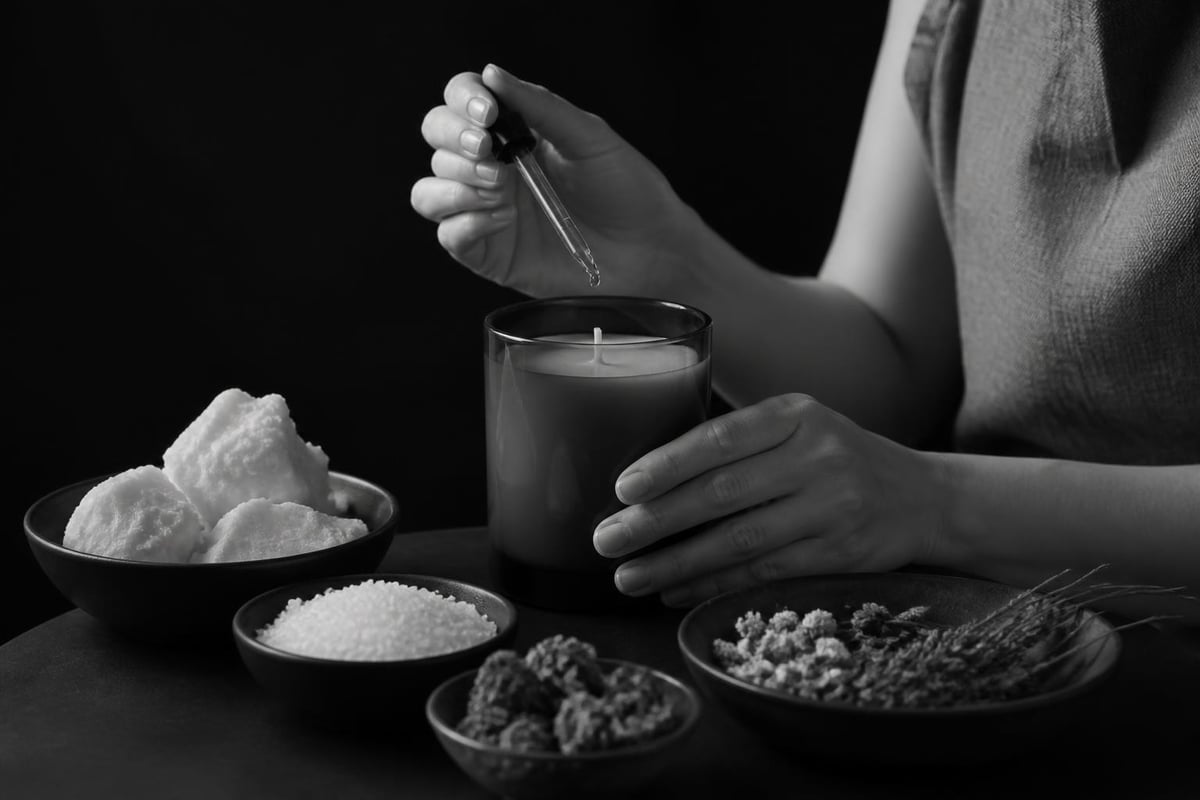
For candles New York studios producing botanical options, transparency often extends to showing the raw materials. Small-batch makers can typically point to the exact jars of plant extracts, bags of wax, and spools of wick in their workspace. This level of access is uncommon with larger brands.
What Safety Regulations Apply to Candles in New York?
New York City enforces specific fire safety regulations for candle use in residential and commercial buildings through the Fire Department. The NYC Fire Code addresses open flame restrictions, required clearances, and prohibited locations for burning candles.
Residential use allows candles with supervision, but they must remain at least 12 inches from combustible materials. Never leave burning candles unattended, and extinguish them before sleeping. Place candles on stable, heat-resistant surfaces away from drafts, pets, and children.
Commercial spaces face stricter rules. Restaurants, hotels, and event venues must obtain permits for decorative candles and follow occupancy-specific restrictions. Some buildings prohibit open flames entirely. The FDNY provides educational materials on safe candle practices for both residential and commercial contexts.
Safety Compliance Checklist
- Keep candles 12+ inches from curtains, papers, and furniture
- Use stable, non-flammable candle holders
- Trim wicks to 1/4 inch before each lighting
- Extinguish candles before leaving rooms
- Never burn candles on unstable surfaces
- Keep out of reach of children and pets
- Stop use when 1/2 inch of wax remains
Makers also bear responsibility for product safety. Candles sold in New York should include warning labels about fire hazards and proper use. The container must withstand the heat generated during burning without cracking or exploding.
Natural wax candles generally burn cooler than paraffin, reducing some fire risks. However, botanical extracts are still flammable, and all candles require the same safety precautions regardless of their natural credentials.
What Price Range Should I Expect for Quality Botanical Candles?
Quality botanical candles in New York typically range from $28 to $65 for standard sizes, with larger vessels and custom formulations reaching $100 or more. The higher cost reflects ingredient sourcing, hand-pouring labor, and small-batch production methods that cannot match factory economies of scale.
Price breaks down by several factors. An 8-ounce candle using premium coconut wax and rare plant extracts from a Manhattan studio might cost $45, while a similar-sized soy candle from a Brooklyn maker using more common botanicals might run $32. Container quality, wick type, and burn time also influence pricing.
| Size | Mass Market | Natural/Botanical | Premium Botanical |
|---|---|---|---|
| 4 oz | $8-12 | $18-24 | $28-35 |
| 8 oz | $15-22 | $32-45 | $48-65 |
| 12 oz | $24-32 | $48-60 | $75-95 |
| Custom | N/A | $55-80 | $100-150 |
The candles New York botanical makers produce often justify their pricing through transparency. You pay for ingredients you can pronounce, production you can observe, and formulations tested in small batches rather than chemical labs. Some studios offer hand-poured candles and wax melts made from natural wax with real plant extracts, setting every wick by hand in Manhattan.
Burn time provides another value metric. A well-made botanical candle should burn one hour per ounce of wax, meaning an 8-ounce vessel offers roughly 40-50 hours of use. This extends the effective cost per hour below that of cheaper candles that burn quickly or tunnel.
How Can I Support Local Candle Makers in Manhattan?
Supporting local makers requires intentional purchasing decisions that prioritize small studios over mass retailers. Buy directly from maker websites with pickup options, visit studios during open hours, and attend craft markets where artisans sell in person rather than through intermediaries.
Direct purchases ensure makers receive full retail value rather than wholesale margins. When you buy a $45 candle from a boutique, the maker might receive $22. Buying the same candle directly from their studio or website gives them the full amount minus credit card fees.
Ways to support candles New York artisans:
- Order online with studio pickup instead of shipping
- Visit maker studios during posted open hours
- Purchase gift sets directly rather than through retailers
- Request custom orders for events or gifts
- Leave detailed reviews on maker websites
- Share maker content on social channels
- Ask local shops which candles are made in New York
Studio visits create relationships that go beyond transactions. You learn about ingredient sourcing challenges, production timelines, and the maker's philosophy about scent. This context makes each candle more meaningful than an anonymous purchase from a national chain.
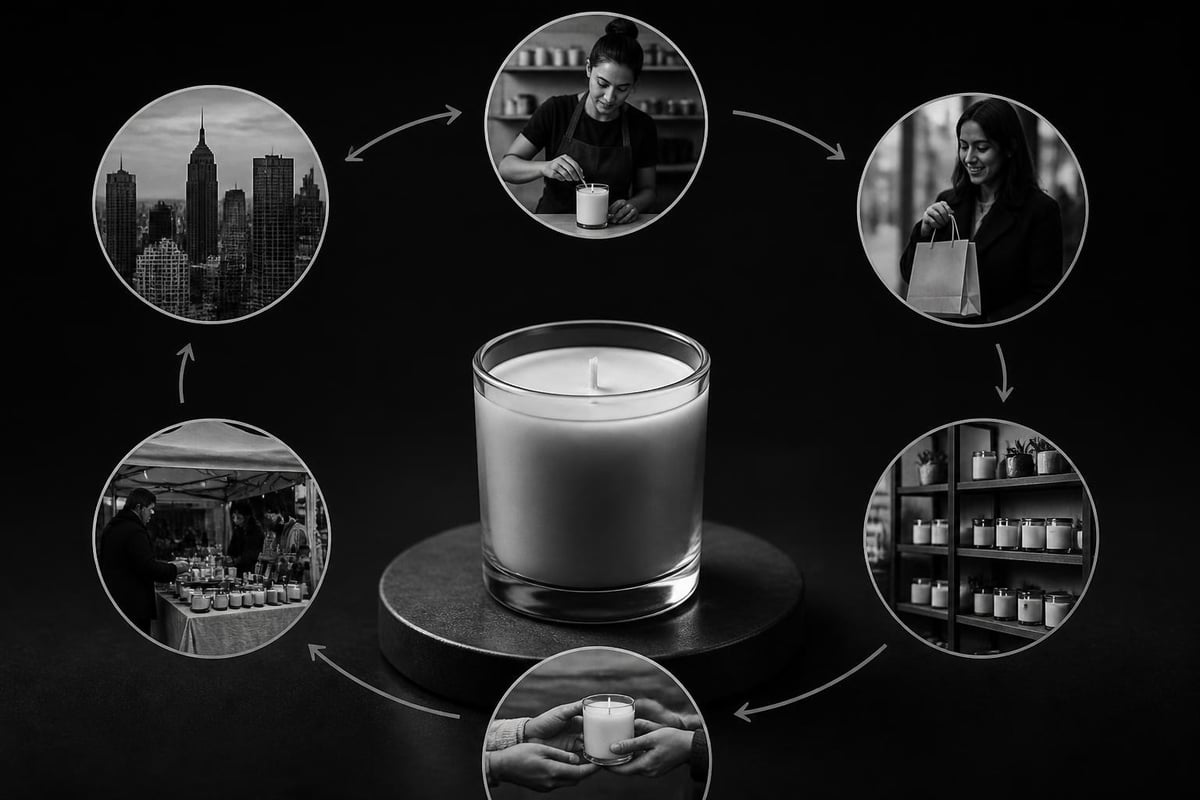
Custom orders represent another support avenue. Many botanical makers accept commissions for specific scent profiles, vessel types, or label designs for weddings and corporate gifts. These projects provide higher margins and allow makers to experiment with new formulations.
What Seasonal Trends Shape the Candles New York Market?
Seasonal demand for candles in New York follows predictable patterns tied to daylight hours, temperature, and cultural moments. Sales peak in October through December as shorter days increase indoor time and holiday gifting drives purchases, while summer months see reduced candle buying except for outdoor citronella options.
Fall introduces scents that match the season's sensory landscape. Makers release candles evoking dried leaves, rain on pavement, wood smoke, and cold air. These formulations sell particularly well in September and October as customers prepare homes for colder months. Some studios create neighborhood-specific scents that reference Central Park in autumn or the smell of steam rising from subway grates.
Winter demand shifts toward gifts and celebration. December accounts for 30-40% of annual candle sales for many small makers, driven by people seeking thoughtful presents with local provenance. Botanical candles appeal to gift-givers who want to avoid generic mall purchases.
Seasonal Product Strategy
- Spring (March-May): Green, floral, rain-inspired scents; focus on renewal themes
- Summer (June-August): Lighter formulations, citrus and herb profiles, outdoor options
- Fall (September-November): Earthy, woody, spice-forward releases; prepare for holiday inventory
- Winter (December-February): Gift sets, limited editions, warming scents
Spring brings different opportunities. Customers seek lighter scents after heavy winter formulations, and many use spring cleaning as motivation to refresh home fragrance. Makers who align new releases with these moments capture attention more effectively than those maintaining static inventories.
The candles New York makers produce often reference the city itself. A studio might release a "July in Manhattan" candle evoking hot garbage, car exhaust, and sidewalk steam as ironic commentary, or a "First Snow in Central Park" option with pine and cold air notes. These hyperlocal references resonate with residents in ways that generic "Ocean Breeze" formulations cannot.
Are Botanical Candles Better for Indoor Air Quality?
Botanical candles generally produce fewer volatile organic compounds and particulates than paraffin candles, making them preferable for indoor air quality in enclosed spaces. However, all candles release some combustion byproducts when burned, and proper ventilation remains important regardless of formulation.
Paraffin combustion releases toluene and benzene in small amounts, both recognized as air contaminants. Soy and coconut waxes burn cleaner, producing primarily carbon dioxide and water vapor. Botanical scenting avoids the synthetic musks and phthalates that can off-gas from conventional fragrance oils.
Research shows that burning multiple candles simultaneously in poorly ventilated rooms elevates particulate levels measurably. The solution involves limiting simultaneous candles, ensuring airflow, and choosing natural waxes with botanical scenting when air quality concerns exist.
Indoor air quality considerations:
- Natural waxes produce less soot than paraffin
- Botanical extracts avoid synthetic off-gassing
- Proper wick trimming reduces smoke and particulates
- Ventilation matters more than wax type
- Cotton wicks burn cleaner than metal-core options
People with asthma or chemical sensitivities often report better tolerance for botanical candles. The absence of synthetic fragrance compounds eliminates common triggers, though individual plant extracts can still cause reactions in sensitive individuals. Testing a small candle before purchasing larger sizes allows you to assess personal tolerance.
Manhattan apartments present unique air quality challenges due to limited ventilation in older buildings. Botanical candles offer a safer option for these spaces, but opening windows periodically while burning any candle improves air exchange and reduces buildup of combustion products.
How Long Do Natural Wax Candles Last Compared to Paraffin?
Natural wax candles typically burn 30-50% longer than equivalent paraffin candles due to lower melting points and denser wax compositions. An 8-ounce soy candle might provide 45-50 hours of burn time, while a paraffin version of the same size offers 30-35 hours.
The slower burn comes from chemistry. Soy wax melts at 120-180°F compared to paraffin's 130-200°F range, creating a cooler, steadier burn that consumes wax more gradually. Coconut wax burns even slower, sometimes extending an 8-ounce candle to 55-60 hours under proper use.
Proper maintenance extends any candle's life. Trim wicks to 1/4 inch before each lighting to prevent smoking and excessive wax consumption. Burn candles long enough for the entire top surface to liquify, preventing tunneling that wastes outer wax. Never burn for more than 4 hours at a time, allowing the wax to cool between sessions.
Burn Time Comparison
| Wax Type | 4 oz Candle | 8 oz Candle | 12 oz Candle |
|---|---|---|---|
| Paraffin | 20-25 hrs | 30-35 hrs | 45-55 hrs |
| Soy | 25-30 hrs | 45-50 hrs | 65-75 hrs |
| Coconut | 28-35 hrs | 50-60 hrs | 75-90 hrs |
| Beeswax | 30-40 hrs | 55-65 hrs | 80-100 hrs |
Storage affects longevity as well. Keep candles away from direct sunlight and heat sources, which can cause natural waxes to soften or discolor. Botanical extracts may fade if exposed to UV light for extended periods. Cool, dark storage preserves both scent integrity and structural quality.
The candles New York botanical makers pour often emphasize burn time as a value proposition. A $48 coconut wax candle that burns for 55 hours costs roughly $0.87 per hour of use, comparable to or better than cheaper options that burn quickly and require frequent replacement.
What Environmental Impact Do Different Candle Types Have?
Environmental impact varies significantly between petroleum-based paraffin candles and plant-derived wax options, with considerations including carbon footprint, biodegradability, and agricultural practices behind wax production. Soy, coconut, and beeswax generally present lower environmental costs than paraffin, though each has specific concerns.
Paraffin wax comes from petroleum refining, linking candle production to fossil fuel extraction and its associated environmental damage. The material is non-renewable and non-biodegradable. While paraffin candles eventually break down, the process takes decades and may release petrochemicals into soil.
Soy wax offers renewability but raises agricultural questions. Most soy comes from industrial farms using pesticides, herbicides, and monoculture practices that deplete soil and harm ecosystems. Choosing candles made from organic soy addresses some concerns but increases cost significantly.
Environmental comparison of candle waxes:
- Paraffin: Non-renewable, petroleum-derived, slow biodegradation
- Soy: Renewable but often from industrial agriculture with pesticides
- Coconut: Renewable, biodegradable, sometimes linked to deforestation
- Beeswax: Renewable, biodegradable, not vegan, supports pollinators
- Palm: Avoid due to deforestation and habitat destruction
Coconut wax comes from the meat of coconuts, a renewable resource that grows quickly in tropical climates. The environmental profile depends on farming practices, with sustainable coconut plantations presenting minimal impact. However, some coconut production contributes to tropical deforestation.
Transportation also factors into environmental calculations. Candles New York makers produce locally reduce shipping distances compared to candles manufactured overseas and transported to U.S. retailers. A Manhattan studio using domestic soy wax likely has a smaller carbon footprint than an imported paraffin candle, even if the soy comes from Midwest farms.
Packaging choices matter too. Glass containers can be reused or recycled, while metal tins offer similar benefits. Some makers use compostable labels and avoid plastic shrink wrap. Zero-waste consumers appreciate studios that accept container returns for refilling.
The landscape of candles New York offers ranges from mass-produced paraffin options to handcrafted botanical alternatives made in Manhattan studios with transparent ingredient sourcing and vegan formulations. Understanding the differences in materials, production methods, and environmental impact helps you make purchasing decisions aligned with your values.
When you want botanical candles poured by hand in New York using only plant-based ingredients, Haus of Smell creates vegan options with natural wax and real botanical extracts in their Manhattan workshop. Every wick is set by hand, and pickup is available for local customers who prefer to collect their candles directly from the studio.
FAQ
Where are most botanical candles in New York City made?
Most botanical candles in New York are made in small studios throughout Manhattan and Brooklyn, with concentrations in NoMad, Chelsea, Williamsburg, and the Lower East Side. Makers typically operate production spaces of 200-800 square feet where they hand-pour wax, set wicks, and blend botanical extracts in small batches ranging from 20-100 candles per pour.
Do natural wax candles smell weaker than synthetic options?
Natural wax candles using botanical extracts typically offer subtler scent throw than synthetic fragrance oils, which are engineered for maximum diffusion. The difference reflects the concentration limits of real plant materials versus lab-created compounds. However, proper formulation and adequate botanical extract percentages create noticeable fragrance that fills rooms without the artificial intensity some people find overwhelming in conventional candles.
Can I visit candle makers in Manhattan to see production?
Many Manhattan candle makers welcome studio visits during posted hours or by appointment, particularly those operating retail-production hybrid spaces. Studios in NoMad and Chelsea often list pickup times when customers can collect online orders and observe the workspace. Some makers offer scheduled workshop events where visitors pour their own candles under guidance, providing hands-on experience with the materials and process.
Are expensive botanical candles worth the higher price?
Expensive botanical candles justify their cost through ingredient quality, longer burn times, and transparent production when made by reputable small-batch studios. A $50 coconut wax candle burning 55 hours costs less per hour than a $20 paraffin option burning 30 hours. The value extends beyond economics to include supporting local makers, avoiding synthetic chemicals, and purchasing products with disclosed ingredients you can verify.
How do I know if a candle labeled "natural" is actually botanical?
Verify natural claims by requesting complete ingredient lists and asking specific questions about wax source, fragrance composition, and additive use. Genuine botanical makers disclose everything and can typically show you the raw materials in their studio. Red flags include vague language like "fragrance" without specification, refusal to provide ingredients, or claims that seem too broad such as completely soot-free burning.
What makes New York candles different from candles made elsewhere?
New York candles from local makers often reference city-specific scents, neighborhoods, and cultural moments that resonate with residents in ways generic formulations cannot. The proximity to customers allows Manhattan studios to offer direct pickup, studio visits, and rapid custom orders. Higher operating costs in New York push makers toward premium positioning with superior ingredients and craftsmanship rather than competing on price with mass-market brands.