
New York City offers candle makers access to wholesale wax distributors, specialized fragrance suppliers, vessel importers, and botanical ingredient sources scattered across Manhattan, Brooklyn, and online retailers serving the metro area. This guide maps your options for sourcing professional-grade materials, botanical extracts, and compliance-tested components in the five boroughs.
Selecting a reliable candle supply store in NYC affects product quality, cost structure, and your ability to scale production. Manhattan's density concentrates both advantages and challenges. You gain proximity to rare botanical suppliers and same-day pickup. You face higher retail rents reflected in markup and limited warehouse inventory compared to national distributors.
Where can you buy candle-making supplies in New York City?
You can purchase candle supplies through wholesale distributors in the Garment District, craft retailers in Lower Manhattan, online suppliers offering local pickup, and specialty botanical vendors in NoMad and the Lower East Side. Each channel serves different scales and ingredient philosophies.
Wholesale distributors typically require business licenses and minimum orders. Craft retailers stock consumer-grade kits and small quantities. Online suppliers ship to NYC addresses or offer warehouse pickup in outer boroughs. Botanical specialists focus on natural waxes, plant-based scents, and vegan formulations.
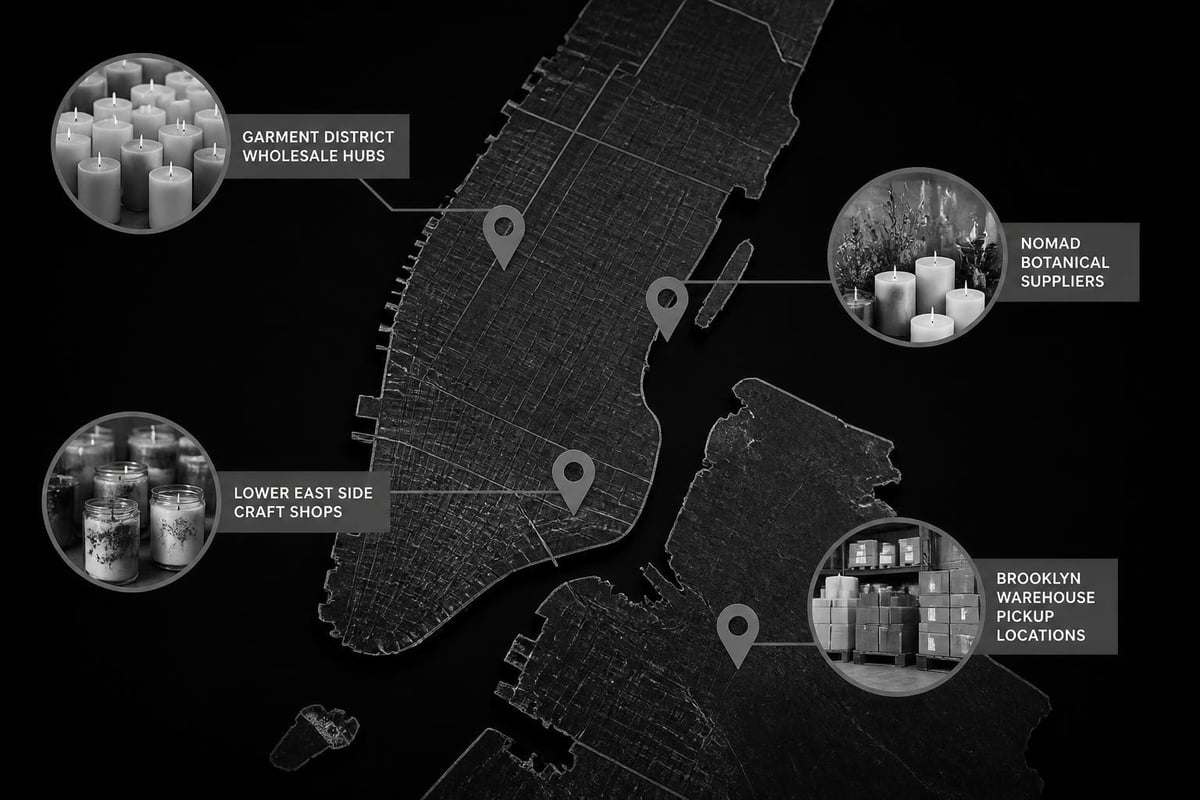
Manhattan candle supply options by neighborhood
Garment District and Midtown West house multi-floor wholesalers selling bulk paraffin, soy flakes, pre-tabbed wicks, and dye chips. These vendors cater to production candle makers ordering 50-pound cases. Expect trade pricing but limited customer service.
NoMad and Flatiron feature boutique ingredient suppliers emphasizing botanical materials. You will find beeswax blocks, coconut wax, essential oil blends, and sustainable vessel options. Retail pricing runs higher but supports small-batch experimentation.
Lower East Side and East Village stock craft shops with starter kits, molds, and decorative add-ins. These serve hobbyists and first-time makers testing concepts before committing to bulk orders.
| Supply Category | Garment District | NoMad/Flatiron | Lower East Side |
|---|---|---|---|
| Bulk wax (50+ lb) | Yes | Limited | No |
| Botanical extracts | Rare | Common | Occasional |
| Vessel selection | Industrial | Curated | Decorative |
| Price point | Wholesale | Premium | Retail |
| Minimum order | Often required | Flexible | None |
Brooklyn warehouses in Sunset Park and Red Hook serve as pickup points for national distributors. You order online and collect pallets, avoiding residential delivery surcharges.
What should you look for in a candle supply store NYC location?
Look for USPS hazmat compliance, transparent sourcing documentation, batch consistency data, and clear return policies on defective materials. A quality candle supply store in NYC should provide material safety data sheets and help navigate FDNY fire safety requirements for retail displays.
Ingredient transparency separates professional suppliers from hobby shops. Request certificates of analysis for fragrance oils, purity testing for waxes, and origin documentation for botanical extracts. Suppliers unwilling to share these documents often blend synthetic fillers into "natural" products.
Evaluating wax quality and consistency
Wax performance varies by harvest, processing, and storage. Soy wax from different crops exhibits different melt points and scent throw. Beeswax color shifts seasonally. Coconut wax blends use varying ratios of hydrogenated oil.
Professional suppliers provide:
- Lot numbers on every container for traceability
- Melt point ranges verified by lab testing
- Recommended wick sizing based on vessel diameter
- Shelf life dates for oxidation-sensitive materials
- Batch consistency reports comparing shipments
Request samples before bulk ordering. Pour test candles using your exact vessel and wick specifications. Evaluate cure time, surface finish, and scent retention after 48 hours.
How do NYC candle makers source botanical ingredients?
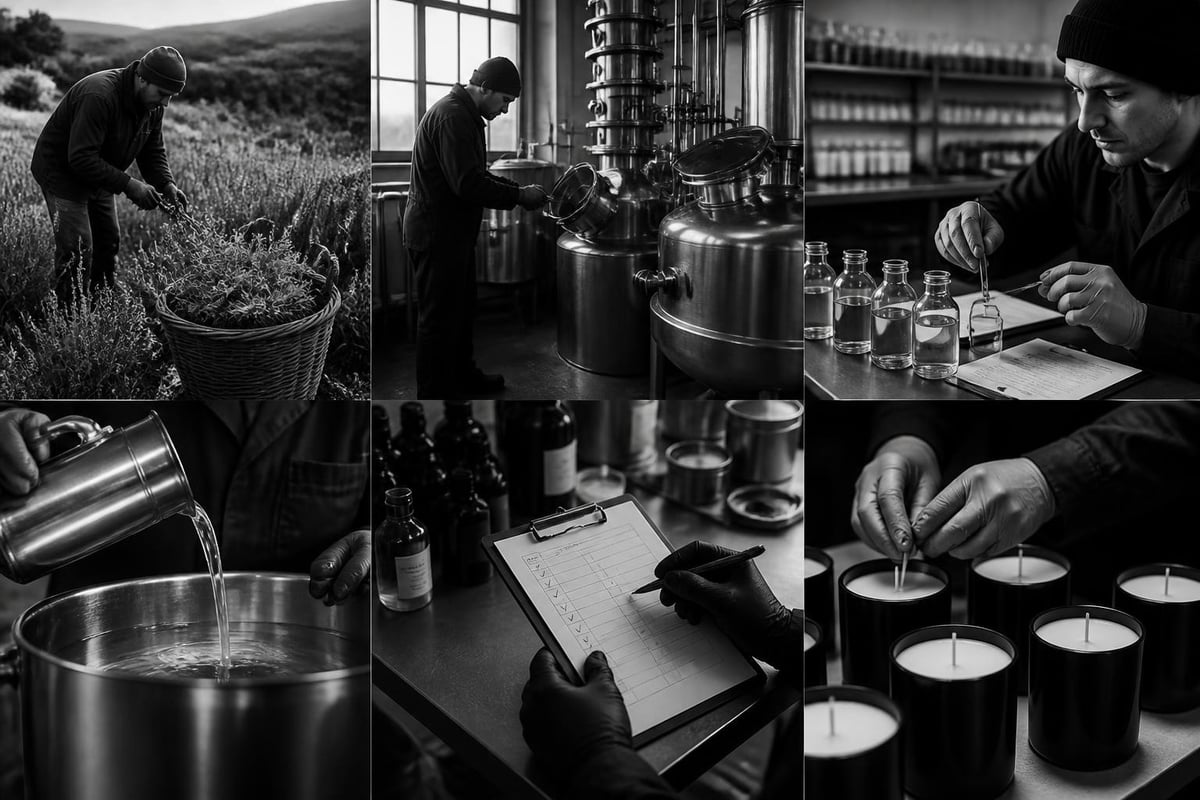
NYC candle makers source botanical ingredients through essential oil importers in Manhattan, direct relationships with distilleries upstate, cooperative buying groups, and specialized brokers who verify organic and fair-trade certifications. IFRA compliance documentation becomes critical when using plant extracts in candles.
The botanical fragrance supply chain operates differently than synthetic fragrance networks. You often work directly with distillers, negotiate harvest-season pricing, and accept natural variation between batches.
Building relationships with botanical suppliers
Establishing supplier relationships in New York's botanical community requires patience and volume commitments. Small distilleries and extract producers prioritize consistent buyers who understand seasonal availability.
- Attend trade shows at the Javits Center to meet extract vendors face-to-face
- Join local maker cooperatives that negotiate group pricing on bulk botanicals
- Visit distilleries in the Hudson Valley and Catskills during harvest season
- Request small samples before committing to liter quantities
- Communicate production schedules so suppliers can reserve inventory
Haus of Smell sources botanical ingredients exclusively from plant and resin extracts, never synthetic compounds. This commitment requires maintaining direct relationships with suppliers who can document origin and processing methods.
What permits do you need to buy candle supplies in NYC?
You need a valid business license and EIN to access wholesale pricing at most candle supply stores in NYC, though retail craft shops sell to individuals without documentation. Operating a candle production business requires additional permits through NYC Business Services depending on your production volume and retail plans.
Wholesale accounts typically require:
- Federal Employer Identification Number (EIN)
- New York State sales tax certificate
- Business liability insurance
- Resale certificate for tax-exempt wholesale purchases
If you plan to sell finished candles, you must register with the New York Department of Taxation and Finance for sales tax collection. Home-based candle businesses in NYC operate under specific fire code restrictions outlined in the FDNY resource materials.
Fire safety compliance for NYC candle makers
New York City enforces strict fire codes for businesses storing flammable materials. Candle wax, fragrance oils, and alcohols fall under these regulations.
Storage requirements include:
- Maximum quantities of flammable materials per square foot
- Approved containers with tight-fitting lids
- Fire extinguisher placement within 30 feet of storage areas
- Ventilation standards for spaces using fragrance concentrates
- Exit path clearance from all production areas
Consult NFPA candle safety standards when designing your workspace. These guidelines inform both safe production practices and customer education materials.
How much do candle supplies cost in Manhattan versus online?
Manhattan candle supplies typically cost 15-40% more than online national distributors when comparing identical products, but local sourcing eliminates shipping fees, allows immediate quality inspection, and reduces lead times for rush orders. The price gap narrows when shipping hazmat-classified materials under USPS Publication 52 regulations.
| Material | Online (shipped) | Manhattan retail | Manhattan wholesale |
|---|---|---|---|
| Soy wax (10 lb) | $28-35 | $45-55 | $32-38 |
| Cotton wicks (100 ct) | $12-18 | $22-28 | $15-20 |
| Glass vessels (dozen) | $24-36 | $48-72 | $30-45 |
| Essential oils (4 oz) | $15-45 | $25-65 | $18-50 |
Shipping hazardous materials adds surcharges. Fragrance oils and alcohol-based products incur HAZMAT fees ranging from $25-45 per shipment regardless of order size. This flat fee makes small online orders uneconomical.
Calculating total cost of ownership
Compare suppliers using total landed cost, not just list price. Factor in:
- Base material cost per pound or unit
- Shipping fees including HAZMAT surcharges
- Storage costs if bulk ordering for price breaks
- Spoilage risk from ordering more than you can use before expiration
- Time value of immediate pickup versus 5-7 day shipping
For small-batch makers producing fewer than 100 candles monthly, Manhattan retail pricing often proves competitive once shipping costs enter the equation. Production makers exceeding 500 units monthly benefit from wholesale accounts and bulk shipping.
What are the best practices for working with NYC candle suppliers?
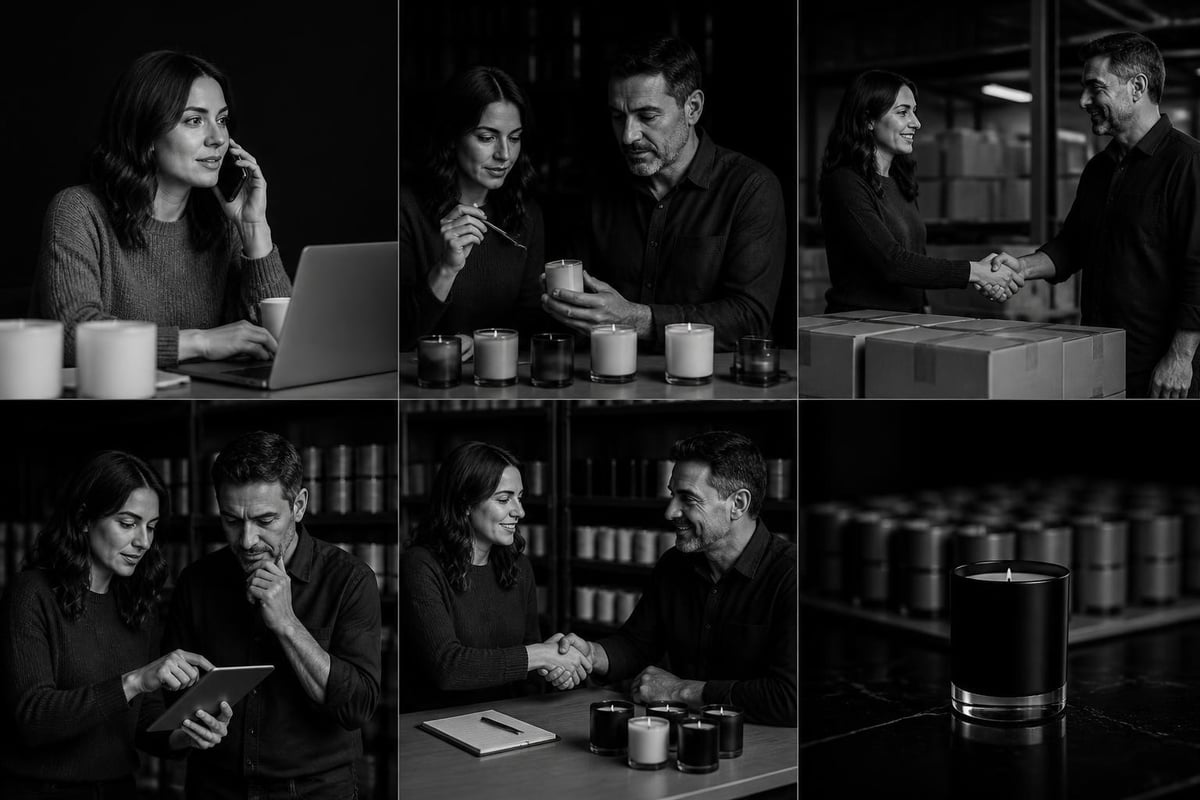
Best practices include maintaining consistent order schedules, communicating production changes in advance, paying invoices promptly to preserve terms, testing every new lot before production runs, and building backup supplier relationships to avoid material shortages during peak seasons.
Professional relationships with suppliers yield better pricing, priority allocation during shortages, and advance notice of discontinuations or reformulations.
Negotiating wholesale terms in New York
NYC suppliers operate in a high-rent, high-turnover environment. Understanding their constraints helps negotiate favorable terms.
Volume commitments unlock tiered pricing. Agreeing to purchase minimum monthly quantities reduces your per-unit cost by 10-25%. Ensure you can move that volume before committing.
Payment terms typically start at net 30. Establishing payment history can extend terms to net 60 or net 90, improving cash flow for production makers.
Consignment inventory arrangements allow some suppliers to stock materials at your facility, billing only when used. This works for high-volume producers with secure storage.
Seasonal prebooking locks in pricing before holiday production surges. Many suppliers offer 5-15% discounts for orders placed 90 days in advance.
Where can NYC candle makers find sustainable and vegan supplies?
NYC candle makers find sustainable and vegan supplies through botanical specialty stores in NoMad, online vendors certified by vegan organizations, cooperative buying groups focused on ethical sourcing, and direct relationships with organic farms in the Hudson Valley and Finger Lakes regions.
Vegan candle-making excludes beeswax, stearic acid derived from animal tallow, and any fragrance tested on animals. Sustainable sourcing prioritizes renewable waxes, recyclable vessels, and fragrance materials harvested without habitat destruction.
Verifying vegan and botanical claims
Supplier claims require verification. "Natural" and "botanical" lack regulatory definitions in the fragrance industry. Suppliers may label synthetic compounds as natural if derived from plant precursors through chemical processing.
Request:
- Complete ingredient disclosure beyond marketing descriptions
- Processing method documentation for extracts and isolates
- Third-party certifications from Vegan Action or similar organizations
- Allergen testing for potential skin sensitizers
- Origin documentation proving sustainable harvest practices
Haus of Smell maintains a strict commitment to vegan formulations using only botanical materials. This transparency allows customers to trust ingredient sourcing. Apply the same scrutiny to your supply chain.
How do you handle shipping and storage of candle materials in NYC?
Handle shipping and storage by using approved flammable material containers, maintaining climate-controlled environments between 60-75°F, rotating stock using first-in-first-out systems, keeping detailed inventory logs, and ensuring adequate ventilation in storage areas to prevent fragrance oil oxidation and wax degradation.
NYC apartments and small commercial spaces present storage challenges. Fragrance oils degrade in heat and light. Waxes absorb odors from nearby materials. Wicks lose rigidity in humidity.
Small-space storage solutions for Manhattan makers
Maximize limited square footage with vertical shelving, airtight containers, and strategic placement away from heat sources.
- Metal shelving units resist fire better than wood and support heavier loads
- Glass or HDPE containers with tight seals prevent fragrance migration
- Dark storage areas protect light-sensitive essential oils from degradation
- Dehumidifiers maintain optimal humidity for wick storage
- Temperature monitoring alerts you to conditions that could melt wax or degrade materials
Never store candle supplies near radiators, sunny windows, or cooking equipment. Maintain at least three feet of clearance from ignition sources as outlined in fire safety standards.
Label all containers with contents, lot numbers, and purchase dates. This traceability helps identify problem batches and rotate stock efficiently.
What trends are shaping the NYC candle supply market?
Current trends include increased demand for sustainable packaging, shift toward botanical and synthetic-free fragrances, emphasis on local sourcing to reduce carbon footprint, adoption of coconut and apricot wax blends, and growing interest in custom fragrance development that reflects New York's diverse neighborhoods and experiences.
Market research indicates consumer preference for transparency and natural ingredients continues accelerating. This pushes suppliers to stock more botanical options and document sourcing chains.
The rise of neighborhood-specific scent profiles
Manhattan candle makers increasingly develop fragrances tied to specific locations. NoMad's coffee shops and flower markets inspire different scent profiles than the salt air of the Seaport or the greenery of Central Park.
This hyperlocal approach requires working with suppliers who understand terroir in fragrance. Just as wine reflects its growing region, botanical extracts carry the character of their harvest location. Hudson Valley lavender smells different from Provence lavender. Catskills pine differs from Pacific Northwest varieties.
Building a location-specific candle line means sourcing regionally when possible and working with suppliers who can provide origin documentation.
FAQ
What is the minimum order at wholesale candle supply stores in NYC?
Most wholesale candle supply stores in NYC require minimum orders between $100-500 for opening accounts, with reorder minimums typically around $50-150. Some specialized botanical suppliers accept smaller orders but charge premium pricing for sub-wholesale quantities. Establishing purchase history often reduces minimums.
Can you buy candle supplies in NYC without a business license?
You can buy candle supplies at retail craft stores throughout NYC without any business documentation, though you pay retail markup and miss wholesale pricing. Wholesale suppliers require an EIN and resale certificate to verify business status and provide tax-exempt purchasing. Hobby makers typically start retail then transition.
How long do candle-making supplies last when stored in NYC apartments?
Candle-making supplies last 12-24 months when stored properly in NYC apartments, with soy and coconut wax remaining stable longest and essential oils degrading fastest. Fragrance oils keep 1-2 years in cool, dark conditions. Wicks last indefinitely if kept dry. High summer temperatures and radiator heat accelerate degradation significantly.
Where do professional NYC candle makers buy their wicks?
Professional NYC candle makers buy wicks from wholesale distributors in the Garment District, online specialty suppliers offering local pickup, or directly from wick manufacturers through trade accounts. Cotton, wood, and hemp wick varieties require different suppliers. Many makers test multiple brands before committing to bulk purchases based on performance.
What NYC neighborhoods have the most candle supply options?
The Garment District offers the highest concentration of wholesale candle supply options, followed by NoMad for botanical specialists and the Lower East Side for retail craft supplies. Brooklyn's Sunset Park and Red Hook serve as pickup locations for online bulk orders. Manhattan's density provides same-day sourcing unavailable elsewhere.
How do you ship finished candles from NYC to customers?
You ship finished candles from NYC using standard ground service through USPS, UPS, or FedEx with proper packaging including bubble wrap, void fill, and "Fragile" labels to prevent breakage during transit. Candles are not classified as hazardous when shipped as finished products. Use tracking and insurance for valuable shipments over $100.
Finding reliable candle supply sources in Manhattan requires balancing cost, quality, and convenience while maintaining commitment to ingredient transparency and safety compliance. Whether you source wholesale materials in the Garment District or seek botanical extracts from specialty vendors, building strong supplier relationships ensures consistent production. Haus of Smell crafts botanical candles entirely by hand in Manhattan using vegan, plant-based ingredients sourced through these same networks. Explore how botanical fragrance transforms your space at HAUS OF SMELL.