
A thoughtful candle gift guide helps you navigate scent profiles, wax quality, and presentation styles to match recipients with candles they'll actually use. The best candle gifts balance personal preference with occasion appropriateness, prioritizing natural ingredients and craftsmanship over mass-produced alternatives. Understanding botanical versus synthetic compositions, burn time, and vessel reusability transforms a simple gift into a memorable experience.
What makes candles such effective gifts for any occasion?
Candles work as universal gifts because they combine sensory experience with functional utility, fitting seamlessly into homes regardless of decor style or personal taste. Unlike clothing or accessories that require sizing and style matching, candles appeal to nearly everyone, offering both ambiance and practical light. They communicate thoughtfulness without the pressure of permanent commitment, as recipients use and enjoy them over weeks or months rather than storing them indefinitely.
The versatility of candles extends across occasions and relationships. A host receives one gratefully for dinner parties, while a colleague appreciates the same gesture during the holidays. The National Candle Association reports that candles remain among the most purchased gift items, with billions spent annually on candle gifts across all demographics. This widespread acceptance removes the anxiety of gift-giving guesswork.
Scent carries memory and emotion more powerfully than visual or auditory stimuli. When you select a candle with intention, you're offering someone the ability to shift their environment and mood with a single match strike. The recipient controls when and how they experience your gift, making it both personal and practical.
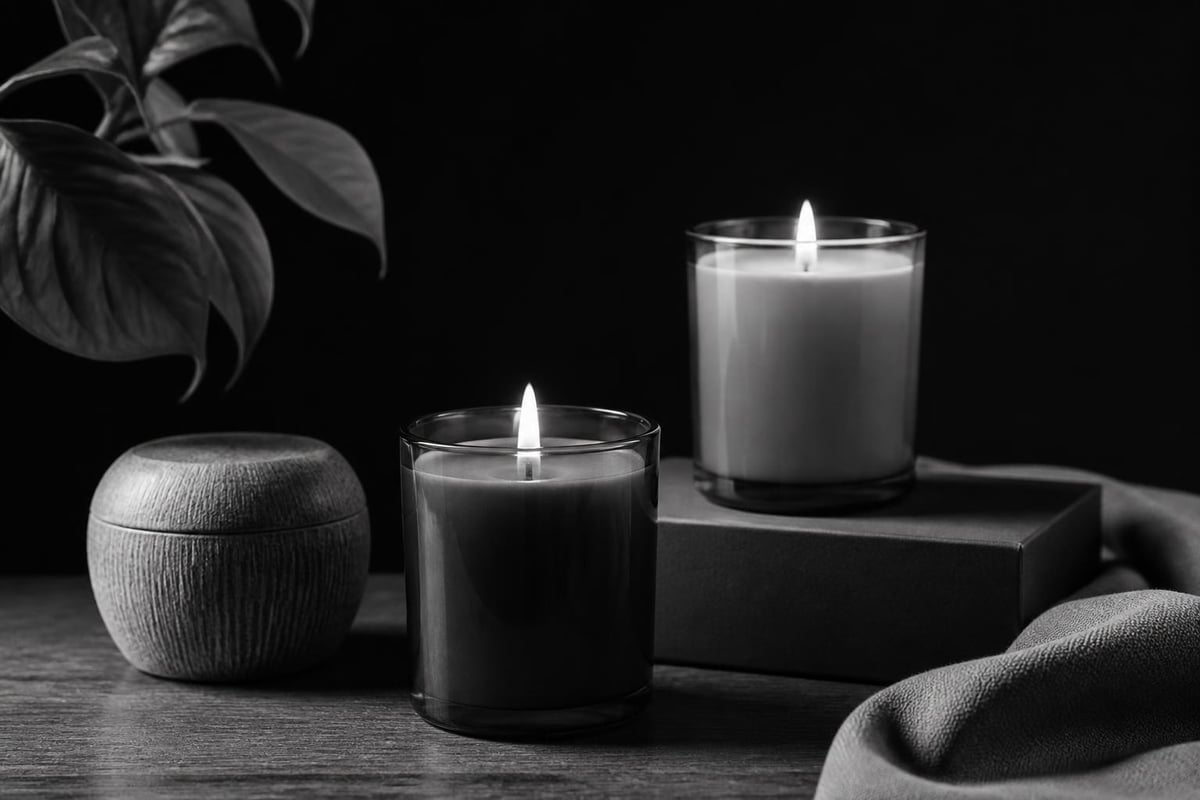
How do you choose candles based on who's receiving them?
Choosing candles by recipient requires understanding their living situation, scent sensitivity, and aesthetic preferences rather than guessing their favorite fragrance. Someone in a small apartment needs candles with moderate scent throw that won't overwhelm limited square footage, while a homeowner with multiple rooms can handle more robust fragrances. Consider whether the recipient has pets, children, or respiratory sensitivities that might affect their candle preferences.
Matching candles to lifestyle and space
Urban dwellers in studio apartments benefit from smaller vessels with refined scents that complement rather than dominate their space. Making a small apartment smell luxurious requires restraint and quality over quantity. Suburban homeowners with dedicated dining rooms or home offices can accommodate larger candles with longer burn times and more complex scent profiles.
Professional environments demand different considerations than personal spaces. Someone working from home might appreciate candles that enhance focus during work hours, while a frequent entertainer values candles that create welcoming atmospheres for guests. Age also plays a role, as younger recipients often prefer modern, minimalist vessels while older gift recipients might appreciate traditional or ornate containers.
| Recipient Type | Ideal Candle Size | Scent Intensity | Vessel Style |
|---|---|---|---|
| Studio apartment dweller | 4-6 oz | Light to medium | Minimal, reusable |
| Homeowner | 8-12 oz | Medium to strong | Decorative, substantial |
| Office professional | 4-6 oz | Very light | Clean, professional |
| Frequent host | 10-16 oz | Medium | Elegant, conversation piece |
What occasions call for specific candle gift approaches?
Different occasions demand distinct candle gift strategies, from celebratory milestones to sympathy gestures. Housewarming gifts should prioritize versatile, crowd-pleasing scents in durable vessels that complement various decor styles. Wedding gifts allow for more luxury and investment in premium candles with longer burn times and sophisticated packaging.
Holiday gifting benefits from this candle gift guide approach of creating sets or collections rather than single candles. Pairing complementary scents lets recipients rotate fragrances based on mood or season. Birthday gifts offer opportunities to match candles to personal interests, whether someone gravitates toward botanical compositions, warm ambiance, or specific scent families.
Seasonal considerations in candle selection
Winter gifts traditionally feature deeper, richer compositions, though personal preference always trumps seasonal conventions. Spring and summer occasions allow for lighter, fresher options that won't compete with open windows and outdoor air. Fall bridging periods work well with transitional scents that aren't overtly seasonal.
Sympathy and condolence situations require particular sensitivity. Avoid overpowering fragrances or overly cheerful presentations. Subtle, comforting scents in understated vessels communicate care without presuming to lift spirits artificially. The gesture matters more than the specific scent profile.
How does candle quality affect the gifting experience?
Quality separates memorable candle gifts from forgettable ones, with wax composition and wick construction determining both burn performance and scent delivery. Natural waxes like soy, coconut, or beeswax burn cleaner and longer than paraffin alternatives, releasing fragrance more evenly throughout the candle's life. Luxury candle buyers increasingly prioritize ingredient transparency and sustainable sourcing.
Wick quality directly impacts burn consistency and safety. Hand-set wicks positioned precisely in the center prevent tunneling and uneven melting that wastes wax and diminishes scent throw. Cotton or wood wicks offer different experiences, with cotton providing traditional performance and wood creating subtle crackling sounds.
- Wax purity: Natural botanical waxes without synthetic additives or petroleum derivatives
- Wick placement: Hand-set positioning that ensures even burn across the vessel diameter
- Fragrance source: Real plant and resin extracts versus synthetic fragrance oils
- Vessel construction: Heat-resistant glass or ceramic that won't crack under temperature changes
- Burn time accuracy: Realistic estimates based on actual testing rather than theoretical calculations
Botanical formulations offer distinct advantages for health-conscious recipients. Hand-poured candles made from natural wax and real plant extracts eliminate concerns about synthetic chemicals or artificial fragrances, making them suitable for people with sensitivities or strong preferences for natural products. Every element from wax to scent should serve the candle's performance and the recipient's wellbeing.
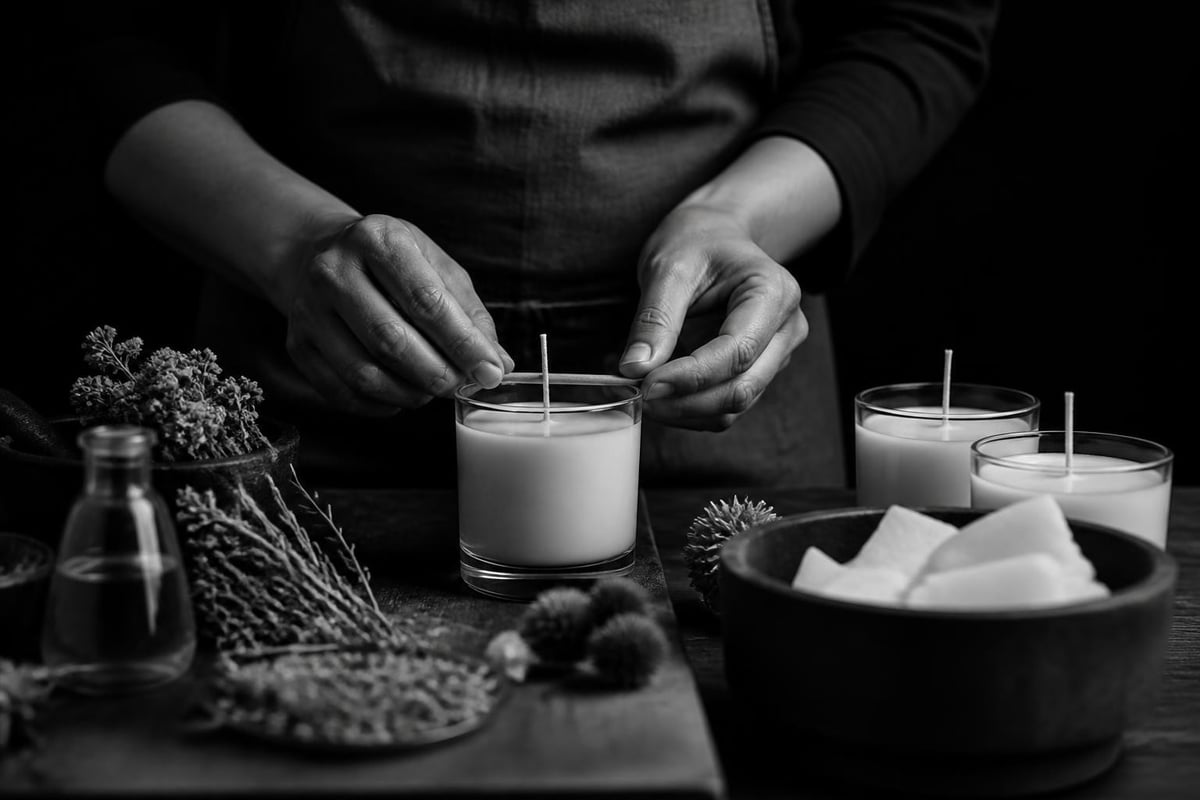
What presentation elements elevate a candle gift?
Presentation transforms a simple candle into a curated gift experience, beginning with thoughtful packaging that protects while previewing the product inside. Minimalist boxes with clean typography communicate sophistication, while elaborate wrapping suggests luxury and celebration. The packaging should complement the candle's aesthetic rather than competing with it.
Including context elevates the gift beyond the physical object. A handwritten note explaining why you selected this particular scent or how you imagine the recipient using it adds personal dimension. Mention burn time, care instructions, or the story behind the botanical ingredients if relevant. This transforms passive receiving into active appreciation.
Creating gift sets with intention
Pairing candles with complementary items builds cohesive gift experiences. Match a candle with quality matches in an attractive holder, a wick trimmer for proper maintenance, or a candle snuffer for clean extinguishing. These additions demonstrate attention to the complete usage experience rather than just the initial presentation.
Consider the unboxing sequence when assembling gift sets. Recipients should encounter items in logical order, building anticipation toward the main candle reveal. Layer tissue paper, position items at varying heights, and ensure nothing shifts during transport. The first impression matters significantly in gift perception.
How do botanical candles differ in the gifting context?
Botanical candles occupy a distinct category in any candle gift guide because they emphasize ingredient integrity and natural sourcing over synthetic convenience. Recipients increasingly appreciate knowing exactly what burns in their homes, particularly those with chemical sensitivities or environmental commitments. Botanical formulations use real plant and resin extracts to create scent profiles that evolve more subtly than synthetic alternatives.
The craftsmanship behind botanical candles adds narrative value to the gift. Hand-poured production in specific locations like Manhattan connects the recipient to place and maker in ways mass-produced candles cannot. This geographical and artisanal context transforms the candle from commodity to craft object worthy of appreciation beyond its functional purpose.
Vegan and cruelty-free certifications matter to growing recipient segments. Botanical candles that exclude animal-derived ingredients like beeswax or animal musk align with values-based purchasing decisions. When you gift a candle that reflects the recipient's ethics, you demonstrate genuine understanding of who they are beyond surface preferences.
- Research the maker: Verify ingredient sourcing and production methods before purchasing
- Confirm formulation: Ensure synthetic-free composition if that matters to the recipient
- Assess scent complexity: Botanical fragrances often develop more subtly than synthetic versions
- Evaluate vessel sustainability: Choose containers designed for reuse after the candle burns completely
- Document the story: Keep information about origin and ingredients to share with the recipient
What common candle gifting mistakes should you avoid?
Assuming everyone loves strong fragrances ranks among the most frequent candle gifting errors, as scent tolerance varies dramatically between individuals. What smells pleasantly robust to you might overwhelm someone with different sensory thresholds. When uncertain about preferences, err toward lighter scent throws that recipients can burn in smaller spaces or for shorter durations.
Ignoring burn time creates practical problems for recipients. A massive candle with a 100-hour burn time seems generous but becomes burdensome for someone who rarely uses candles or lacks storage space. Smaller candles with 20-30 hour burn times offer complete experiences without long-term commitment or storage demands.
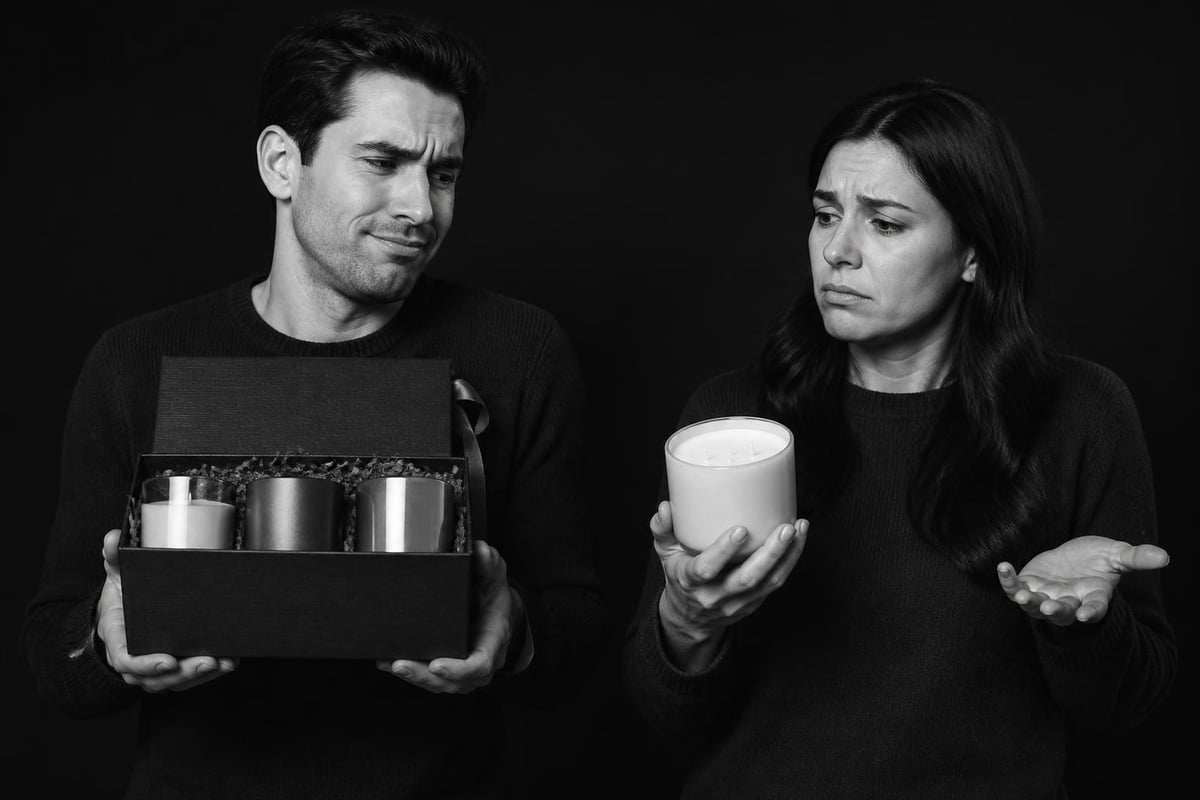
Presentation missteps that diminish impact
Over-wrapping candles obscures their visual appeal and creates unnecessary waste. Recipients should glimpse the vessel and understand the product category without extensive unwrapping. Balance protection during transport with presentation elegance. Excessive packaging suggests either insecurity about the gift itself or environmental insensitivity.
Gifting without context leaves recipients guessing about usage and care. Include basic information about optimal burn practices, such as trimming wicks before each use or burning until the wax pool reaches the vessel edge. This educational component prevents common user errors that diminish the candle's performance and the recipient's satisfaction.
| Mistake | Why It Fails | Better Approach |
|---|---|---|
| Choosing your favorite scent | Assumes shared preferences | Ask about scent families they enjoy |
| Buying oversized candles | Creates storage and commitment issues | Select moderate sizes (6-10 oz) |
| Skipping care instructions | Leads to poor burn performance | Include simple usage guidance |
| Generic presentation | Lacks personal connection | Add context about selection reasoning |
How much should you invest in a candle gift?
Investment level should reflect relationship depth and occasion significance rather than arbitrary price points. A colleague's housewarming warrants different spending than a parent's milestone birthday. Expert gift guides typically categorize options by price range, but focus on value and quality over pure cost.
Budget-conscious gifting doesn't require sacrificing quality when you prioritize smaller sizes of premium candles over large vessels of questionable composition. A 6-ounce candle made from botanical ingredients with hand-poured craftsmanship often exceeds the impact of a 16-ounce mass-produced alternative at the same price point. Recipients notice quality differences in burn performance, scent evolution, and vessel construction.
Premium botanical candles justify higher investment through ingredient quality, production methods, and performance reliability. When you select candles made entirely from natural materials without synthetic additives, you're investing in both immediate sensory experience and long-term health considerations. The price reflects genuine material costs rather than brand markup alone.
Where should you shop for candle gifts?
Local boutiques specializing in botanical scents offer advantages over department stores or online marketplaces, particularly regarding product knowledge and curation. Staff at dedicated scent shops can guide selections based on detailed recipient descriptions and provide samples when possible. Supporting local makers also adds narrative value to your gift, especially when the candle comes from a specific neighborhood or city meaningful to the recipient.
Manhattan-based options like Haus of Smell provide access to handcrafted botanical candles made in NoMad with transparent ingredient sourcing and production. Visiting physical locations lets you experience scents firsthand rather than relying on written descriptions that rarely capture fragrance accurately. This tactile shopping experience significantly improves selection confidence.
Online shopping works when you know exactly what you're purchasing or when buying from makers whose quality you've previously confirmed. Read detailed product descriptions focusing on wax type, wick construction, and scent source rather than marketing language. Customer reviews help verify burn time accuracy and scent throw claims, though individual experiences vary based on room size and ventilation.
What makes a candle gift memorable beyond the burn?
Memorable candle gifts provide utility after the wax depletes, with vessels designed for second lives as planters, storage containers, or decorative objects. High-quality glass or ceramic containers warrant keeping rather than discarding, extending the gift's presence in the recipient's home long after the last burn. This sustainable approach aligns with growing environmental consciousness among consumers.
The sensory memory created during burning persists beyond the candle's physical presence. When recipients associate a particular scent with a meaningful gift occasion or thoughtful giver, they carry that connection forward. Understanding scent categories helps you select fragrances that create positive associations rather than neutral or negative ones.
Documentation adds lasting value through storytelling. Include information about the candle's origin, the meaning behind specific botanical ingredients, or the artisan's approach to crafting. This narrative context transforms a consumed product into a remembered experience. Recipients often retain these stories even after the candle itself is gone.
FAQ
What size candle makes the best gift for most people?
Medium-sized candles between six and ten ounces work best for most recipients because they provide substantial burn time without overwhelming storage capacity or requiring extended commitment. This size allows recipients to fully experience the scent profile across multiple burns while fitting easily on shelves, nightstands, or bathroom counters. It balances generosity with practicality better than either very small or oversized alternatives.
Should you choose candles with lids or open vessels?
Lidded candles offer practical advantages for gifting because they preserve scent integrity during storage and prevent dust accumulation between uses. Lids also enhance presentation by adding structural interest and protecting the candle during transport or wrapping. However, some artisanal candles use open vessels as part of their aesthetic, so prioritize overall quality and design cohesion over lid presence alone.
How can you determine if a candle uses real botanical ingredients?
Verify botanical ingredients by checking product descriptions for specific plant and resin extract names rather than vague "fragrance" or "parfum" listings. Legitimate botanical candles identify their wax source clearly as soy, coconut, or specific plant waxes rather than generic "natural wax" claims. Contact makers directly with ingredient questions, as transparent companies willingly discuss sourcing and formulation details.
What if the recipient has never mentioned candle preferences?
When recipient preferences remain unknown, select candles with universal appeal through moderate scent intensity and neutral or botanical compositions that avoid polarizing fragrance families. Observe their home environment for clues about aesthetic preferences that guide vessel selection. Include gift receipts when possible, framing exchange options as practical rather than presumptuous to reduce any recipient discomfort.
Do expensive candles actually burn better than budget options?
Premium candles typically demonstrate superior burn performance through cleaner wax combustion, more consistent scent throw, and longer total burn time per ounce compared to budget alternatives. However, price alone doesn't guarantee quality, as some brands charge for packaging or marketing rather than ingredient superiority. Evaluate specific formulation details and production methods rather than relying solely on price as a quality indicator.
How many candles should you include in a gift set?
Gift sets work best with two to four candles that offer scent variety without overwhelming recipients with choices or storage demands. Pair complementary rather than identical fragrances so recipients can rotate based on mood or room while maintaining cohesive aesthetic presentation. Odd numbers often create more visually interesting arrangements, though practical considerations like box dimensions may dictate even quantities instead.
Selecting the right candle gift combines practical assessment of recipient needs with thoughtful consideration of quality, presentation, and lasting impact. When you prioritize botanical ingredients, artisanal craftsmanship, and meaningful context over generic convenience, you transform a common gift into a memorable experience that recipients genuinely appreciate. Explore the carefully curated collection at Haus of Smell, where every botanical candle is hand-poured in Manhattan using natural ingredients and traditional techniques that honor both craft and environment.