
Aroma oils for candles are concentrated scent compounds added to wax to create fragrant candles, available in two primary forms: essential oils extracted from plants and fragrance oils formulated from synthetic or blended materials. These oils disperse through the wax during burning, releasing scent molecules into the air through a process called scent throw, with concentration ratios typically ranging from 6% to 12% depending on wax type and desired intensity.
The choice between natural and synthetic aromatic materials shapes not only the scent profile but also the performance, cost, and sustainability of finished candles. Whether crafting candles for personal use or developing a commercial line, understanding how different oils behave in wax creates better results and more satisfied customers.
What Are Aroma Oils for Candles and How Do They Work?
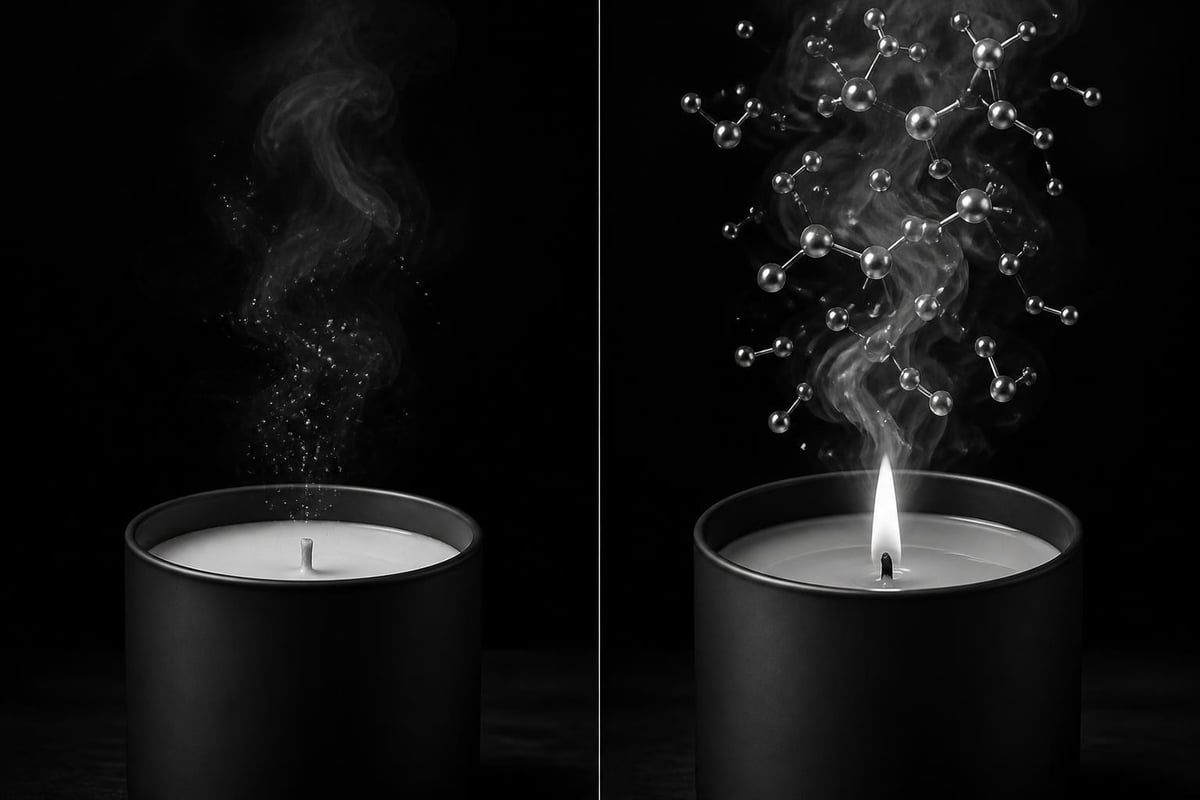
Aroma oils for candles are scenting agents that transform plain wax into fragrant products through molecular dispersion when heated. The National Candle Association explains the role of fragrances in creating scented candles, noting that these oils must bind properly with wax molecules to release scent effectively. When a candle burns, heat liquefies the wax pool surrounding the wick, allowing aroma compounds to evaporate and disperse into the surrounding air.
The effectiveness of these oils depends on their volatility, molecular weight, and compatibility with the chosen wax base. Lighter molecules evaporate quickly, creating immediate scent impact called cold throw (the scent when unlit) and initial hot throw (the scent when burning). Heavier molecules release more slowly, providing lasting fragrance throughout the candle's burn time.
Cold Throw vs Hot Throw Performance
Cold throw refers to the scent strength a candle releases at room temperature, while hot throw describes the fragrance intensity during burning. Both characteristics matter for customer satisfaction, though they require different formulation strategies.
Factors affecting cold throw:
- Oil concentration in the wax
- Surface area of the candle exposed to air
- Ambient temperature and humidity
- Molecular volatility of scent compounds
Factors affecting hot throw:
- Wax melt pool temperature and depth
- Wick size and burn rate
- Room ventilation and air circulation
- Scent oil flash point and evaporation rate
What Is the Difference Between Essential Oils and Fragrance Oils for Candles?
Essential oils are concentrated plant extracts obtained through distillation or cold pressing, while fragrance oils are blended compounds that may contain synthetic chemicals, isolated natural components, or combinations of both materials. CandleScience outlines the differences between essential oils and fragrance oils, emphasizing their distinct compositions and performance characteristics in candle applications. Essential oils provide authentic botanical scents but often have lower scent throw and higher costs, whereas fragrance oils deliver stronger projection and broader scent variety at more accessible price points.
The choice between these options affects not only scent character but also labeling requirements, ingredient transparency, and alignment with natural or vegan product standards. Many makers prefer botanical approaches, seeking botanical aroma oils that maintain plant authenticity while providing adequate scent distribution.
Essential Oil Characteristics
Pure essential oils contain volatile aromatic compounds extracted directly from plant materials. Lavender, eucalyptus, peppermint, and citrus oils rank among the most common choices for candle making, though their flash points and scent strength vary considerably.
| Property | Essential Oils | Fragrance Oils |
|---|---|---|
| Source | Plant distillation or extraction | Synthetic or blended formulation |
| Scent Strength | Generally lighter throw | Typically stronger throw |
| Cost | Higher per ounce | More economical |
| Variety | Limited to botanical scents | Nearly unlimited options |
| Natural Status | 100% natural | Varies by formulation |
| Consistency | Can vary by harvest | Highly consistent |
Essential oils require higher usage rates (often 10-12%) to achieve comparable scent throw to fragrance oils (typically 6-8%). This difference impacts both cost and formulation strategy. Flash points also vary widely, with citrus oils having particularly low flash points that can affect burning safety.
Fragrance Oil Formulations
Fragrance oils provide consistent scent profiles and stronger performance in candles, though their synthetic components may not align with natural product goals. CandleScience offers a comprehensive overview of fragrance oils, explaining how these blends are created specifically for candle applications with optimized flash points and wax compatibility.
Modern fragrance oils often incorporate some natural isolates alongside synthetic molecules, creating hybrid formulations that balance performance with ingredient preferences. Phthalate-free options have become standard in quality candle making, addressing health and transparency concerns.
How Much Aroma Oil Should You Add to Candle Wax?
The optimal amount of aroma oils for candles ranges from 6% to 12% by weight of the total wax, with specific ratios depending on wax type, oil strength, and desired scent intensity. Soy wax typically holds 8-10% fragrance load effectively, while paraffin can accommodate up to 12%, and beeswax generally performs best at 6-8% due to its own natural scent. Exceeding recommended ratios can cause sweating, poor burning, or diminished scent throw rather than stronger fragrance.
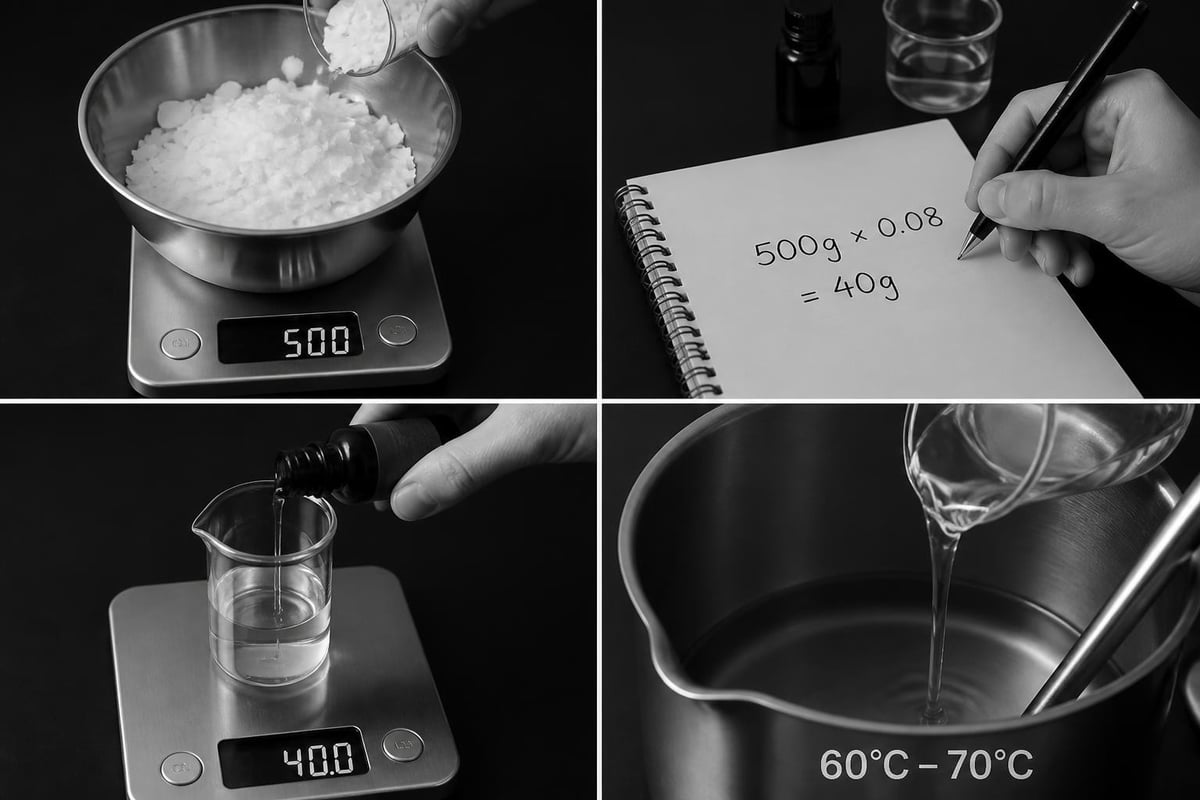
Calculating the correct amount requires weighing both wax and oil precisely. For a candle using 16 ounces of wax at 10% fragrance load, you would add 1.6 ounces of aroma oil. The National Candle Association discusses various candle waxes and their properties, including how different waxes interact with scenting materials.
Step-by-Step Scenting Process
1. Measure and melt wax: Heat wax to the manufacturer's recommended temperature, typically between 170°F and 185°F for most waxes.
2. Calculate oil amount: Multiply total wax weight by your chosen percentage (0.06 to 0.12) to determine oil weight needed.
3. Cool to addition temperature: Allow melted wax to cool to 135°F-165°F before adding oils to prevent scent degradation from excessive heat.
4. Add oils slowly: Pour aroma oils into cooled wax while stirring gently but thoroughly for even distribution.
5. Stir completely: Mix for at least two minutes, ensuring oils incorporate fully without creating excessive air bubbles.
6. Pour at proper temperature: Transfer scented wax into containers at the recommended pouring temperature for your specific wax type.
Testing small batches at different percentages helps identify the ideal ratio for specific oil and wax combinations. A candle that performs well at 8% with one essential oil blend might require 10% with a different botanical composition.
Which Wax Types Work Best With Aroma Oils?
Soy wax, coconut wax, and beeswax are the three primary natural wax options that work effectively with aroma oils for candles, each offering distinct characteristics for scent retention and release. Soy wax provides excellent cold throw and accepts fragrance loads up to 10%, making it popular for botanical candle making. Coconut wax burns slowly with superior hot throw but costs more per pound. Beeswax has a natural honey scent that can complement or compete with added aromatics, performing best with lighter fragrance loads of 6-8%.
Wax choice affects not only scent performance but also burn characteristics, appearance, and alignment with natural product standards. Many makers blend waxes to optimize multiple properties simultaneously.
Soy Wax Performance
Soy wax dominates the natural candle market due to its renewable source, clean burning properties, and reliable fragrance retention. It accepts both essential oils and fragrance oils readily, though it may develop frosting (a white crystalline surface) that doesn't affect performance but changes appearance.
The natural texture of soy wax creates excellent cold throw because its slightly porous structure releases scent molecules even when solid. Hot throw depends on achieving a full melt pool, which requires proper wick sizing for the container diameter.
Coconut and Beeswax Options
Coconut wax offers premium performance with exceptional scent throw in both cold and hot states, though its higher cost limits its use primarily to luxury candle lines. It blends well with soy to create balanced formulations that improve appearance while maintaining natural ingredients.
Beeswax presents unique challenges because its inherent honey-like scent can mask lighter aromatics. Stronger botanical oils or spice-forward blends work better than delicate florals. The wax also has a higher melting point, requiring specific wick selection and potentially different oil addition temperatures.
| Wax Type | Fragrance Load | Cold Throw | Hot Throw | Cost | Natural Status |
|---|---|---|---|---|---|
| Soy | 8-10% | Excellent | Good | Moderate | Plant-based |
| Coconut | 10-12% | Excellent | Excellent | High | Plant-based |
| Beeswax | 6-8% | Good | Good | High | Animal product |
| Paraffin | 10-12% | Good | Excellent | Low | Petroleum |
How Do You Choose Quality Aroma Oils for Natural Candles?
Quality aroma oils for candles should be specifically formulated for candle applications with appropriate flash points above 150°F, pure compositions free from fillers or adulterants, and transparent ingredient disclosure from reputable suppliers. Amphora Aromatics offers a comprehensive range of essential oils with detailed sourcing and purity information, demonstrating the transparency serious makers should expect. Testing oils in small batches before committing to large purchases prevents costly mistakes and ensures compatibility with your specific wax and wick combinations.
For makers committed to botanical formulations, verifying that oils are pure plant extracts without synthetic extenders maintains product integrity and supports accurate labeling. Some suppliers offer organic certifications, which can strengthen brand positioning for health-conscious consumers.
Evaluating Supplier Transparency
Reliable suppliers provide detailed safety data sheets (SDS), flash point information, suggested usage rates, and clear ingredient lists. They should also specify whether oils are pure essential oils, natural isolates, or synthetic fragrances.
Red flags when selecting suppliers:
- Vague ingredient descriptions or "proprietary blend" labels without details
- Prices significantly below market average for genuine essential oils
- Lack of safety documentation or flash point data
- No candle-specific usage guidelines
- Absence of purity testing or certification information
Building relationships with suppliers who understand candle making allows for better technical support when troubleshooting scent throw issues or burn problems. Some suppliers offer sample sizes that enable testing before larger investments.
Testing Protocols for New Oils
Candeliss provides a practical guide on using essential oils in candles, covering selection criteria and testing workflow considerations. Systematic testing prevents production failures and ensures consistent results across batches.
Test new oils by making multiple small candles at different fragrance loads (6%, 8%, 10%) with your standard wax and wick combination. Burn test each version for at least three burns, evaluating cold throw before lighting, hot throw at full melt pool, and any performance issues like smoking, tunneling, or weak scent projection.
What Are the Best Botanical Options for Candle Scenting?
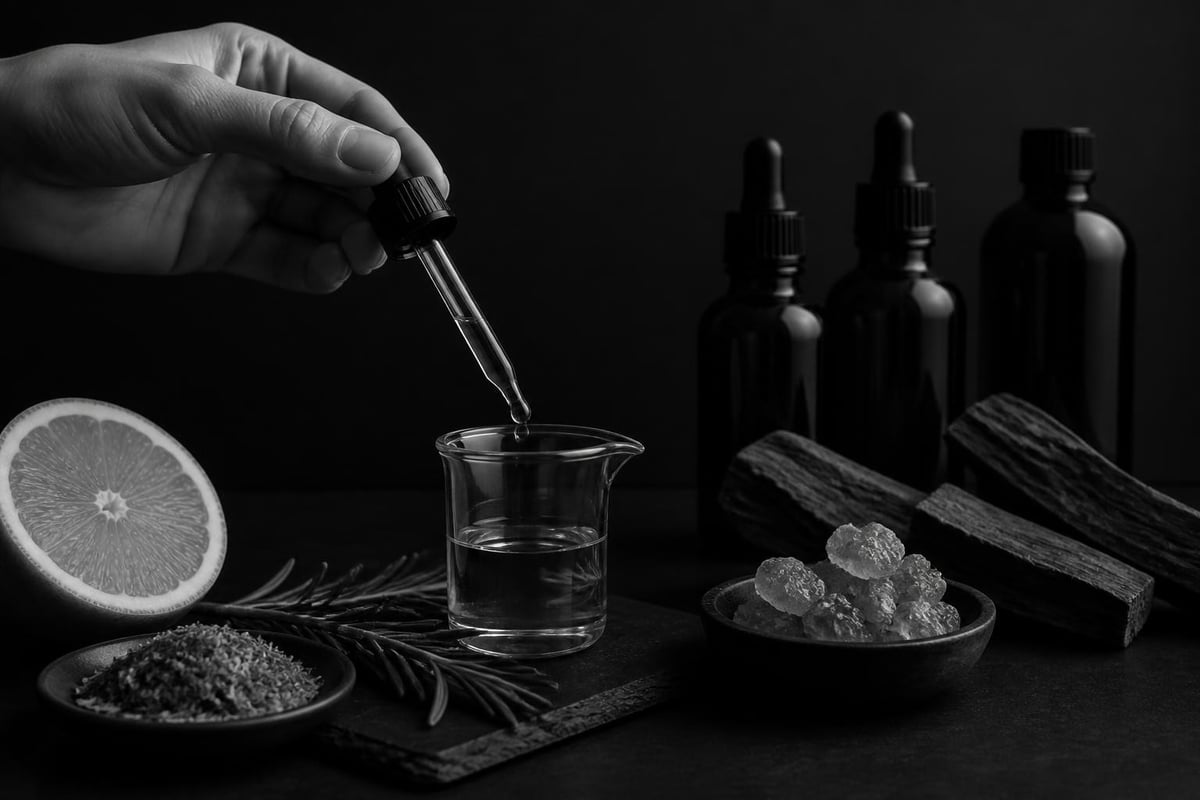
Pine, cedarwood, lavender, eucalyptus, and citrus essential oils rank among the most effective botanical options for candle scenting due to their strong natural scent profiles and reasonable flash points. Pine and cedarwood provide woodsy, grounding aromas with good hot throw performance. Lavender offers floral notes that remain relatively stable when heated. Eucalyptus delivers clean, medicinal freshness that disperses well through air. Citrus oils like sweet orange or grapefruit create bright, uplifting scents though they may fade faster than other botanicals.
Blending multiple essential oils creates complexity and can improve overall scent performance by combining oils with different volatility rates. A blend might use fast-evaporating citrus for initial impact, mid-range florals for body, and slower-releasing woods or resins for lasting base notes.
Creating Balanced Botanical Blends
Successful botanical blending considers how different plant extracts interact and layer. Rather than random combinations, thoughtful formulations balance light and heavy molecules to create evolving scent experiences throughout the candle's life.
Many botanical candle makers structure their blends around traditional perfumery concepts without focusing on individual note details, instead considering overall scent families and how they complement each other. Herbal, woody, citrus, floral, and earthy categories each bring distinct characteristics to finished candles.
For makers seeking to work with pure botanical materials, exploring options like those found in botanical candles and wax melts demonstrates how natural ingredients can create compelling scent experiences without synthetic compounds. These products rely entirely on plant and resin extracts to achieve their aromatic profiles.
Seasonal and Contextual Scenting
Different environments and seasons call for different aromatic approaches. Winter candles often feature warming spices, rich woods, and cozy botanicals, while summer formulations might emphasize fresh herbs, light florals, and crisp citrus notes.
Context also matters for intended use. Candles for relaxation benefit from calming lavender or chamomile, while those meant for focus might incorporate stimulating peppermint or rosemary. Understanding customer intentions helps guide oil selection beyond simple preference.
How Do You Prevent Common Scenting Problems?
Preventing common scenting problems in candles requires maintaining proper temperatures during oil addition (135°F-165°F), using appropriate fragrance loads (6-10% for most natural waxes), selecting correctly sized wicks for container diameter, and allowing adequate cure time of 1-2 weeks before evaluating scent throw. Temperature control is particularly critical because adding aroma oils for candles to excessively hot wax can burn off volatile compounds, while adding to too-cool wax prevents proper binding. The National Candle Association's FAQ section addresses common safety and performance questions that can help troubleshoot issues.
Many scenting problems stem from rushing the process or skipping small-batch testing. Each new oil or wax combination behaves differently, requiring specific optimization.
Weak Scent Throw Solutions
Weak scent throw frustrates both makers and customers. Multiple factors contribute to this issue, requiring systematic diagnosis to identify the root cause.
Common causes of weak scent throw:
- Insufficient fragrance load for the chosen oil type
- Wick too small, preventing full melt pool development
- Oil added at improper temperature
- Incompatible wax and oil combination
- Insufficient cure time before evaluation
- Poor quality or degraded oils
Addressing weak throw starts with verifying that your melt pool reaches the container edges within 2-3 hours of burning. If not, upsize your wick. If the melt pool is adequate but scent remains weak, increase fragrance load incrementally or switch to stronger oils.
Preventing Oil Separation and Seeping
Oil separation occurs when aroma compounds don't fully integrate with wax, creating pockets of pure oil that can seep to the surface or pool at the bottom. This wastes expensive oils and creates messy products.
Proper stirring technique prevents most separation issues. After adding oils to cooled wax, stir gently but thoroughly for at least two full minutes, ensuring complete distribution without incorporating excessive air. Pour at the correct temperature for your specific wax to maintain integration as the candle solidifies.
Some essential oils, particularly citrus varieties, are more prone to separation due to their thin consistency and chemical composition. Blending them with thicker oils or reducing overall fragrance load can improve stability.
FAQ
What percentage of aroma oils should I use in soy candles?
For soy wax candles, use 8-10% aroma oils by weight for optimal scent throw without causing burning or appearance issues. Start testing at 8% and increase gradually if needed. Higher percentages may cause sweating or poor burning, while lower amounts often produce insufficient scent. The exact ratio depends on your specific oil strength and desired intensity.
Can you use essential oils and fragrance oils together in one candle?
Yes, you can blend essential oils and fragrance oils in a single candle formulation to balance natural ingredients with stronger scent performance. Calculate the combined total to stay within your target fragrance load percentage. This approach allows botanical character from essential oils while fragrance oils provide projection and consistency. Test blends thoroughly before production.
Why do my candles smell strong when unlit but weak when burning?
Strong cold throw but weak hot throw typically indicates wick sizing issues preventing a full melt pool, oils with low heat stability that degrade during burning, or insufficient fragrance load for hot scent distribution. Upsize your wick first to ensure complete melting across the container surface. If melt pool is adequate, try oils with higher flash points or increase fragrance percentage.
How long should candles cure before the scent fully develops?
Natural wax candles should cure for 1-2 weeks at room temperature before evaluating scent throw, allowing aroma oils to fully bind with wax molecules. Soy wax particularly benefits from longer cure times, often reaching optimal performance at 14 days. Burning immediately after pouring typically shows weaker scent than properly cured candles. Store curing candles in moderate temperatures away from direct sunlight.
Are botanical aroma oils safe for pets and children?
While botanical oils are natural, many essential oils can be toxic to pets or irritating to children when burned in enclosed spaces. Research specific oils for safety concerns, maintain good ventilation, and never burn candles in small rooms with pets present. Some oils like tea tree, eucalyptus, and citrus can be harmful to cats and dogs. Choose milder botanicals and monitor for adverse reactions.
What causes candles to sweat or develop oil droplets on the surface?
Candle sweating occurs when excess fragrance oil seeps to the surface due to overloading (exceeding wax capacity), temperature fluctuations during cooling, or incompatible oil and wax types. Reduce fragrance load to recommended percentages, maintain consistent room temperature during curing, and ensure thorough mixing. Some wax types hold less fragrance than others, requiring adjusted formulations for different bases.
Selecting and using aroma oils for candles effectively requires understanding the relationship between oil type, wax compatibility, and proper incorporation techniques to achieve balanced scent performance. Whether choosing pure botanical extracts or formulated blends, testing systematically and maintaining quality standards ensures consistent results that satisfy customers seeking naturally scented products. Haus of Smell handcrafts botanical candles in Manhattan using real plant and resin extracts without synthetics, demonstrating how committed sourcing and careful formulation create compelling aromatic experiences rooted in natural ingredients.