
212 for men nyc is Carolina Herrera's aromatic woody fragrance created by perfumer Alberto Morillas and launched in 1999 to capture the energy and modern masculinity of New York City. The scent balances bright citrus and green notes with spices and woods in a composition designed for the urban professional. It remains part of Carolina Herrera's 212 franchise, which links fragrance identity directly to Manhattan's cosmopolitan character and fast-paced lifestyle.
The fragrance has maintained a steady presence in the men's cologne market for over two decades, appealing to those seeking a versatile daily scent that transitions from office to evening. Its connection to New York City is both marketing positioning and cultural statement, reflecting how fragrance can embody place and identity. Understanding 212 for men nyc requires exploring its composition, the perfumer behind it, and the broader context of scent in Manhattan culture.
What makes 212 for men nyc distinct in the fragrance market?
212 for men nyc distinguishes itself through its urban positioning and aromatic green character rather than the heavy oriental or aquatic trends that dominated men's fragrances in the late 1990s. The scent was crafted to evoke New York's energy without resorting to overpowering intensity, creating a wearable profile suitable for professional and social settings. Its moderate sillage and contemporary drydown made it accessible to younger consumers while maintaining sophistication for mature wearers.
The fragrance's architecture follows classical perfumery structure with clear development across top, heart, and base phases. Opening freshness gives way to aromatic spice in the heart, finally settling into smooth woods and subtle musk. This progression mirrors the movement through a New York day, from morning brightness to evening depth.

Key distinguishing factors include:
- Creation by Alberto Morillas, whose portfolio includes major designer fragrances across multiple houses
- Transparent aromatic quality rather than opaque sweetness or synthetic marine accords
- Moderate longevity designed for reapplication throughout the day
- Gender positioning that avoids aggressive masculinity stereotypes common in 1990s men's scents
The official product page for 212 Men NYC describes the fragrance as modern and sophisticated, emphasizing its connection to New York's contemporary character. This positioning differentiates it from heritage colognes and aggressively marketed sports fragrances.
Who is Alberto Morillas and what is his approach to fragrance?
Alberto Morillas is among the most commercially successful perfumers of the past four decades, with a career spanning independent houses and major fragrance conglomerates. His approach combines technical precision with wearability, creating compositions that perform well across diverse consumer markets while maintaining distinctive character. The Perfume Society profile of Alberto Morillas documents his extensive training and the breadth of his commercial work.
Morillas favors clarity in structure, building fragrances with recognizable phases rather than monolithic walls of scent. This transparency allows wearers to experience fragrance development throughout the day. His work on 212 for men nyc demonstrates this philosophy through its progression from bright opening to settled base without jarring transitions.
Morillas' commercial impact and industry standing
The perfumer's commercial success is documented in industry records, with major wins and credits spanning multiple decades and markets. His ability to create fragrances that resonate across cultural boundaries while maintaining commercial viability makes him a sought-after collaborator for global brands.
Morillas' technique involves layering familiar elements in unexpected proportions, creating recognition without redundancy. For 212 for men nyc, this meant balancing green aromatic character with enough warmth to prevent clinical coldness, achieving approachability without blandness.
His work demonstrates how fragrance can serve as cultural product rather than mere cosmetic accessory. By embedding place identity into scent structure, Morillas helped establish fragrance as storytelling medium.
How does 212 for men nyc fit into the broader 212 franchise?
The 212 franchise began with 212 Women in 1997, establishing the numerical reference to Manhattan's area code as brand signature. The men's version followed in 1999, expanding the urban positioning to male consumers while maintaining family resemblance. Subsequent releases including 212 VIP, 212 Heroes, and limited editions have extended the franchise across multiple demographics and price points.
| Release | Year | Target Market | Positioning |
|---|---|---|---|
| 212 Women | 1997 | Contemporary women 25-45 | Urban sophistication |
| 212 Men NYC | 1999 | Urban professionals 25-40 | Modern masculinity |
| 212 VIP | 2010 | Younger party-goers | Nightlife energy |
| 212 Heroes | 2021 | Millennial/Gen Z | Environmental consciousness |
The franchise strategy relies on consistent visual identity and New York association while varying scent profiles to address different consumer segments. This approach allows Carolina Herrera to maintain brand coherence while expanding market reach. Recent franchise activity shows continued investment in the 212 brand family across travel retail and domestic markets.
212 for men nyc serves as anchor for masculine offerings within the franchise, providing continuity while newer releases explore contemporary trends. Its longevity demonstrates the viability of urban positioning in fragrance marketing, a strategy that connects scent to aspirational geography.
What ingredients and regulatory considerations apply to 212 for men nyc?
Like all commercial fragrances sold in regulated markets, 212 for men nyc carries detailed ingredient declarations listing both functional components and allergenic substances. The ingredient documentation reveals the typical complexity of modern fragrance formulation, including alcohol base, fragrance compounds, preservatives, and UV protectants.
Regulatory requirements mandate disclosure of 26 specific allergens when present above threshold levels. These substances occur naturally in many essential oils and botanical extracts, as well as in synthetic aroma chemicals. Consumers with sensitivities must review these declarations before purchase.
Common allergens in commercial fragrances:
- Limonene from citrus oils
- Linalool from lavender and citrus
- Geraniol from rose and citrus materials
- Citral from lemon and citrus grass oils
- Eugenol from spice materials
The presence of these substances does not indicate poor quality or safety concerns for most consumers. They represent standard components of fragrance materials widely used across the industry. However, individuals with documented sensitivities should approach all fragranced products with appropriate caution.
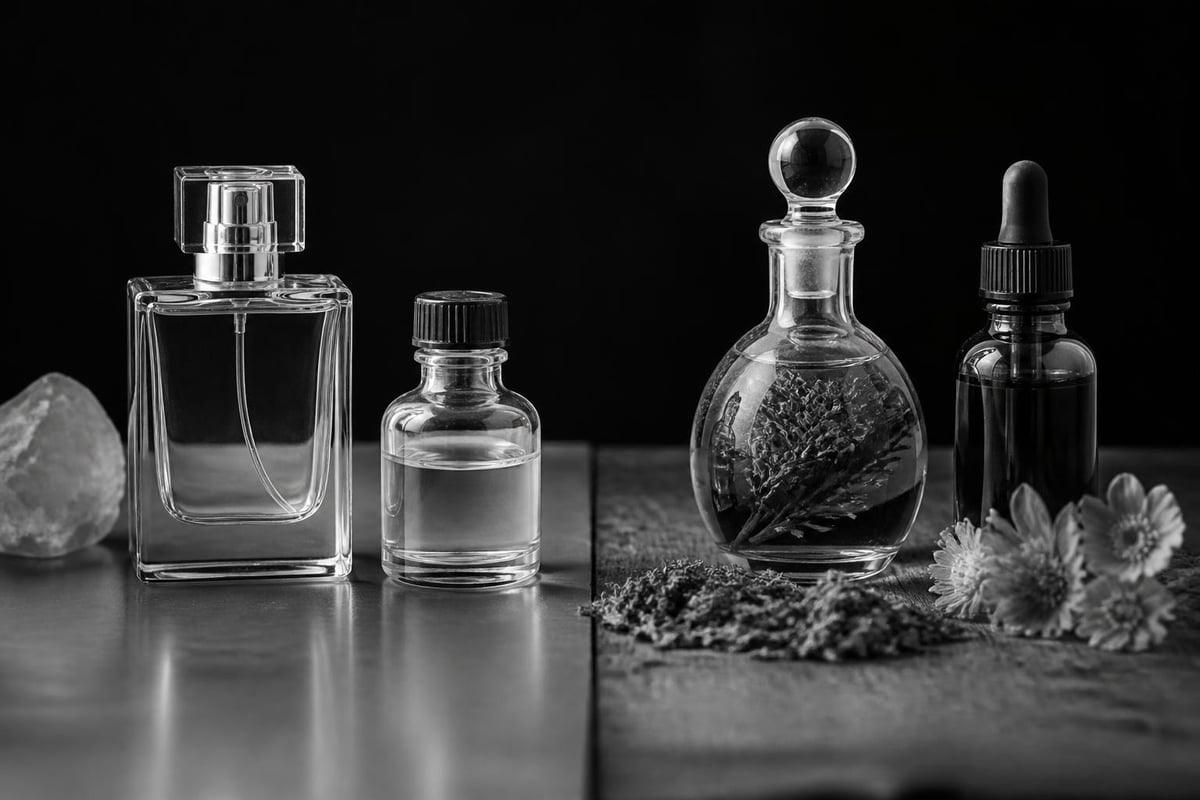
Commercial fragrance formulation differs substantially from botanical perfumery in both ingredient sourcing and carrier systems. Conventional fragrances typically use alcohol as primary solvent, allowing for spray application and volatile top note delivery. Botanical alternatives often employ oil carriers, changing the scent profile and skin interaction significantly.
How has 212 for men nyc been received by industry and editorial sources?
Industry reception of 212 for men nyc has remained steady rather than spectacular, with the fragrance establishing itself as reliable performer rather than award-winning masterpiece. The Fragrance Foundation recognizes industry excellence through annual awards, though 212 for men nyc has not been among the major winners in competitive categories. This reflects the fragrance's positioning as accessible daily wear rather than groundbreaking composition.
Editorial coverage has similarly treated the scent as solid option within the designer category. Contemporary assessments such as Esquire's cologne rankings place newer releases alongside established fragrances, showing how 212 for men nyc competes in an increasingly crowded market. The fragrance's endurance speaks to consistent consumer interest despite lack of critical acclaim.
Market positioning and competitive context
Designer fragrances occupy a middle tier between prestige niche houses and mass-market celebrity scents. 212 for men nyc sits comfortably in this space, offering recognizable quality at accessible price points. Its longevity in the market demonstrates consumer acceptance of its value proposition.
The fragrance competes against both contemporary releases and its own successors within the 212 franchise. This internal competition requires careful brand management to prevent cannibalization while maintaining franchise vitality. Carolina Herrera's approach has been to position each 212 variant for distinct demographics rather than direct replacement.
What role does scent play in New York City culture?
New York City's relationship with scent extends beyond fragrance marketing into the lived experience of urban density, cultural diversity, and economic activity. The city's olfactory landscape includes street food, subway systems, seasonal changes in Central Park, and the specific character of different neighborhoods. Manhattan particularly concentrates these sensory experiences into compact geography.
Fragrance culture in New York reflects the city's cosmopolitan character, with consumers exposed to global scent traditions through immigration, travel, and cultural exchange. This creates sophisticated demand for both mainstream designer offerings and niche alternatives. The city supports numerous fragrance boutiques specializing in hard-to-find and independent brands alongside department store counters carrying commercial lines.
Manhattan neighborhoods and scent culture:
- NoMad: Contemporary boutiques mixing design, fashion, and fragrance retail
- SoHo: International beauty retailers and niche perfume specialists
- Upper East Side: Traditional department stores with extensive fragrance floors
- Lower East Side: Independent shops focusing on natural and botanical offerings
The NoMad neighborhood in particular has developed as a destination for design-conscious consumers seeking alternatives to mainstream retail. This area's concentration of independent boutiques creates an ecosystem supporting artisanal production and informed purchasing.

Those interested in exploring botanical alternatives to conventional fragrance can experience oil-based formulations that differ substantially from alcohol sprays. Haus of Smell's botanical perfumes demonstrate how natural materials create distinct scent profiles without synthetic aroma chemicals, offering a different approach to personal fragrance entirely.
How do modern consumers evaluate fragrance beyond marketing claims?
Contemporary fragrance consumers increasingly seek information beyond brand marketing, researching ingredients, perfumer credentials, and community reviews before purchase. This shift reflects broader consumer trends toward transparency and informed decision-making across categories. The internet has democratized fragrance knowledge previously confined to industry professionals.
Online communities discuss fragrance with technical vocabulary and critical analysis, comparing formulations across brands and price points. These discussions often prioritize performance characteristics like longevity, projection, and seasonal appropriateness over brand prestige alone. Such scrutiny benefits quality products while exposing overpriced mediocrity.
Key evaluation criteria for informed consumers:
- Ingredient quality and transparency
- Perfumer attribution and track record
- Longevity and projection performance
- Versatility across seasons and occasions
- Value relative to price point
- Brand ethics and production practices
This analytical approach extends beyond conventional fragrance to include botanical and natural alternatives. Consumers compare extraction methods, carrier oils, and sourcing practices when evaluating essential oil perfumes and botanical formulations. The same critical thinking applied to designer scents transfers to independent producers.
What distinguishes botanical perfumery from conventional fragrance?
Botanical perfumery restricts materials to plant-derived extracts, resins, and essential oils, excluding synthetic aroma chemicals and animal products. This constraint fundamentally changes fragrance architecture, as botanical materials behave differently than synthetic molecules. Natural extracts carry complexity within single ingredients, where synthetics provide isolated scent characteristics.
Oil-based carriers replace alcohol in many botanical formulations, altering how fragrance interacts with skin and develops over time. Without alcohol's volatility, oil perfumes release scent gradually through body heat rather than immediate projection. This creates intimate rather than projecting scent experiences.
| Aspect | Conventional Fragrance | Botanical Perfumery |
|---|---|---|
| Ingredient source | Synthetic and natural mix | 100% plant-derived |
| Carrier system | Alcohol-based spray | Oil-based application |
| Development | Structured evaporation phases | Gradual heat-activated release |
| Sillage | Moderate to high projection | Close to skin presence |
| Longevity | 4-8 hours typical | 6-12 hours on skin |
| Vegan status | Varies by formulation | Consistently plant-only |
The botanical perfume offerings at independent Manhattan producers demonstrate these differences in practice. Visitors can experience how natural materials create scent profiles distinct from commercial fragrances, with development patterns tied to individual skin chemistry rather than standardized evaporation curves.
New York's botanical perfumery scene has grown alongside broader interest in natural beauty products and sustainable consumption. Manhattan particularly supports multiple small-batch producers whose work emphasizes local production and transparent ingredient sourcing. This movement exists parallel to rather than in opposition to conventional fragrance, serving different consumer priorities.
How can consumers explore alternatives to mainstream designer fragrances?
Exploring fragrance alternatives begins with identifying personal priorities: ingredient preferences, ethical considerations, scent profile preferences, and budget constraints. Armed with clear criteria, consumers can navigate both conventional and alternative offerings more effectively. In-person testing remains essential despite online research, as fragrance interacts uniquely with individual skin chemistry.
Steps for exploring fragrance alternatives:
- Identify ingredient restrictions or preferences (vegan, synthetic-free, alcohol-free)
- Research independent producers and niche houses in your area
- Visit boutiques allowing unhurried testing on skin rather than paper strips
- Allow fragrances to develop fully before evaluating (2-4 hours minimum)
- Compare performance characteristics across formulation types
- Consider sample programs before committing to full bottles
Manhattan offers particular advantages for fragrance exploration, with concentrated retail options across neighborhoods. Kips Bay, Murray Hill, and Flatiron districts all host independent boutiques alongside conventional retailers, allowing comparative shopping within compact geography.
Custom fragrance experiences provide another entry point to botanical perfumery. Made-to-order services allow consumers to select from curated materials and create personalized compositions. The 212 custom botanical perfume service exemplifies this approach, offering choice among natural materials with hand-crafted production and local pickup in NoMad.
FAQ
Is 212 for men nyc still manufactured and available for purchase?
Yes, 212 for men nyc remains in active production and distribution through Carolina Herrera's fragrance portfolio. The scent is available at major department stores, specialty fragrance retailers, and online channels. It continues as a core offering within the 212 franchise alongside newer releases and limited editions.
What is the typical longevity and projection of 212 for men nyc?
212 for men nyc typically provides 4-6 hours of noticeable presence on skin with moderate projection in the first 2-3 hours. Performance varies based on skin type, application amount, and environmental conditions. The fragrance settles close to skin after initial projection, requiring reapplication for all-day wear.
How does botanical perfumery differ in scent character from conventional fragrances?
Botanical perfumes carry layered complexity within individual natural extracts rather than isolated synthetic molecules, creating depth through material richness. Oil carriers provide gradual scent release through body heat rather than alcohol's immediate volatility. The result is intimate, evolving scent that stays close to skin with substantial longevity.
Can consumers with fragrance sensitivities wear botanical perfumes safely?
Botanical perfumes contain naturally occurring allergens from plant materials that may trigger sensitivities in susceptible individuals. Natural does not mean hypoallergenic, as many essential oils contain the same allergenic compounds as synthetic fragrances. Consumers with documented sensitivities should patch test any fragrance, botanical or conventional, before regular use.
What makes NoMad a destination for independent fragrance shopping in Manhattan?
NoMad concentrates design-focused independent boutiques in walkable blocks between Madison Square Park and Herald Square, creating a district for curated retail experiences. The neighborhood attracts consumers seeking alternatives to mainstream commercial offerings across categories including fragrance, with multiple small-batch producers and specialty shops within compact geography.
How long does oil-based botanical perfume last compared to alcohol spray fragrances?
Oil-based botanical perfumes often provide 6-12 hours of skin presence due to slower evaporation rates and carrier oil tenacity. However, they project less than alcohol fragrances, remaining closer to the wearer. Longevity depends on specific botanical materials, oil carrier quality, and individual skin chemistry rather than formulation type alone.
Understanding 212 for men nyc provides insight into how commercial fragrance connects product to place while serving practical daily wear needs. The scent's endurance reflects solid formulation and consistent consumer interest despite evolving market trends. For those seeking alternatives to conventional alcohol-based fragrances, Manhattan's botanical perfumery scene offers oil-based formulations crafted from natural plant extracts without synthetic ingredients. Haus of Smell creates handmade botanical perfumes and candles in NoMad, offering both ready-made compositions and custom fragrance experiences using 100% vegan plant materials.